Showing posts with label communities. Show all posts

Thursday, October 2, 2014

O Calcutta!


It seems to me to be disrespectful to live in a place and know little about it. The structured and the organic conjoin in Kolkata. Modernity has wrought changes, but the influences of earlier ages are never eliminated. I decide to explore why it is as it is. 

Epistemologists say the name Kolkata is likely to be a tribute to deity, the warrior goddess Kali, or Mother Nature’s bounty. However, most newcomers to the city, and especially non-resident Indians, don’t see any godly connection, and are appalled by the congestion, the pollution and the noise. It takes time to recognize the indomitable spirit of the people and to experience their selfless giving nature, but few people are that patient. To others, although difficult to stomach initially, Kolkata, nicknamed the city of joy after a French author’s book, tends to grow on you.

Travelogues of merchants and scholars from Persia and China date the region to centuries BCE. It is mentioned in the Mahabharat, one of the country’s ancient mythological epics. It was there during the Maurya and Gupta periods and in Mughal Emperor Akbar’s rent rolls in the sixteenth century. In short, this region had inhabitants for well over two millennia before Europeans appeared on the horizon. There was also an established trading post. Burra Bazar, close to the river, was probably this business hub. The old, old trading houses are still standing, although now in urgent need of repair and restoration.


The British, though, claim to have discovered the area through Job Charnock, a representative of the East India Company that came to these shores towards the end of the seventeenth century. That strikes me as absurd; just as it must have the Native American tribes when Christopher Columbus was credited the discovery of America. Like, hey, we were here first!  

True, not much concrete evidence remains of the ancient Indian architecture. This is most likely because the people of the age didn’t use brick and mortar for their dwellings. Their homes were eco-friendly, made of mud, thatch, tiles, and regularly recycled. Temples and tombs, however, were constructed with more lasting materials and they are testimony to the local talent. 


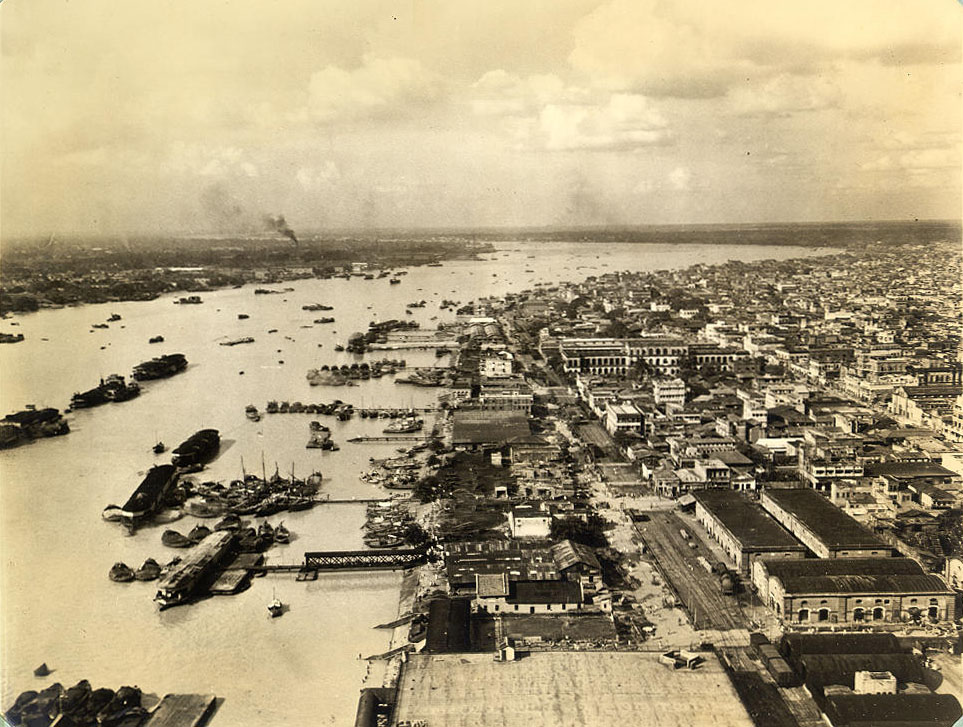
The British captured three villages, Sutanuti, Gobindapur and Kalikata, to create their headquarters for trading. They put their cultural stamp on their holdings razing everything else to the ground. The eastern bank of the Hoogly tributary of River Ganges bears impressive British architecture since. The roads built were named for their convenience - Dalhousie Square, Esplanade, Strand Road, Outram Ghat, Princep Ghat, Hastings, Curzon Park and so on. Being unable to pronounce the tongue-twisting Indian names, I suppose, they called the city Calcutta.

In the new millennium, this city has been renamed Kolkata. Street names change more frequently here. Whosoever comes to power in state governance, exercises the right to rename, perhaps following the British. I look up a few on a map of the city and then try to find them on the road. It turns out not such an easy task, because the same place might be referred to with different names! It can become confusing when people forget Chowringhee Road is now Jawahar Lal Nehru Road, or by habit, remember Harrington Street instead of Ho Chi Minh Sarani.


New constructions also appear atop the old, changing the faces of things quite completely. A Bank Street, for instance, is shown on a map to run alongside the waterfront on the Kolkata side for miles. But the location of this road is still a mystery to me. On every try, I am stumped at the Howrah Bridge, because the flow of traffic goes straight onto and over the bridge. I’m missing it somehow, or perhaps the newer flyovers have been built over and across it, to make ‘Bank Street’ just another discarded historical name.

Amongst the first British projects in India was the garrison to station the troops. Fort William, founded in 1702, is still there, as are the various living quarters built within, for humans, horses and armoury. Post-independence it has been taken over to serve as cantonment for the Indian Army. Although there have been later additions of housing and schools, the heritage of older structures, including the cannons, still look in top condition. The military story from inception to today is meticulously recorded in a little museum inside the Fort. 


Fort William was a strategic placement for the British. On the bank of the river, and shaped as a polygon of six or eight sides, and gateways on each side, enabled rapid deployment of their enforcers to one direction or another. The establishment of this regional military headquarters became a bone of contention between the foreign settlers, and the Muslim monarch of Bengal. Nawab Siraj-ud-daulah’s foresight of British expansionist intentions, led him to attack the Fort and succeed in driving the British out.  

But consolidation eluded him. Within a year, his own uncle betrayed him to British cunning. The bloody battle of Plassey was fought in 1757 and the Nawab was vanquished and killed. That put an end, for a while at least, to local aspirations. The Crown established Calcutta as the capital of British India. They wanted it to be known as the City of Palaces, and accordingly, the buildings constructed were massive, ostentatious displays of British architecture, high-ceiled spacious rooms, wide main roads, handsome parkways and boulevards, and deep, concealed drainage. The capital of British India flaunted imperial superiority to this part of the world. 


I’ve often wondered why only a part of Calcutta is so beautifully laid out, while much more was steeped in poverty and squalor. I rationalized that the Calcutta of yore must have been a pretty small place. The locations of their architecture probably demarcated the limits of the city built by the British. The population explosion thereafter must be responsible for sections to become dreadfully congested, with narrow streets, and run down structures. Pity, I thought, that the Indians had not learned from them to value space

I realize now that my grasp of the history is pretty weak. Calcutta had actually been bigger than what I imagined. The imperialists were not in the region to integrate cultures. They were white supremacists, here as masters.  Calcutta was developed in two distinct parts, and their names are self-explanatory - White Town and Black Town. The land, the funds utilized in the opulent construction projects of the former, as well as the human labour pressed into service were of course, taken from their new subjects in India, probably as reparation costs. 


They indulged racial discrimination to the hilt, relegating the natives to Black Town, north and east of the city. Dispossessed of their own lands, the Indian people were pushed further inland. The waterways and access to the river came under the aegis of the British Raj that did not hesitate to collect taxes. Deprived of their traditional livelihoods of cultivation and fishing, they huddled together in shantytowns. Poverty and squalor become their lot, and eventually the characteristic of all Black Towns held in the iron grip of the colonizers, backed by imperial military might.

Meanwhile, education was introduced in accordance with British educational standards. It raised a new class of Bengalis, the anglophiles, the educated, rich, upper caste Hindus. They were inducted into the lower levels of administration and the Baboo culture became the backbone of the bureaucracy. The Baboos profited from British presence. Their large town houses situated just outside the White Town zone probably as a buffer, shielding the masters from the serfs. Manipulated by the colonizers, many Baboos were against their own people.

However, education became a double-edged sword for the colonizers. Many Indians quickly became discerning, politically savvy intellectuals. The seeds of nationalism against British occupancy began to take root. Calcutta became the hub of the freedom movement launched within the first decade of the twentieth century. The sepoy mutiny (the upsurge of Indian soldiers), took place near the capital.  It was said that what Bengal thinks today, India thinks tomorrow

When the partition of Bengal was mooted in 1905, political activism gained momentum with the boycott and public burning of British goods on the streets. It forced the British to shift their capital from Calcutta to Delhi in 1911. Perhaps in retaliation, they vivisected Bengal and handed the East to Pakistan in 1947. Although the former East Bengal is now a country, Bangladesh, that physical, emotional and economic setback inflicted on the region, it is yet to recover from. 
 

But the Indian psyche is not built to hold onto grudges for too long. Through centuries of being invaded, conquered, annexed and colonized by different culture, we are able to take the worst misfortunes in strides. The sense of nationhood remains through oppression and democracy. We become comfortable with all outside influences. They are assimilated into the culture and Indianized.

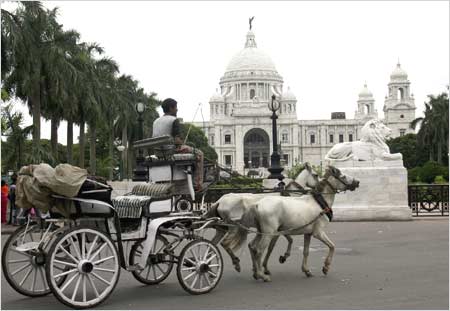
The English language is now one of the twenty-two official languages in the country. The colonial architecture has been preserved in all its glory even so many decades after Independence. Buggy rides reminiscent of the British Raj continue around the Victoria Memorial even today. We own it all without prejudice. As part of Kolkata’s historical cultural inheritance, they remain, as they ever were - Black Town, White Town, and what-have-you.

Monday, September 22, 2014

Street corner GPS


I’m rather challenged in spatial orientation. I mean my sense of direction goes haywire on the road in Kolkata. It is tough to figure out locations, and their street signs are a little difficult to spot too. I don’t worry too much, however. Navigational help is around the corner, and it comes free.

The street corners of Kolkata buzz with activity, from first light to late night. They are the centres for adda (gossip). Everything is discussed, the local news, sports, politics or personal issues. They may have card games there too, and gambling. Makeshift stalls for tea, snacks and tobacco spring up on the sidewalk, to do brisk business. The corner serves the same social purpose for the ordinary that exclusive clubs do for the wealthy. In both places, men need clubbability, like ships need anchors. But the roadside intellectuals are rather more street savvy. 

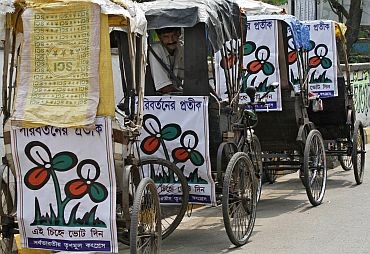
I venture in to explore an area in the vicinity of the Howrah Bridge some call a bad place. Wholesale goods are auctioned there. Hand-rickshaws or thelas (pushcarts) line the street ends, waiting to be engaged, to carry people and goods to different parts of the city. They run on human labour through the seemingly mazes of lanes and bylanes of Kolkata’s congested areas. Getting lost is pretty easy in those places, and on my own, I go round in circles.

Many street corners of the city double as stands for transport vehicles. Each stand is specific for a type of vehicle – for taxis, for auto-rickshaws, for rickshaws, etc., and mindful perhaps, of road hierarchy, the types don’t mix. The transport walas (drivers) are weather-beaten men, almost uniformly dressed in lungi (long loin-cloth) and baniyan (vest), which younger men might vary attire with jeans and tee-shirts.
 

Each though, carries their trademark long red gamcha (towel). It helps with the sun, the rain, the cold, and the carrying of weights. They are patient, they can wait hours, perched on their vehicles or squatted on the sidewalk. The chaps in this place speak Hindi, not Bengali, as do most of the traders, which shows how diversity has infiltrated the city. I guess the ‘bad’ perceptions may also be parochial! 

I stop at the corner to enquire where the roads might lead to or come from. Surprised at being addressed, they all stare at me. Finally, one of them asks instead where it is I’m trying to reach. Nowhere actually, I say and smile at the incongruity, just roaming. They find it funny that I would choose such a place to roam in. But still, they need a destination to be able help. I say Kolkata, which is silly really, as we are in the city, but they rightly assume I mean its central region. They explain the one-way only rule is enforced here, and hence it seems wise to keep going with the traffic. They point out where I can join the flow, and how to return to the centre. Accordingly, I go across the river over the bridge, u-turn at the railway station, and then, via the flyovers, head back to more familiar climes.


Another time, another turn becomes wrong. I find the sides of the road closing in, and the surroundings progressively shabbier. I realize I’m in the heart of a close-knit minority community, and its residents are suspicious of outsiders coming in. Few women are about, and those that are, are keeping conservatively covered. I’m obviously out of place in that environment, and it is being noticed. The rule of thumb of following the road no longer makes sense because it’s now a dirt track. 

No help for it, I have to stop to ask directions. Several young men are lounging about on the street corner. I attract their attention and they gather around, curious about what I’m about on their turf. I mention the landmark seven-point crossing. They know where it is, and how to get there. They tell me I’m actually heading the opposite way. Their instructions to going back include plenty of turns, and I’m getting confused.

The first thing though, is to move, because a queue is building up behind me. I decide on taking one turn at a time, with the first one right there. Drivers behind me, and those in oncoming vehicles, begin sounding their displeasure, but the young men jump in to help. With their arms outstretched, they stop the traffic on either side, and hold them back until I manage the turnaround in the narrow space. I wave my thanks as I drive away in the general direction they explain to me. A few street corners later, my way forward is clear again.


Many localities in Kolkata have their own distinctive community flavour. In the more congested old Kolkata, especially to the north of the city,  pockets of various religious minorities focus on preserving their customs and rituals. In the more affluent southern areas, the social milieu is more diffuse, more liberal perhaps, but neighbours hardly know one another.  

Near railway stations, the roads become thoroughfare. There is a constant stream of people that have just stepped off one or are on the way to catch the local trains. They commute daily from their homes in the villages far from the city.Fortunately, for millions of people employed in the city, the Indian railway network is the largest in the world, and it is their only mode of travel. 

When they set off from their homes early morning, it is still dark. Their families are asleep when they leave and when they return. They are so focused on getting to work, or catching the train home, that they are quite oblivious of their surroundings. Honking at them makes no difference; they walk in the middle of the road, as they do back home. The only way to drive there is to trundle along behind them.


I take a turn to get away from the crowds, and that road keeps winding on and on, left then right. I follow it with the hope of coming upon a main road soon. Eventually, I see a row of cycle-rickshaws at the end of the road. Beyond them, between two buildings, there is an opening. Something seems to glint beyond. I stop and roll down my window. The group of men squatted on the roadside, look on impassively. Elder brother, I say, is it possible to go down that way? I gesture to the passageway beyond. 

No, elder sister, they reply, pleased with my respectful form of address. I realize I’ve reached an absolute dead end. The glint I saw is the railway tracks just beyond, and the opening is a shortcut to the station.  It’s their corner, they line up their vehicles on one side, pick up passengers coming through the opening, and move on down the other side of the road to take them on to their destination. They tell me I should have turned right instead of left, to reach the main road and the bridge further on. A passing man sniggers that the only way out now is in reverse. But backing the car around the winding bends I passed earlier doesn’t seem a great option.

The rickshaw-walas watch in silence as I back away to the nearest pavement and wait there. Some rickshaws are taken and ready to move. Their drivers look at me uncertainly. They are unsure of my intention, and seem to debate being patient or being belligerent. I wave them on their way. There is just enough room for them to go past, and they head out. Thankfully, passengers are aplenty the line of parked rickshaws clears quickly, and I can continue with my manoeuvre. The drivers that remain courteously move their vehicles up to provide me a little more space to help me get right around and retrace my route.

The class conscious groups in Kolkata looks down their noses at the riff raff that gather at the corners. They are loud and individuals may be quick to confront, or even come to blows over perceived injustices. Moreover, they may be illiterate and vice ridden, so the respectable barely acknowledge their existence. Street corner people are perceived the lowest of the low.


But their social responsibility is second to none. These savvy people become first responders in any emergency. Their help is immediate even for a total stranger. They spring into action to clear traffic jams if the police are not around, or as additional help. They also regularly intervene to resolve street altercations.

The one thing they are undoubtedly expert at, are road directions. Ask about locations, shortcuts, traffic flow and road conditions, and they are instant sources of information. They know ways in and out of the locality, like the backs of their hands. A satellite-dependent GPS is a must in the West.  In Kolkata, we get by with these human equivalents.