Showing posts with label control or change. Show all posts

Tuesday, October 7, 2014

Get up, stand up


I’m not a victim, I say. And realize to my surprise, that indeed, it is a thing of the past for me. The majority of the female gender in India is, or has been victim at some point in their lives. The abuse they suffer can be in many forms, economic, verbal, physical, sexual, and emotional. It is not only the illiterate that are affected; education and employment doesn’t always protect the others. Culturally, they rarely get help; rather their integrity is questioned. The trauma of an abusive experience hounds them, and perhaps gets carried into their social interactions.


Several decades ago, a Western woman journalist, curious about life as a non-white in London, decided to change her appearance and go undercover as an Asian. With wig, contact lenses, appropriate makeup and attire, she transformed from one race to another. The few weeks of subtle social discrimination experienced were a revelation, and eventually, she too felt hunted. While commuting on a train in the disguise, she heard two other white women patronizing her. They obviously assumed that being Asian, she wouldn’t have the language. It was not her appearance that irritated, they said, but her attitude.

The downtrodden expect abuse. That they are beaten into the dust and cannot hope to get up again, is projected in look and body language. Perhaps their unarticulated fears attract further aggression. Verbal or physical abuse is common sight on the city streets. Hardly anybody protests.  Many may even condone it, and outside interventions often make things harder for the victim. Like kicking pets in petulance, men in India tend to take their frustrations on those that can’t or don’t fight back. But mostly, society is immune to the abuse of women.

On the road, the family group walking by, seemed normal enough, man, woman and small girl child. But as they passed, I heard the man say conversationally that he was fed up with ingratitude, and if the little girl made one more demand for food, he would smash her baby face to pulp. I looked up sharply, but nothing seemed out of the ordinary. I wondered if I was imagining things. The child and the mother said nothing; they simply walked on as if all was well. But then I noticed, they walked a little too straight looking neither right nor left, as if careful to not upset the man.

Another day, three little girls were on their way to school, along with a young man, most probably a member of their extended family, or a neighbour. The littlest girl had been unable to cross the road with the others, and remained stranded on the far curb. The fellow didn’t even notice that she had been left behind. Several bystanders at the crossing called out to attract his attention: Hey, hey, take this one with you! Then the man marched angrily back to the child and slapped her hard on the head. In shock and pain, she burst into tears. Slap yourself first, I shouted, walking up to point an accusing finger, the fault is yours entirely. He went quiet, embarrassed into behaving by the public scrutiny.


In days gone by, the joint family structure had several generation and extended families living under the same roof. The cloistering of women was extreme. During my mother’s girlhood in the 1930s and 1940s, young women couldn’t stand at the windows in case they caught the eye of some man before marriage, and they were forbidden from meeting any man alone. It seems to me that there was a positive to it too, in terms of their safety from predators.

Post-independence, nuclear family units became the norm mostly for economic reasons. It was instrumental in opening doors to women’s education and employment. However, it did not remove the feudal attitude to gender; it just made the access to women easier. In the new family structure, family ties remained the same. Mothers continued to view men as they were brought up to, as the superior beings to look up to. They trusted the male ‘family members’ in its extended branches implicitly.

It never occurred to them that by putting their little girls in their control they were putting them in harm’s way. The ignorance of the mothers allowed the uncomprehending children as young as four to be abused and molested at will. I know this, because it happened to me too. The home itself can be an unsafe environment for many women and girls. They are socialized early into the trauma of gender. 

Women may be unsafe in the marital home as well. In a traditional marriage, the spouses are almost strangers. It is customary to uproot the woman from her parents’ home, and throw her to the wolves, as it were. I once witnessed such a couple’s public interaction. The man strutted around like the proverbial rooster, and the woman’s insecurity was palpable. She wasn’t pretty, which was probably was the source of her insecurity. She followed the man, crying and pleading.

The more she did that, the more his ego inflated. Every now and then he stopped, and turned on her aggressively. Wagging his finger in her face, he hissed threats and insults. I heard him say she was so ugly she sickened him, that she was a burden around his neck, and that he couldn’t wait to be rid of her. She should have rapped him across the mug and stalked off. But instead, she just put her hands up piteously, as if to ward off his words.
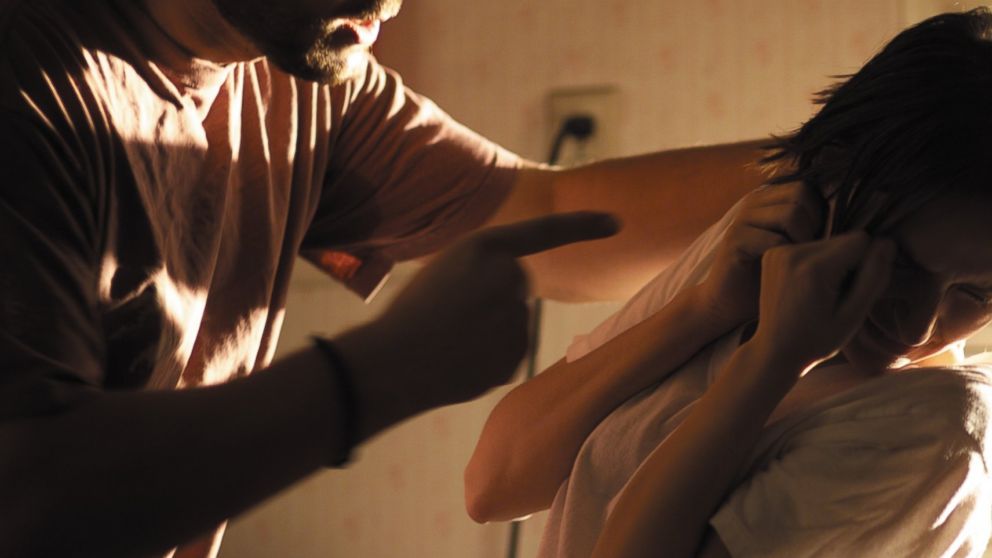
 

It made my blood boil, and I stopped nearby and glared at the man. Other passersby definitely heard him too, but because the woman had a vermillion streak in her hair (signifying the marital state), nobody intervened. The social environment holds out no support whatsoever for the victims of marital abuse. It is traditional, instead, to consider a wife the husband’s property; with which argument, marital abusers count on escaping censure. 

I know, because I was in such a relationship, where this argument was repeatedly used. I was educated, but perhaps I too projected the characteristically abysmal self-esteem of victims. It didn’t matter that I changed attitude like a chameleon changes colour, to keep the peace and protect children and pets. Punishment for some slight, real or imagined, was imminent, and would be vicious. At a time when the marital and custody laws favoured the male, it was a hostage situation.

Not much has changed since then, however. The right to ‘control’ the women in their lives – mothers, sisters, wives, daughters, and others, continues to receive tacit social support. It matters not that the women may have outstripped the men academically.  In the social equation, they are expected to walk several steps behind and be the subservient gender even in this day and age.

After several years, I recently met my own brother. He is a non-resident Indian, and has been a citizen of the lands of plenty for several decades. We are closest in age, and in our younger days, were constantly at loggerheads. The special treatment he always seemed to get, especially from my mother, irked me no end. We have mellowed in later years, but still, I admit, that although we do not come to blows any more, we occasionally lapse into childish behaviours, reminiscent of our younger days.


The matter of our argument, the other day, was actually trivial. But I realized that his Indianness is entrenched in a time gone by. Despite living in a developed society for several decades, the conditioned cultural responses reactivate on the shores of the mother country.  In an instant, the general mistrust of gender of those past times came alive in him. He was like an alpha male that had to dominate the group and the women!  In his mind, possibly, he was being the elder, the male head of family, and quite unaware that that behaviour pattern could now be termed abusive. 

The revisit of the past brought me enlightenment. Although we were brought up in the same environment in the past, I have moved on, have emancipated from victim-hood. I no longer placate or change attitude. I am assertive, and relate on equal terms. Masculine intimidations are of no consequence to me today. They seem comically archaic, and I am free of their toxicity.  I’m not a victim, I say. Not anymore. I have been in the pits, and now I stand up.

Saturday, September 27, 2014

Social attitude and family reality

Children in traditional India lead more sheltered lives than their counterparts elsewhere. Helicopter parents control the purse strings and their lives. It is social duty to do so, because they are judged by their children’s achievements. But family structure is rapidly changing in today’s India, and so must the social attitudes.


Education is priority over everything else. The family’s social recognition depends upon results - how the children do in the high school Board Exams, in college, in university and so on. The parents want their children to go up in the world, hence, the proper exposure is of paramount important. From middle school itself, extracurricular activities or vacations are sacrificed for coaching classes to prepare the children for the next step in life. There is no let up to keeping noses to the grindstone. It is for their good they are told, for their future.

The transition from high school to college is most stressful, especially for the parents. Adolescents beginning to explore the world outside without supervision is concerning, because who knows what influences will be picked up to alienate them from cultural family values! 

A teenager, Runu, stands on this threshold. Much time is spent in weighing the pros and cons of the different institutions. On the one hand, there is a far-away governmental institution, where costs are subsidized. For the adolescent, it is opportunity to be free of parental supervisions. On the other hand, staying in the city brings down establishment costs, but extends the parental watch. And it means attendance at a more expensive private institution; hence more strain on parental resources, because the children are still economically dependent. 

The immediate family and the social circle of involved relatives and friends agonize over the course of action for college admissions, reminiscent of the joint family structure of days gone by in India. Where siblings and cousins were brought up together, with several generations living under the same roof, it was not customary for the individual to think or act independently. 


Westernization and the partition of the country destroyed the joint family social unit, and instead, small, independent nuclear units became standard. The circle of people involved in decision-making became smaller, restricted to parents and their children. However, older age groups sometimes behave as though the traditional collectivism continues, whereby somebody’s business is everybody’s business.

In my opinion, young people need to make their own choice in the matter of their future. Runu should not feel pushed to live out somebody else’s dream, and later blame them for it. He needs to discover what his aptitude and interest pointed to, and state them clearly. I insist to his parents that they let him do so and support him to their best ability, and not the other way around. My input bases on the experience of another family, traumatized by change.

Fact is the social unit is again in transition. The education and employment of women has put them in touch with their own identity, as distinct from husband or family. There is power struggle in the home. Men may want to continue with things as they were, but women are less tolerant of second-class citizenship within the home. Consequently, separations and divorce have risen sharply.

The new family unit then is becoming parent-and-child/children, and the parent mostly, is the mother. A matrimonial bond is traditionally supposed to last seven lifetimes; hence a fragmentary family is an affront to social attitudes, and bias is clear. Social sympathy sides with the man, and the social circle is more concerned with his needs. The woman is generally blamed for the failure; kinship support deserts her. The responsibility of child upbringing remains hers, nevertheless.


Shibani is such a single mother and Santanu, her only son. Since she is also the breadwinner now, she opts to send the boy to a military boarding school. In the absence of the father as a role model, she reasons, the school training would instill discipline in his life. His mother doesn’t have the time to hover, and all she can do was to keep track of academic results.

She dreams of a far better future for them, expects him to achieve certain targets, and he consistently delivers. But her goals are those that society values. She looked forward to him becoming a doctor, or an engineer. Only his success in life will assuage the pain and guilt she is burdened with over the breakup of her marriage and the family unit.

Unfortunately, Shantanu dreams different from his mother. Neither medicine nor engineering interest him. That his aspirations are quite in another direction, he doesn’t share. Shantanu had learned early to look after himself and appears quite self-sufficient. However, he has withdrawn into himself and shares little of his thoughts and aspirations with others. He also trusts none - least of all, the adults in his life.

His mother pushes him to appear in all the relevant entrance exams, and dutifully he does so. He passes them all with flying colours and top institutions in the state offer admissions. But on the very day they are scheduled to complete the admissions process at a top college, Shantanu is untraceable. His mother waits in vain at the admissions office, devastated as her dreams for their future slip out of her grasp. 

Caught between his own aspirations and social expectations, Shantanu meanwhile, has fled from home. He takes up residence in a district across the river, and a job as a delivery boy to support himself. He stays put for a few weeks while he thinks out the direction of his future. Mother and son thus live in the same state, with no contact whatsoever between them.

Fortunately, Shantanu finds his course in life, and returns a few weeks later. The absence of a father figure and role model in his life to provide seasoned counsel is stark. His choices clearly lack the experience of life. He enrolls in his favourite subject at a very ordinary college nearby. One college is as good as another, it is the subject that matters, he reasons in his inexperience. No quite, I say when I meet him. The equation is small pond versus big pond. A small place doesn't hold out too many opportunities for the future. In the work world, the value to a potential employer is the institution he graduates from, and bigger is better.


Children of fragmentary homes are alienated from society itself for no fault of their own. While unable to comprehend the trauma they have to go through, they internalize it. They feel the outsider, compelled to reinvent the wheel, to relearn things by trial and error. Society needs to be aware that many of its traditional practices are fast becoming obsolete. A change in social attitude to family reality is necessary eschewing the entrenchment in social inequality.

Thursday, September 18, 2014

The end of fear itself


Mary Kom, the living legend. Bear in mind that her country of origin is India, and her achievements of five world titles in boxing, is mind-boggling. But can the film inspire families around the country to allow their women-folk to step out of traditional gender roles? Or will the tale of her success remain bittersweet for the many nameless, faceless women of India, themselves casualties on the road to self-actualizing?
 

The Mary Kom biopic released in India this month. Her life story, packaged in a Bollywood production, sweeps the audience along on an emotional roller coaster. We are in awe of her grit in demolishing the sexist bounds girls her age are afraid of confronting. We marvel how her boxing dream sustains her through travails. The images portrayed are iconic, and have dramatic timing. Against the backdrop of destructive insurgent standoffs in the Northeastern states, a young girl finds the boxing glove that inspires her career. Again, conflict flares and curfew ensues when she is to become a mother.

We too rage at the sporting ignorance of the federation officials, and at the injustices meted out to state and national players. Our tears well up with her collapse onto the ring canvas in sync with her child’s loss of vitals during her comeback championship bout. Together with her supporters, we will her to find strength in helplessness and get back to her feet. Her pain as person, woman, daughter, student, wife and mother resonates as our pain, because so many women in India are or have been in like situations. 

Although all around the world, women’s movements have cried themselves hoarse in protest over the invisible glass ceiling in employment organizations, in India it is barely realized. Entrenched in gender roles, most women probably do not believe they are worth any better. We cannot hope to see anybody else have the self-belief to speak out, let alone throw a chair in protest at the powers-that-be. It may be telling that, although in the last fortnight, the film screened in theatres in the rest of India, its release is as yet held up in Kom’s home state of Manipur!


In the social structure of the country, women do occupy positions of power, but their climbing the rungs of achievement on their own strengths are rare. Far more often we hear of the incumbents being somebody’s mother, sister, wife, daughter or daughter-in-law. In short, behind every successful woman there is a man to pull the strings, and wield the power. When this is the socially accepted construction of a woman’s life, it is no surprise that their self-worth is also dependent on forces outside of them. Against that norm, the woman that values herself is an oddity.

We love the men that stand up tall in her life - the father, a wrestler himself, for his turnabout from stiff resistance to support of his daughter’s dreams, the husband for his calming counsel, devotion to family and commitment to her career, and of course, the curmudgeon coachfor his unwavering focus on goal, without whose guidance in training she acknowledges she can never be a champion.

We are also secretly jealous, because very, very few women can boast of kinship support that respects or even tolerates the development of their individual identity. Rather, most women that dare to be “unwomanly” in a patriarchal society are not only left open to gender exploitation in the outside world, they also face the severest backlash at home. The pressures of battling several fronts often break down resolve, and in abject despair, most become apathetic shells of their former self. In the ultimate analysis, they lack the killer instinct.

What holds the women back from achieving their goals? In one word: Fear. The undifferentiated fear that is all consuming. The fear is of stepping outside the mythological lakshmanrekha (invisible boundary) that tradition constrained them with so many millennia ago. The fear is of performance, it is of making mistakes, and of being a failure. The fear is of the unknown, of what inexplicable terror or danger might lurk in the shadows. The fear is of other people might think. The fear is of bring shame to family.  The fear is of being abandoned.


Women of this country have been taught through generations that they are custodians of culture and carriers of the tradition. They are bred to be dependent. This perspective has probably become interwoven with their DNA. Hence, fears are their constant companions and rule their lives. In one memorable scene in the film, the protagonist warns the official, Don’t scare anybody so much that their fear ends altogether. Women of India need to take heart from it.  Fact is they have nothing to fear but fear. Conquer it, and they become impervious to the men’s most potent weapon of control against them - emotional blackmail.

Mary Kom is not the first ever woman in the country with the drive to break new ground. There have been many that have tried before to fight for gender equality. Like the same wine in older bottles, they too were held hostage to stereotypical assumptions – that they would become boys if they played boys’ games, that nobody would ever marry them, that they would bring dishonour to the family prestige, ad infinitum.  Through earlier ages, innumerable women have thus been felled by the wayside for their audacious attempts to reach out and break the glass ceiling. They were not defeated in fair fights but through their greatest weakness, the desire to maintain relationships.

The tenacity of Mary Kom lends substance to her legendary status. She keeps her goal in sight no matter what. Through thick and thin, her talent remains undiminished. When the father forces a choice, the pressure shows, and yet her gaze is unwavering as she chooses boxing over the familial relationship. It makes the Arjuna Award for her exceptional prowess significant – Arjun the warrior-prince of the Mahabharat could shoot out the eye of a fish on a rotor at a distance because of that extraordinary ability to focus.

Although the earlier women innovators remain in the shadows today, Mary Kom’s success actually vindicates their belief that woman can do this. For them it is bittersweet - they couldn’t make it, but somebody finally did! This country and many others around the world could do with a reevaluation of gender roles. May be, just may be, the story of one woman’s journey to the top adds fillip to a new trend in women’s development.


In the cinema hall, the audience jumps to its feet as the national anthem plays at the end of the show. They applaud, perhaps the person, perhaps the presentation, perhaps both. I wonder whether they will, thereafter, apply any of it to bring change into their own lives. Or will the majority soon distance from proactive action, and instead, re-view the biopic as just 123 minutes of filmy entertainment

Monday, September 15, 2014

Save the last dance

In modern India, older age groups have a problem. Actually, they may even be the problem. After decades of nurturing others, they forget how to nurture themselves. Society forgets about them as well. Elsewhere in the world, we hear 60 is now the new 40! But that memo, for sure, is yet to be received here.

I visit an upcoming housing complex. Their marketing executive tells me that the place is self-sufficient. Residents do not need to step outside the area for any activity or entertainment. With a few thousand high-rise flats, it is like a little town in itself. He reels off the modern in-house facilities, now an inseparable part of urban living – shopping mall, multiplex theatre, gymnasium and health spa, children’s play centre, community hall, and so on. He is eager for me to understand that they have thought of everything. 

What about senior citizens? I ask. A flourish of his arm takes in a passageway with about a dozen armchairs. I stare in surprise. Is that all the activity retirees merit – a sit down and chat? It is almost like waiting to die. That the elderly are viewed as completely spent is disquieting. The metabolism may have slowed down, but the minds are still active, thinking, creating. May be more, in fact, now that the distractions of youth have been seasoned. I dream of ageing gracefully, not of being relegated to a trash heap of uselessness!

For years the older age-group shoulders responsibility for the future. First, it is more important to focus on a good education to go up in life, then, there are job priorities, and finally, family and children take precedence. The little time remaining in hand for them must look bleak when the social consideration they earn as returns is poor. Surely, the ageing deserve something a bit more imaginative!

Society may not mean to discriminate, but its majority associates this group with little other than medical needs. It pushes the elderly to think negatively about themselves too, when the opposite is just as true. Now that responsibilities are largely over, it is opportunity for them to refocus on the self. Post-retirement, one finally has time to develop freely what has been left remote for years. Maybe childhood aspirations saved in some corner of memory could be resurrected. Discovering the simple joy of learning new skills, for instance. 

Certainly, the assumptions of suspended animation need to be question, and yes, a few waves created in chasing dreams. From my very long-term memory, I dredge one up - Dance.  I was captivated with it, but was then too young to join the class the three older girls in our joint family were going to. Later, they told me. Alas, by then, the older girls gave up on it, one by one. The family was convinced that, by association, so would I. Dancers only get fat later on, they told me, better to learn to sing.


A dream shatters at a very impressionable age. It is not forgotten, just buried in memory as failure, never pursued again. I imagine putting the pieces together, to see what comes of it.  Out of respect for the childhood goal, I could at least give it a try. In fact, the exercise might be more interesting than the chatting envisaged as the appropriate old age pastime. 

My age-mates laugh at my craziness. Seriously, time to stop, they tell me in parental tones, you’ve danced around a lot before in your life. Yes, but that was a different spin of dancing. Bouncing around is perhaps a more appropriate term to use - changing subjects of study, changing job fields, and changing homes.

I suppose they mean for me to have stability in my life, to be completely predictable, and like furniture, to just be there. The mistake is in thinking there is safety in an environment controlled to keep everything the same. Fact is the only constant in life is change. Accept that, and one is ready to adapt to any new reality.

I set about finding the dance school to attend. I look them up and decided to ‘phone a couple located close by for details. Initially, they are most welcoming. I’m just the kind of enthusiastic person they need in their class, they tell me. There are two broad categories, Indian and Western, and under them, innumerable styles and specializations: bharatnatyam, kathak, odissi, salsa, samba, zumba, and more besides. For an absolute beginner, Indian or Western makes no difference. At the moment, it is more a question of what might be a little easier to do. The schools promise guidance, and incidentally, telephonic admissions are also possible.


In the end, I ask the most important question, the age limit. They assure me there isn’t any. Student over a-year-and-a-half in age is all. They misunderstand. At the other end, I clarify. My query puzzles them. Adult? They respond tentatively, like it is a question. I tell them I’m in search of a senior citizens class. The silence wafting down the telephone line is telling! I can feel their interest wane. Senior citizens don’t do these classes. But there is a sop. I can join in with the kids in the beginners' class, if I want.

I decide on not for now. Surely, senior citizens have the gumption to organize their own activities! It may feel a little awkward at first, but to just think, they don’t need to impress anybody or please the world any more. When there are no classes for seniors, go to Plan B. The point is to learn. Technology is freely available, so why not take advantage of online instructions. I search the ‘Net and find a slew of tutorials. They all say joining an actual class is the best way to learn, and I couldn’t agree more. However, a saying in India is that having a blind uncle is better than having no uncle at all. 

The dance is, at last, for me! I decide to choose something with rhythm. I close my eyes and make a stab at the computer screen. Salsa, it is, a sexy dance from Cuba. It may be an ambitious project, but well, I’m not about to become a performer. The aim is to prove that this also can be achieved. I try to emulate moves from the video clips. They don’t look impossible to remember. Right, left, right Left, right, left … Like walking. With a wish held this long, touchwood, I might even get it.