Showing posts with label Kolkata roads. Show all posts

Monday, September 22, 2014

Street corner GPS


I’m rather challenged in spatial orientation. I mean my sense of direction goes haywire on the road in Kolkata. It is tough to figure out locations, and their street signs are a little difficult to spot too. I don’t worry too much, however. Navigational help is around the corner, and it comes free.

The street corners of Kolkata buzz with activity, from first light to late night. They are the centres for adda (gossip). Everything is discussed, the local news, sports, politics or personal issues. They may have card games there too, and gambling. Makeshift stalls for tea, snacks and tobacco spring up on the sidewalk, to do brisk business. The corner serves the same social purpose for the ordinary that exclusive clubs do for the wealthy. In both places, men need clubbability, like ships need anchors. But the roadside intellectuals are rather more street savvy. 

I venture in to explore an area in the vicinity of the Howrah Bridge some call a bad place. Wholesale goods are auctioned there. Hand-rickshaws or thelas (pushcarts) line the street ends, waiting to be engaged, to carry people and goods to different parts of the city. They run on human labour through the seemingly mazes of lanes and bylanes of Kolkata’s congested areas. Getting lost is pretty easy in those places, and on my own, I go round in circles.

Many street corners of the city double as stands for transport vehicles. Each stand is specific for a type of vehicle – for taxis, for auto-rickshaws, for rickshaws, etc., and mindful perhaps, of road hierarchy, the types don’t mix. The transport walas (drivers) are weather-beaten men, almost uniformly dressed in lungi (long loin-cloth) and baniyan (vest), which younger men might vary attire with jeans and tee-shirts.
 

Each though, carries their trademark long red gamcha (towel). It helps with the sun, the rain, the cold, and the carrying of weights. They are patient, they can wait hours, perched on their vehicles or squatted on the sidewalk. The chaps in this place speak Hindi, not Bengali, as do most of the traders, which shows how diversity has infiltrated the city. I guess the ‘bad’ perceptions may also be parochial! 

I stop at the corner to enquire where the roads might lead to or come from. Surprised at being addressed, they all stare at me. Finally, one of them asks instead where it is I’m trying to reach. Nowhere actually, I say and smile at the incongruity, just roaming. They find it funny that I would choose such a place to roam in. But still, they need a destination to be able help. I say Kolkata, which is silly really, as we are in the city, but they rightly assume I mean its central region. They explain the one-way only rule is enforced here, and hence it seems wise to keep going with the traffic. They point out where I can join the flow, and how to return to the centre. Accordingly, I go across the river over the bridge, u-turn at the railway station, and then, via the flyovers, head back to more familiar climes.


Another time, another turn becomes wrong. I find the sides of the road closing in, and the surroundings progressively shabbier. I realize I’m in the heart of a close-knit minority community, and its residents are suspicious of outsiders coming in. Few women are about, and those that are, are keeping conservatively covered. I’m obviously out of place in that environment, and it is being noticed. The rule of thumb of following the road no longer makes sense because it’s now a dirt track. 

No help for it, I have to stop to ask directions. Several young men are lounging about on the street corner. I attract their attention and they gather around, curious about what I’m about on their turf. I mention the landmark seven-point crossing. They know where it is, and how to get there. They tell me I’m actually heading the opposite way. Their instructions to going back include plenty of turns, and I’m getting confused.

The first thing though, is to move, because a queue is building up behind me. I decide on taking one turn at a time, with the first one right there. Drivers behind me, and those in oncoming vehicles, begin sounding their displeasure, but the young men jump in to help. With their arms outstretched, they stop the traffic on either side, and hold them back until I manage the turnaround in the narrow space. I wave my thanks as I drive away in the general direction they explain to me. A few street corners later, my way forward is clear again.


Many localities in Kolkata have their own distinctive community flavour. In the more congested old Kolkata, especially to the north of the city,  pockets of various religious minorities focus on preserving their customs and rituals. In the more affluent southern areas, the social milieu is more diffuse, more liberal perhaps, but neighbours hardly know one another.  

Near railway stations, the roads become thoroughfare. There is a constant stream of people that have just stepped off one or are on the way to catch the local trains. They commute daily from their homes in the villages far from the city.Fortunately, for millions of people employed in the city, the Indian railway network is the largest in the world, and it is their only mode of travel. 

When they set off from their homes early morning, it is still dark. Their families are asleep when they leave and when they return. They are so focused on getting to work, or catching the train home, that they are quite oblivious of their surroundings. Honking at them makes no difference; they walk in the middle of the road, as they do back home. The only way to drive there is to trundle along behind them.
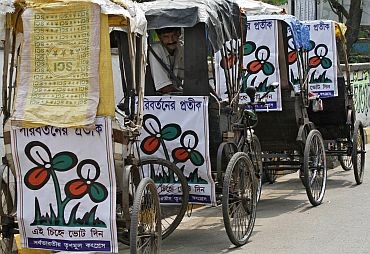

I take a turn to get away from the crowds, and that road keeps winding on and on, left then right. I follow it with the hope of coming upon a main road soon. Eventually, I see a row of cycle-rickshaws at the end of the road. Beyond them, between two buildings, there is an opening. Something seems to glint beyond. I stop and roll down my window. The group of men squatted on the roadside, look on impassively. Elder brother, I say, is it possible to go down that way? I gesture to the passageway beyond. 

No, elder sister, they reply, pleased with my respectful form of address. I realize I’ve reached an absolute dead end. The glint I saw is the railway tracks just beyond, and the opening is a shortcut to the station.  It’s their corner, they line up their vehicles on one side, pick up passengers coming through the opening, and move on down the other side of the road to take them on to their destination. They tell me I should have turned right instead of left, to reach the main road and the bridge further on. A passing man sniggers that the only way out now is in reverse. But backing the car around the winding bends I passed earlier doesn’t seem a great option.

The rickshaw-walas watch in silence as I back away to the nearest pavement and wait there. Some rickshaws are taken and ready to move. Their drivers look at me uncertainly. They are unsure of my intention, and seem to debate being patient or being belligerent. I wave them on their way. There is just enough room for them to go past, and they head out. Thankfully, passengers are aplenty the line of parked rickshaws clears quickly, and I can continue with my manoeuvre. The drivers that remain courteously move their vehicles up to provide me a little more space to help me get right around and retrace my route.

The class conscious groups in Kolkata looks down their noses at the riff raff that gather at the corners. They are loud and individuals may be quick to confront, or even come to blows over perceived injustices. Moreover, they may be illiterate and vice ridden, so the respectable barely acknowledge their existence. Street corner people are perceived the lowest of the low.


But their social responsibility is second to none. These savvy people become first responders in any emergency. Their help is immediate even for a total stranger. They spring into action to clear traffic jams if the police are not around, or as additional help. They also regularly intervene to resolve street altercations.

The one thing they are undoubtedly expert at, are road directions. Ask about locations, shortcuts, traffic flow and road conditions, and they are instant sources of information. They know ways in and out of the locality, like the backs of their hands. A satellite-dependent GPS is a must in the West.  In Kolkata, we get by with these human equivalents.

Monday, September 8, 2014

Signalling ambiguity


Ever quite so often, I wish for a dashboard camera. Pictures that would capture in a trice the happenings on the roads of Kolkata would indeed be worth the thousands of words I labour to express – sometimes funny, sometimes heart-warming, and sometimes exasperating. On our general confusion with the traffic signals, for instance, they would speak volumes!

For decades, things were easier, and only three lights used to be there, red, amber and green. They were positioned on wooden or metal posts on the left corner of the road or in the middle of the traffic island with lights facing four ways. It is customary to drive on the left in this country; hence, an automatic left turn at crossings was the norm.

The signal posts of yesteryears are still standing. They also function, although greenery growing around them may obscure their lights sometimes. We have juxtaposed modernity now, with more rows of lights hung up ahead. The multiple new green lights qualify the single homogenous green light of old, and are redesigned into a green arrow to point out the direction more specifically. There are as many arrows as there are roads diverging from the crossing. Rendered necessary, I suppose, now that the numbers have increased, of people, and correspondingly, of traffic.

For additional help, single lights, red or green, are placed on the left or right of the road. The information the ordinary driver needs to drive safely is obtainable partly ahead, partly on the left, and partly on the right. Unfortunately, in the midst of heavy traffic, these are difficult to spot, let alone collate on the fly. Most people don’t bother their heads with them, and just go with the flow. It is so much easier to follow somebody else. It must be our herd instinct, do whateverthey are doing, right or wrong! 

The rules have changed from yesteryears, and the automatic left facility no longer exists. A “no free left” signboard stuck halfway up on the old traffic signal post says so. But how many of the drivers in Kolkata read English, anyway? It is thus unnoticed or just ignored. The point is the free left still exists in the minds of many drivers. Without the specific signal, yes, it is often freely appropriated; leaving behind those that can read feeling stupid!

I notice at several crossings, the “go left” green arrow comes on some seconds after the red light stops all traffic on the route. Vehicles bound for that direction begins to move, but after a few seconds more, that green light goes off again. Must the left-bound traffic already on the move stop again ? On a right turn, they must stop, of course, because traffic on the straight will soon be oncoming. But on the left turn, certainly no such difficulty exists. Still, I prefer to wait for the clear signal. However, for many other drivers that initial green arrow is go-ahead enough to keep going. Seems to me that if so, the signal too should stay on for the entire duration the channel is open. Surely, common sense dictates that! 


In many places, timers next to the signal lights count down the seconds. They look very precise and efficient technological tools. Motorists can see for themselves how much longer they have to wait for the go signal, or conversely, how long the channel will remain open. To my mind, though, it is the major irritant we can do without. The timings programmed into them are abysmal.  It may be that many of these signal lights have manual overrides, and the fault lies with their operators, since it is their duty to ensure that traffic on any particular road is not backed up too far too long. And what easier way to clear the traffic jams on one route, than to freeze the signal lights on the others until it is!

Often, despite the timer having already counted down to “00” (zero seconds remaining), motorists continue to be greeted with the unblinking red light. This may go on for an indefinite period – I’ve counted 30, 60 and even 90 more seconds sometimes with the timer frozen on zero! Why install them in the first place if their purpose is abused? They are meant to be an accurate gauge of time, in this case for stopping or for going, but appear to become the instrument of somebody’s whim.


Furthermore, if the signal operators forget to remove the override at the end of their day, it carries forward to the next. On an ordinary working morning recently, traffic was light. Before rush hour, those out early could beat the logistical delays, and they probably expected to do so. At a crossing in front of a hospital, the timer had already counted down, but the signal remained red. Since there was no obvious emergency happening there, may be the light was malfunctioning. Drivers soon became restive. Several just drove off. Unwilling to run the red light, some stayed put. That frustrated those behind them. The hospital zone was then treated to their high decibel venting, until finally, finally, the signal turned green! 

On many routes, the red and green signal lights are turned off during the very early hours of the morning. Only the amber continues to flash, warning people to be careful and responsible as they drive along. It makes sense for that hour, because traffic is anyway so sparse. The motorists don’t have to waste time just waiting on empty roads. But again, there is inconsistency; on some routes, the red and green are active, despite the traffic being just as sparse. Hence, minutes of stoppage time are mandatory. Many drivers don’t bother to wait. Instead, indulging their needs for speed, they zoom right through the intersections. The onus is on others, the more sedate motorists, to forget the signals, just get out of the way! 

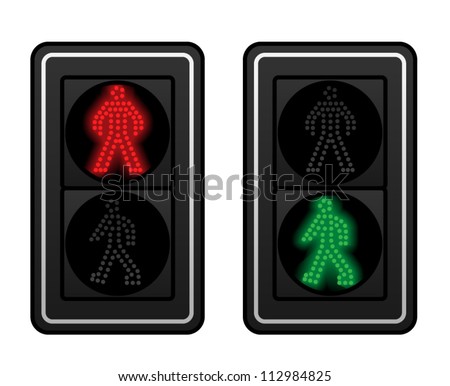
The little red and green men, signalling at pedestrian crossings, are meant to light up in opposite to the main traffic signals. Their task is to alert pedestrians when it is safe to walk and when not. That is, the standing red man shines to halt pedestrians when the motor traffic is on the go, and conversely, the walking green man shines to indicate that their getting across the road is now safe. Situations arise however, that would be comical if they weren’t potentially dangerous. Somebody connects together all the ‘red’ lights in the signals, and all the green ones too. As a result, pedestrians are cautioned “don’t walk”, when the traffic is at a standstill, and encouraged to “walk” when the signal light to motorists too is green for go!

Perhaps it is just as well that most people on foot in Kolkata ignore the traffic lights completely. They don’t labour over ambiguity and cross precisely when they deem it right to! With the technology to guide safe road travel frequently going awry, in their minds, it is much safer for them to take charge of their own lives!

But if, out of sheer frustration, motorists begin likewise to ignore the lights, and follow their own ideas on the road, it becomes a very different, even ugly story. Road safety depends on traffic signals being unambiguous. The technology is meant to ensure that they also are consistently precise. Traffic signals are there to help people on the road be safe, not to raise the general stress levels. Doubts created in the mind compel motorists to second-guess themselves, become dangers to themselves and to others. We need clarity on the road, not information overload nor tactics disrespectful of the public’s intelligence.  

Friday, August 29, 2014

Be a little mad


 Although it is a common assumption that women cannot drive, the very, very few female drivers out and about in Kolkata are particularly mindful of rules, and of doing things right. The overwhelming majority of drivers on the road are men, and the art is assumed to come to them naturally. Yet many of them have the most appalling road sense.

Compared to the planned road networks in cities around the world, many of those in Kolkata seem to remain the narrow village streets they once were. Worse, they are often in poor condition. Although the business of building construction is booming in the city, the access points have changed little. More traffic in the same space is the major problem yet to be adequately addressed in the city. From having to maneuver in small spaces, one could expect greater skills, but often the driving is with no sense at all.

It reinforces my belief that mothers in India spoil their sons. How does that follow, one might ask. Fact is these chaps are raised with the belief that they are the cat’s whiskers. Secure in doting maternal indulgences, the little emperors are able to get away with anything. And as grown men in the driver’s seat, they expect similar deference from the environment around them, and for traffic to part before them like the sea did for Moses. Like little boys with toys, thoughtless about consequences, they just want to go vroom!


Vehicles are positioned just about anywhere, in the fight for space.  Racing to get ahead, a driver that needs to turn right next may come up on the extreme left, and then suddenly sticking his arm out of the window as signal, attempt to make his turn, cutting clean across the paths of all the other vehicles behind. Scratched, scraped and dented car bodies are testimony to what invariably follows. Stalled traffic because two drivers are locked in altercation, is a common sight on the road. 

Small cars, the vehicles of choice for most women drivers, are like tin cans. Though they may negotiate the narrow roads better, and leave a smaller carbon footprint, they damage easily and generally come off second best in even minor collisions. Their repair has to be mostly out of pocket, since insurance payouts for bodywork are meagre. Knowing full well that the litigation process is too cumbersome to pursue, the other side gleefully gets away scot-free.

Moreover, women drivers are in a minority, and traditionally they are not expected to play men’s games, nor are they taught to be overtly aggressive in public. The odds stack against gender on Indian roads. Men tend to hit and run, the general public stares rather than supports, and the police are inert. I’ve learned to be theatrical in such situations. Being perceived a little ‘mad’ seems to work – nothing hurts the male ego more than being held up to public ridicule! 


My car has recently returned from the garage, and I am being extra careful. If a couple of weeks go by without incident, it is cause for joy. At a crossing, the signal lights change to amber just as I approach the stop line. Seeing no point in trying to beat the red light, I slow to a stop. Almost immediately I feel the nudge from behind, rear-ended by the yellow cab following. Really? I jump out and throw my hands up and out in the classic gesture of What?! The driver stays put inside his cab. His passengers too are quiet, embarrassed at being in the public spotlight.

Pointing dramatically at the man behind the wheel, I jab two fingers towards my eyes, up towards the lights and then at my car, indicating that he should keep alert and eyes front while driving. The man pokes his head out of the window and says, I saw the lights, I saw the red, so see, I stopped. How? I retort loudly, by hitting me? No, no, he says placatingly, I hit the brake, but see, it just slipped. Bystanders testify that no damage is done; it is only a light tap, let him go. I wave my hand imperiously for him to back off, and he complies at once. 

Non-resident Indians visiting the country, consider it quite an experience to ride passenger in the front seat. Drivers themselves in the West, they shut their eyes, or exclaim in horror at vehicles passing inches away. A friend and I are looking for a particular road leading off from the main road. I indicate the rather narrow opening we have just gone past as probably it. I decide to come around again and take it on the next pass. She stares in surprise - that is a road for traffic going both ways? Well, it is broader than many others in the city, where one has to back up to some siding to let another get by! Rejoining the flow of traffic, I position rightmost, in preparation for the U-turn. 

Nearing the crossing, I turn on the right indicator. Three lights begin to flash at once, at the front, the back and on the side - essentially, leaving no room for doubt for anybody following as to the directional intent. A couple of motorcyclists move up further to my right. They both turn right and roar away, and as I begin to follow on the turn I noticed a third motorcyclist gunning his vehicle to catch up.  Aha! I thought, he’s decided he must go first too, he’s not about to let me beat him to it. Two-wheeler riders seem always on the go, and see even half a metre of available space as ample opportunity to zip by. They look pretty unstable to me, and I give them a wide berth.
 

The turn road is up a little incline and I slow down further to accommodate. To my surprise, on coming alongside, the rider suddenly throws up his hands and lets go of the handlebars altogether! The motorcycle dashes into the bumper of my car, and then away, with him trying desperately to stay on.  A low boundary wall across the turn road stops them from hitting oncoming traffic. Immediately a crowd gathers around.

I drive up the incline and out of the main traffic flow before turning off my car’s engine. Within a month, the car body looks damaged again! Meanwhile, the man has struggled to his feet. As he spots a couple of women emerge from the car, his fear turns to belligerence. He decides it is safe to go on the offensive. He accuses me of speeding, and turning without any indicator lights. 

His bluster, though annoying, makes the actual picture clear.  The fellow had accelerated before the intersection not to turn, but to zigzag past me and get ahead on the straight road. I suppose the sudden incline that he would have to zig up first, and then zag down, fazes him at the end. Losing his nerve at the crucial juncture, he abandons both his own daring plan and his ‘bike control. Somebody has to be blamed for the failure, and who better scapegoat than two innocuous-looking women! 

Bystanders usually like to side with the ‘little guy’ in the two-wheeler versus four-wheeler fracas. But with us in the fray, they decided to just watch the drama. The biker is asked if he is hurt. Immediately he tries to locate some cut or bruise to draw public sympathy with!  Stop pretending, I say in strident tones, you are not hurt at all and neither is your brand new bike. Look instead at the damage your stupidity caused my car. I draw attention to the front bumper that dangles loose and forlorn with the force of the impact.

I wag a stern finger in his face to emphasize his ineptitude - You were on the wrong side, you were speeding to overtake at the intersection, and you lost control. For a moment he is nonplussed at being yelled at. Then perhaps realizing that public opinion too might soon indict him, and who knows, they could drag him to the police station for further humiliation, he wordlessly picks up his bike and quickly exits the scene.

As we inspect the damage left behind, people come over to help. One knowledgeable person pushes the bumper back into place. He assures me that damage is just the dent on its side, and the car’s road running ability is unaffected. As I turn on the ignition, we see the indicator lights are still on, and they begin to blink cheerily again. I point it out to the bystanders and they nod in agreement. That chap, say a couple of teenaged boys, shaking their heads and laughing. They point in the direction in which he made off as they relate the story to curious latecomers that might have missed the show.

If women are to fend for themselves, they must be assertive. They need to confront the perpetrators, if only for the satisfaction of the last word, and to dispel the widely held notion of them being pushovers. Hopefully, some men will now think twice before taking punga (liberties) with women drivers on the road in Kolkata.