Showing posts with label abuse. Show all posts

Sunday, November 9, 2014

Young college awareness


Young man Rohan has just turned nineteen. He tells me he sometimes forgets that he’s still a teen, he feels so grown up. Stepping into college portals clearly signals the outgrowing of the cocooned shelter of home.

It seems adult characters are being chiseled out of the undifferentiated child block. Within months of entry, the college student is actively shedding puppy fat. His fond mother tells me a little wanly that he’s stopped eating.  He is going through the lean-and-mean phase in the search for individual identity, which needs must include the physical. Besides, there are girls to impress at the college.

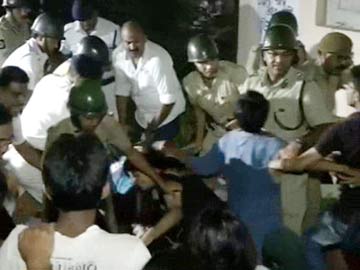
Quite recently, I visit their home, and see the college newbie looking exhausted, but elated all the same. What’s up? I ask. He has been walking miles, he says, and is just back from a student rally. We hear that thousands of students of different colleges cut classes to march from their institutions to another to express solidarity with the student body there. This rally is against police action against their protest against official inaction against student demands against the molestation of a girl-student earlier. It all seems a little complicated to me, but essentially, the student body is riled up.


I ask the question that probably keeps his parents awake at night, have you become a political activist? No, no, he says, we joined in only because it (the protest rally) was apolitical. For children born into the traditional family system in India, breaking bounds in such a way is an awesome feeling. What is important is the realization that in a democracy protest is a right, and they begin to understand the value of the adult franchise they gain at age eighteen. 

In the college world, political awareness is imbibed from the environment. In our time, decades ago, the campus was the hotbed of political activities. Political parties would run their recruitment drives through the student unions dependent on their patronage. Thousands of young people fell victims to their machinations, during the Naxalbari movement in the late ‘60s and early ‘70s. Some political people had wanted to ‘lead’ the rally, Rohan informs us, but were asked to leave. These students want no such overtones, or to have their opinions hijacked by party organizers.  

We tune into the news channel on television and find coverage of rally. We see the students marching along, and Rohan is a little disappointed that he is indistinguishable in the crowd. The elders around him though, are secretly relieved that he is not identifiable; nobody wants to be the unwitting recipient of political ire. 

Many of the young marchers clearly perceive the rally as some sort of college excursion or picnic. The musically inclined have taken along their guitars. They gather en masse to sing songs and join into street plays. It was peaceful, entirely peaceful, the young man insists, and it quite seems that way.   

Then the state minister comes on view, and he is like an aggrieved, martyred parent bemoaning bad behaviour of unruly children. He says that he was saddened by the videos shown to him of the incidents - aggressive students on a rampage, destroying property, beating up unarmed police personnel, abusing elders and so on. Lies, all lies, says our young man excitedly, nothing like that happened. I tell him to calm down and that ‘democracy’ means the other side too must be heard.  

It gets too much for him. We were there; we saw it all, he insists, everything was peaceful. I remind him that the incidents in question happened before their rally. Yes, yes, he says, but we saw the unedited videos. The police put 35 students in hospital, how come that is not being mentioned or shown on tv? The students involved in the fracas had recorded the police actions, and displayed them at the rally. Well, I counter, these could have been edited as well to show the authorities in a bad light, no? 
 

Or it just might be that outside influences did come in, in the guise of the students, to make mischief. Do you know, says Rohan, some ruling party goons locked students in at a college, so they could not participate in the rally! In volatile situations, anything is possible, and the young people are yet too naive to understand their implications. Small wonder then that parents that have suffered in the past are at pains to ensure that their children focus on studies and stay away from anything that might be deemed political. 

Memories of past times resurface in the elders, and they are fearful for the children. Remember those times, one tells me, how thousands were made to just disappear? Indeed, student unrest had been quelled with an iron hand in the past. We had heard little about that on news waves then officially censored. We had felt their effects however, with academic sessions completely disrupted in the ‘70s, and students unable to graduate because examinations were cancelled.

That government was voted out, and the Left Front came to power as the people’s party, and ruled for over three decades. Ironically, the present state administration in Bengal won the elections against all odds, sweeping them aside. The incumbent chief minister had been much admired for her grit and tenacity in standing up to their political stranglehold. It reflected in her party’s success in the elections, which had been once deemed unthinkable.

However, winning elections is one thing and governance is quite another. Despite election promises and good intentions, political mistakes seem to pile up. Anybody that doesn’t agree with them is now branded ‘maoist’ Rohan tells me, so we started to shout that we were Maoists! The point is the present administrative incumbent is fast losing the support of youth. In India, they are the new voting public, and now a sizeable demographic group. 


Most recently, the social activism against corruption carried by students in Delhi contributed to bringing down the entrenched state government. I suppose the political elders had forgotten that the young people are far more adept with technology and social networks. State machineries cannot even hope to control their communications through the informal grapevine. Political heavyweights need to learn from the past to respect the future.

Tuesday, October 7, 2014

Get up, stand up


I’m not a victim, I say. And realize to my surprise, that indeed, it is a thing of the past for me. The majority of the female gender in India is, or has been victim at some point in their lives. The abuse they suffer can be in many forms, economic, verbal, physical, sexual, and emotional. It is not only the illiterate that are affected; education and employment doesn’t always protect the others. Culturally, they rarely get help; rather their integrity is questioned. The trauma of an abusive experience hounds them, and perhaps gets carried into their social interactions.


Several decades ago, a Western woman journalist, curious about life as a non-white in London, decided to change her appearance and go undercover as an Asian. With wig, contact lenses, appropriate makeup and attire, she transformed from one race to another. The few weeks of subtle social discrimination experienced were a revelation, and eventually, she too felt hunted. While commuting on a train in the disguise, she heard two other white women patronizing her. They obviously assumed that being Asian, she wouldn’t have the language. It was not her appearance that irritated, they said, but her attitude.

The downtrodden expect abuse. That they are beaten into the dust and cannot hope to get up again, is projected in look and body language. Perhaps their unarticulated fears attract further aggression. Verbal or physical abuse is common sight on the city streets. Hardly anybody protests.  Many may even condone it, and outside interventions often make things harder for the victim. Like kicking pets in petulance, men in India tend to take their frustrations on those that can’t or don’t fight back. But mostly, society is immune to the abuse of women.

On the road, the family group walking by, seemed normal enough, man, woman and small girl child. But as they passed, I heard the man say conversationally that he was fed up with ingratitude, and if the little girl made one more demand for food, he would smash her baby face to pulp. I looked up sharply, but nothing seemed out of the ordinary. I wondered if I was imagining things. The child and the mother said nothing; they simply walked on as if all was well. But then I noticed, they walked a little too straight looking neither right nor left, as if careful to not upset the man.

Another day, three little girls were on their way to school, along with a young man, most probably a member of their extended family, or a neighbour. The littlest girl had been unable to cross the road with the others, and remained stranded on the far curb. The fellow didn’t even notice that she had been left behind. Several bystanders at the crossing called out to attract his attention: Hey, hey, take this one with you! Then the man marched angrily back to the child and slapped her hard on the head. In shock and pain, she burst into tears. Slap yourself first, I shouted, walking up to point an accusing finger, the fault is yours entirely. He went quiet, embarrassed into behaving by the public scrutiny.


In days gone by, the joint family structure had several generation and extended families living under the same roof. The cloistering of women was extreme. During my mother’s girlhood in the 1930s and 1940s, young women couldn’t stand at the windows in case they caught the eye of some man before marriage, and they were forbidden from meeting any man alone. It seems to me that there was a positive to it too, in terms of their safety from predators.

Post-independence, nuclear family units became the norm mostly for economic reasons. It was instrumental in opening doors to women’s education and employment. However, it did not remove the feudal attitude to gender; it just made the access to women easier. In the new family structure, family ties remained the same. Mothers continued to view men as they were brought up to, as the superior beings to look up to. They trusted the male ‘family members’ in its extended branches implicitly.

It never occurred to them that by putting their little girls in their control they were putting them in harm’s way. The ignorance of the mothers allowed the uncomprehending children as young as four to be abused and molested at will. I know this, because it happened to me too. The home itself can be an unsafe environment for many women and girls. They are socialized early into the trauma of gender. 

Women may be unsafe in the marital home as well. In a traditional marriage, the spouses are almost strangers. It is customary to uproot the woman from her parents’ home, and throw her to the wolves, as it were. I once witnessed such a couple’s public interaction. The man strutted around like the proverbial rooster, and the woman’s insecurity was palpable. She wasn’t pretty, which was probably was the source of her insecurity. She followed the man, crying and pleading.

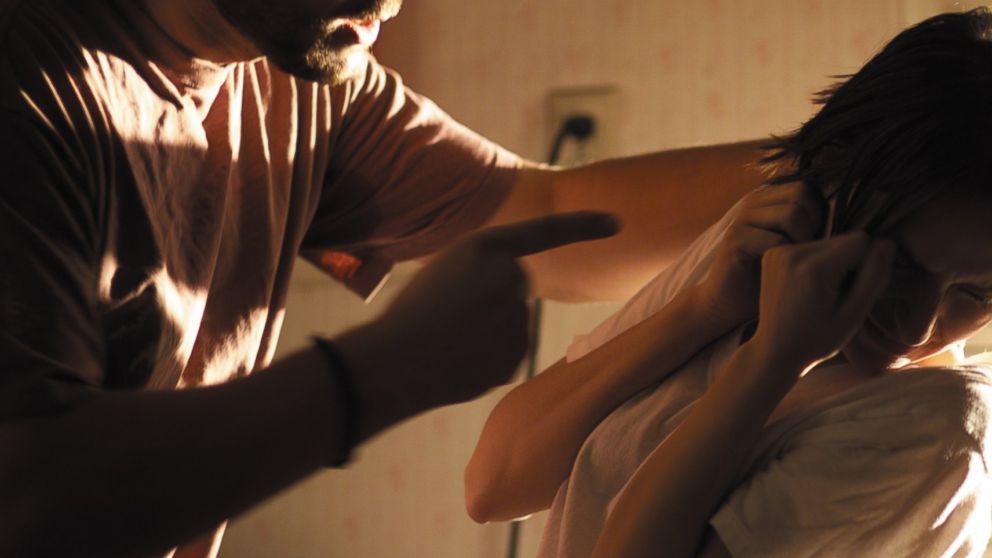
The more she did that, the more his ego inflated. Every now and then he stopped, and turned on her aggressively. Wagging his finger in her face, he hissed threats and insults. I heard him say she was so ugly she sickened him, that she was a burden around his neck, and that he couldn’t wait to be rid of her. She should have rapped him across the mug and stalked off. But instead, she just put her hands up piteously, as if to ward off his words.


It made my blood boil, and I stopped nearby and glared at the man. Other passersby definitely heard him too, but because the woman had a vermillion streak in her hair (signifying the marital state), nobody intervened. The social environment holds out no support whatsoever for the victims of marital abuse. It is traditional, instead, to consider a wife the husband’s property; with which argument, marital abusers count on escaping censure. 

I know, because I was in such a relationship, where this argument was repeatedly used. I was educated, but perhaps I too projected the characteristically abysmal self-esteem of victims. It didn’t matter that I changed attitude like a chameleon changes colour, to keep the peace and protect children and pets. Punishment for some slight, real or imagined, was imminent, and would be vicious. At a time when the marital and custody laws favoured the male, it was a hostage situation.

Not much has changed since then, however. The right to ‘control’ the women in their lives – mothers, sisters, wives, daughters, and others, continues to receive tacit social support. It matters not that the women may have outstripped the men academically.  In the social equation, they are expected to walk several steps behind and be the subservient gender even in this day and age.

After several years, I recently met my own brother. He is a non-resident Indian, and has been a citizen of the lands of plenty for several decades. We are closest in age, and in our younger days, were constantly at loggerheads. The special treatment he always seemed to get, especially from my mother, irked me no end. We have mellowed in later years, but still, I admit, that although we do not come to blows any more, we occasionally lapse into childish behaviours, reminiscent of our younger days.


The matter of our argument, the other day, was actually trivial. But I realized that his Indianness is entrenched in a time gone by. Despite living in a developed society for several decades, the conditioned cultural responses reactivate on the shores of the mother country.  In an instant, the general mistrust of gender of those past times came alive in him. He was like an alpha male that had to dominate the group and the women!  In his mind, possibly, he was being the elder, the male head of family, and quite unaware that that behaviour pattern could now be termed abusive. 

The revisit of the past brought me enlightenment. Although we were brought up in the same environment in the past, I have moved on, have emancipated from victim-hood. I no longer placate or change attitude. I am assertive, and relate on equal terms. Masculine intimidations are of no consequence to me today. They seem comically archaic, and I am free of their toxicity.  I’m not a victim, I say. Not anymore. I have been in the pits, and now I stand up.