Showing posts with label colonial. Show all posts

Saturday, November 22, 2014

The left bank


My grandfather had a sister, a saga behen (own sister) as we say in India. Nothing unusual in that except that there has been no trace of her existence within the family in decades. That she had even existed in what is now called Bangladesh was just a chance discovery.

You’re like the Koreas, a friend quipped, alluding to the fact that North/South Korean divide has pulled entire families asunder. Still, in the Indian joint family structure where collectivism is key, it is bemusing that the only female sibling of three brothers remained unknown to their families for the longest time. 

In the Indian sub-continent, historically, Bengal has been the hotbed of socio-cultural activism. During the colonial era, Bengali Babus were the anglophiles that, at first, the British colonizers relied heavily on to consolidate their position in the region. But then, with Western ‘education’ and their subsequent political awakening, the Bengalis transformed to thorns in their flesh. 


To contain Bengal, the then representative of the Crown, Lord Conwalis I think it was, mooted its first partitioning circa 1911. The banks of the River Ganges that flows through the state became the East and West Bengals. Locally they were called apaar Bangla (Bengal on this bank of the river) and opaar Bangla (Bengal on that bank of the river). In the vivisection of India in 1947, East Bengal was made a province of the newly carved out nation, was renamed East Pakistan. Then, in 1971, with help from across the river to stop the genocide, it became an independent nation, Bangladesh. But the local reference continues to be apaar Bangla and opaar Bangla

My family originates from that side, although they retained no connections with it since they left its soil around the time of the partition of the country. But the parents never forgot their birthplaces, and in their childhood memories, opaar Bangla was like no other on earth. For years we have only heard stories of abundance in the fertile land they grew up in and the freedom to be they had as children in their respective joint families: the tasty hilsa fish, the numerous ponds they swam in and orchards overladen with fruit, the prajas (subjects) that cultivated their fields, the space they enjoyed, the football, the intellectual pursuits.

They spoke less about the horrors inflicted on its people, though the effects of that experience runs deep in remembrances of the oppressiveness of the colonial rule, the famine the foreign powers engineered, the freedom struggle that the young men joined into and were killed for, the sudden rise of communalism that put friends into opposing camps, the riots following the forcible partitioning of the nation that caused the river to run red… My father never got over the trauma or ever wanted to go back. Now, seventy years after she left her village as a bewildered teen, my mother has finally desired to revisit the paradise of stunning natural beauty.


Thinking of it as a pilgrimage, my objective became to find somebody in Bangladesh who might recall those times and the location of the villages my parents came from. At first, it appeared that possibly nobody in the know had survived time. Well, I thought, we have the village names, and perhaps they haven’t been changed too many times by successive governments! But, truth is, I wasn’t too hopeful myself.

Then, the very extended family network came through with a name and a contact number.  He was somebody’s relative, on a visit to Kolkata, and still lived in opaar Bangla. It seemed a godsend, and I made contact immediately. When we met face-to-face, the eager questions we asked one another were, and how are you related to so-and-so or to such-and-such family?

We compared notes on our respective family trees. We stared in surprise at our findings. We are blood relatives, the newfound cousin I shall call Umesh declared at last. The sister of my grandfather, apparently lost in the sands of time for two generations, turned out to be his grandmother!

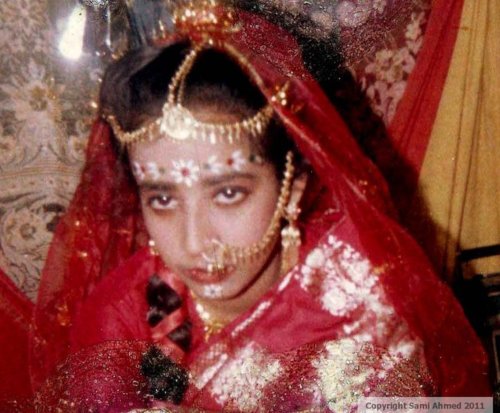
I was eager to hear her story. Her grandson, however, couldn’t quite recall her name. Something-sundari was the best he could come up with. In the traditional naming of the girl-child in those times, appends like Sundari, meaning beautiful, or Bala meaning ornament, was regular. I suppose they were meant to enhance their chances in the marriage market, where child-marriage was prevalent then.


Anyway, the story of this Sundari is the story of three families of my father’s village inter-linked by marriage. Let’s call them X, Y and Z. My paternal grandfather belonged to family Z. At the turn of the twentieth century, the patriarch of family X was a renowned practitioner of ayurvedic medicine. A young man of family Y had become his apprentice and proved himself ably to his mentor. He was welcomed into the fold of practitioners of traditional medicine and thereafter married a young woman of the family, obviously with the patriarch’s blessing. His wife produced two children, but she did not survive too long after. He couldn’t be expected to rear the children on his own, and hence another marriage was on the cards.

Family Z had three boys and one girl of the same generation. The youngest of the three sons, my grandfather, had also married a daughter of family X. Meanwhile, the young man of family Y set his sights this time on the girl of family Z. This was Sundari! It seems they married, although family Z kept no record of it.

Why has there been no mention of her within her family of origin? Was it sexism - did her three brothers consider her gender a burden to be rid of and forgotten at the earliest? Did she marry for love? Was the match against family wishes, and so she was spoken of no more? Or did the fact of Partition lead to the unraveling of ties? 


Sundari stayed back with her husband and children when two of her brothers left for the other bank of the river with the rest of the family members. Her eldest brother also remained to dispose of the family property, but then was found dead under suspicious circumstances. The second brother also died soon after, and it was left to the youngest brother, my grandfather, to anchor the relocation of this large extended family. It all seems pretty curious, and so many questions arise, especially about the constraints imposed on little girls in that age!

I hear that she bore three sons and two daughters, survived childbirth and lived to a ripe old age.  So there was nothing wrong with her physiologically. Was she indeed as beautiful as her name suggests or was loyalty her strength? Was she happy with her lot as wife, mother and grandmother, or was it an imprisonment of sorts? Did she accept her family’s indifference to her plight stoically or was she heartbroken at being so completely forgotten? She died some time ago, and hence unfortunately, there is no way of knowing her side of the story, except as her descendants retell. 

The separation of family members is probably the natural fallout of the partitioning of any nation, but still why forget a person altogether, an only daughter of the family at that? There is no one to provide the answers, and today, I can only speculate whether Sundari’s life has been the stuff of fairytales or as tragic as those times.


Thursday, October 2, 2014

O Calcutta!


It seems to me to be disrespectful to live in a place and know little about it. The structured and the organic conjoin in Kolkata. Modernity has wrought changes, but the influences of earlier ages are never eliminated. I decide to explore why it is as it is. 

Epistemologists say the name Kolkata is likely to be a tribute to deity, the warrior goddess Kali, or Mother Nature’s bounty. However, most newcomers to the city, and especially non-resident Indians, don’t see any godly connection, and are appalled by the congestion, the pollution and the noise. It takes time to recognize the indomitable spirit of the people and to experience their selfless giving nature, but few people are that patient. To others, although difficult to stomach initially, Kolkata, nicknamed the city of joy after a French author’s book, tends to grow on you.

Travelogues of merchants and scholars from Persia and China date the region to centuries BCE. It is mentioned in the Mahabharat, one of the country’s ancient mythological epics. It was there during the Maurya and Gupta periods and in Mughal Emperor Akbar’s rent rolls in the sixteenth century. In short, this region had inhabitants for well over two millennia before Europeans appeared on the horizon. There was also an established trading post. Burra Bazar, close to the river, was probably this business hub. The old, old trading houses are still standing, although now in urgent need of repair and restoration.


The British, though, claim to have discovered the area through Job Charnock, a representative of the East India Company that came to these shores towards the end of the seventeenth century. That strikes me as absurd; just as it must have the Native American tribes when Christopher Columbus was credited the discovery of America. Like, hey, we were here first!  

True, not much concrete evidence remains of the ancient Indian architecture. This is most likely because the people of the age didn’t use brick and mortar for their dwellings. Their homes were eco-friendly, made of mud, thatch, tiles, and regularly recycled. Temples and tombs, however, were constructed with more lasting materials and they are testimony to the local talent. 


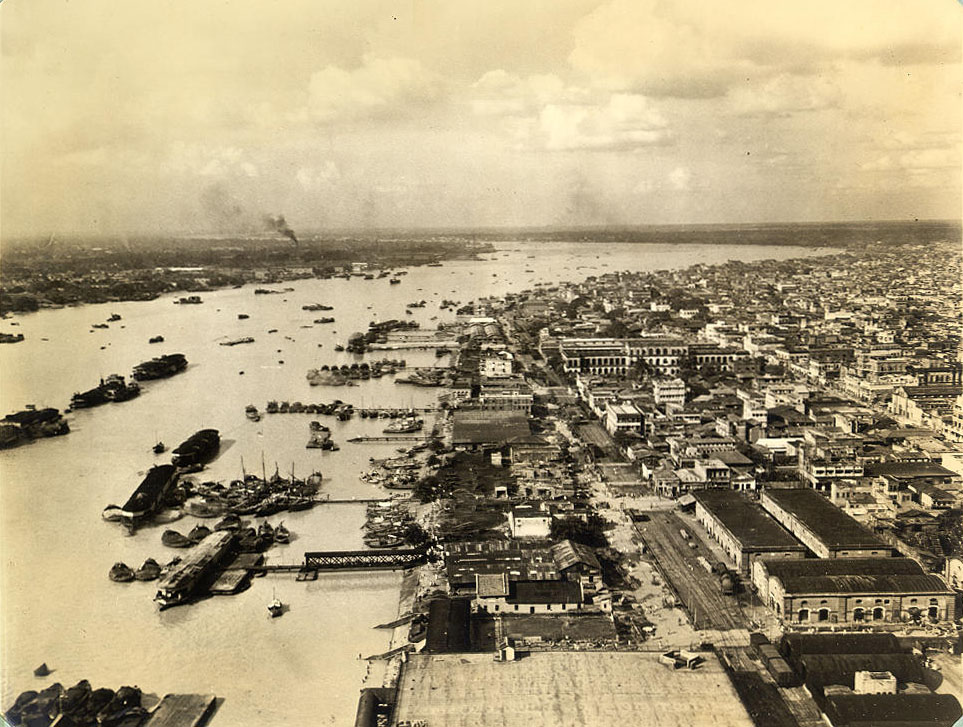
The British captured three villages, Sutanuti, Gobindapur and Kalikata, to create their headquarters for trading. They put their cultural stamp on their holdings razing everything else to the ground. The eastern bank of the Hoogly tributary of River Ganges bears impressive British architecture since. The roads built were named for their convenience - Dalhousie Square, Esplanade, Strand Road, Outram Ghat, Princep Ghat, Hastings, Curzon Park and so on. Being unable to pronounce the tongue-twisting Indian names, I suppose, they called the city Calcutta.

In the new millennium, this city has been renamed Kolkata. Street names change more frequently here. Whosoever comes to power in state governance, exercises the right to rename, perhaps following the British. I look up a few on a map of the city and then try to find them on the road. It turns out not such an easy task, because the same place might be referred to with different names! It can become confusing when people forget Chowringhee Road is now Jawahar Lal Nehru Road, or by habit, remember Harrington Street instead of Ho Chi Minh Sarani.


New constructions also appear atop the old, changing the faces of things quite completely. A Bank Street, for instance, is shown on a map to run alongside the waterfront on the Kolkata side for miles. But the location of this road is still a mystery to me. On every try, I am stumped at the Howrah Bridge, because the flow of traffic goes straight onto and over the bridge. I’m missing it somehow, or perhaps the newer flyovers have been built over and across it, to make ‘Bank Street’ just another discarded historical name.

Amongst the first British projects in India was the garrison to station the troops. Fort William, founded in 1702, is still there, as are the various living quarters built within, for humans, horses and armoury. Post-independence it has been taken over to serve as cantonment for the Indian Army. Although there have been later additions of housing and schools, the heritage of older structures, including the cannons, still look in top condition. The military story from inception to today is meticulously recorded in a little museum inside the Fort. 


Fort William was a strategic placement for the British. On the bank of the river, and shaped as a polygon of six or eight sides, and gateways on each side, enabled rapid deployment of their enforcers to one direction or another. The establishment of this regional military headquarters became a bone of contention between the foreign settlers, and the Muslim monarch of Bengal. Nawab Siraj-ud-daulah’s foresight of British expansionist intentions, led him to attack the Fort and succeed in driving the British out.  

But consolidation eluded him. Within a year, his own uncle betrayed him to British cunning. The bloody battle of Plassey was fought in 1757 and the Nawab was vanquished and killed. That put an end, for a while at least, to local aspirations. The Crown established Calcutta as the capital of British India. They wanted it to be known as the City of Palaces, and accordingly, the buildings constructed were massive, ostentatious displays of British architecture, high-ceiled spacious rooms, wide main roads, handsome parkways and boulevards, and deep, concealed drainage. The capital of British India flaunted imperial superiority to this part of the world. 


I’ve often wondered why only a part of Calcutta is so beautifully laid out, while much more was steeped in poverty and squalor. I rationalized that the Calcutta of yore must have been a pretty small place. The locations of their architecture probably demarcated the limits of the city built by the British. The population explosion thereafter must be responsible for sections to become dreadfully congested, with narrow streets, and run down structures. Pity, I thought, that the Indians had not learned from them to value space

I realize now that my grasp of the history is pretty weak. Calcutta had actually been bigger than what I imagined. The imperialists were not in the region to integrate cultures. They were white supremacists, here as masters.  Calcutta was developed in two distinct parts, and their names are self-explanatory - White Town and Black Town. The land, the funds utilized in the opulent construction projects of the former, as well as the human labour pressed into service were of course, taken from their new subjects in India, probably as reparation costs. 


They indulged racial discrimination to the hilt, relegating the natives to Black Town, north and east of the city. Dispossessed of their own lands, the Indian people were pushed further inland. The waterways and access to the river came under the aegis of the British Raj that did not hesitate to collect taxes. Deprived of their traditional livelihoods of cultivation and fishing, they huddled together in shantytowns. Poverty and squalor become their lot, and eventually the characteristic of all Black Towns held in the iron grip of the colonizers, backed by imperial military might.

Meanwhile, education was introduced in accordance with British educational standards. It raised a new class of Bengalis, the anglophiles, the educated, rich, upper caste Hindus. They were inducted into the lower levels of administration and the Baboo culture became the backbone of the bureaucracy. The Baboos profited from British presence. Their large town houses situated just outside the White Town zone probably as a buffer, shielding the masters from the serfs. Manipulated by the colonizers, many Baboos were against their own people.

However, education became a double-edged sword for the colonizers. Many Indians quickly became discerning, politically savvy intellectuals. The seeds of nationalism against British occupancy began to take root. Calcutta became the hub of the freedom movement launched within the first decade of the twentieth century. The sepoy mutiny (the upsurge of Indian soldiers), took place near the capital.  It was said that what Bengal thinks today, India thinks tomorrow

When the partition of Bengal was mooted in 1905, political activism gained momentum with the boycott and public burning of British goods on the streets. It forced the British to shift their capital from Calcutta to Delhi in 1911. Perhaps in retaliation, they vivisected Bengal and handed the East to Pakistan in 1947. Although the former East Bengal is now a country, Bangladesh, that physical, emotional and economic setback inflicted on the region, it is yet to recover from. 


But the Indian psyche is not built to hold onto grudges for too long. Through centuries of being invaded, conquered, annexed and colonized by different culture, we are able to take the worst misfortunes in strides. The sense of nationhood remains through oppression and democracy. We become comfortable with all outside influences. They are assimilated into the culture and Indianized.

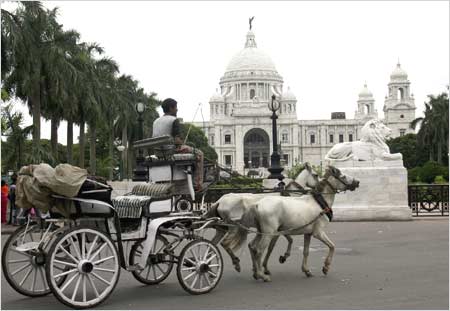
The English language is now one of the twenty-two official languages in the country. The colonial architecture has been preserved in all its glory even so many decades after Independence. Buggy rides reminiscent of the British Raj continue around the Victoria Memorial even today. We own it all without prejudice. As part of Kolkata’s historical cultural inheritance, they remain, as they ever were - Black Town, White Town, and what-have-you.

Monday, August 13, 2012

The bureaucratic inheritance

It often seems to me that, whether or not they are related by blood, people living together begin to resemble one another over time. Perhaps in eating the same foods and breathing the same air, sameness pervades. We might assume that people unconnected by blood or proximity, differ widely. And yet, in similar organizational structures, members begin to look alike, think alike and behave alike although separated geographically. Those that go before must leave behind something lasting in the structure to anchor time, because the sameness prevails over generations.

The bureaucratic structure, for instance, is our colonial legacy. In organizational shape, it is pyramidal, a hierarchy of levels. The flow of authority and information is top down, and bottom up, obedience is norm. The bureaucratic structure is meant to be impersonal, and the process theoretically, is to be rational, logical and impartial in governance. It was introduced into India by British colonizers. But the very nature of colonization superimposes the concept of the alpha male onto the organizational pyramid. In tune with the ascent of man on the evolutionary chart, the higher echelons of the hierarchical structure are considered superior to people on the rungs below.


The colonial bureaucracies overlaid superiority of race onto the caste hierarchy already prevalent in the region. The Indians realized that despite their knowledge and experience, their organizational aspirations were limited because even junior officers of the British civil service would lord it over the local populace.

The bureaucracies enabled imperialism keep a tight rein on their empire spreading overseas. Educated Indians were inducted to clerk for the colonizers, and to liaison between cultures in the sub-continent. They were called the ‘Baboos’ that looked and dressed Indian, but protected the Crown, furthering the imperialistic goals. Rather like the ‘trusties’ of the prison system, wherein certain prisoners elevated fractionally above others, serve to keep them in line. The Baboo culture was likewise despised by either side.

The colonizers used the Baboos to do their dirty work but hardly respected their racial differences, while the rest of the country hated them as stooges of the foreign establishments. The Baboos responded to the negativity by creating their own fiefdoms within the structure. They became the backbone of the system, indispensable to its functioning. On the one hand, they could interpret and translate communications as they wish, and on the other, withhold information and benefits to the public at large.

Indians are good with cultural traditions; we are loath to disturb the continuity with the past. Customs, practices, norms and habits handed down generation to generation are perceived sacrosanct. Despite the complete change in the social environment, bureaucracies in India meticulously preserve their 200-year old colonial traditions. They thus socialize into disrespect for subordinates, while the ordinary public is the common enemy to protect against.

Consequent to the colonial influence, the character of the pyramidal structure transforms to unfriendly, intimidating and prohibitive. Up and down the bureaucratic hierarchy, countenances are as grim and unbending today as they have been during the British Raj. Especially in the public interface, mistrust and impatience radiate. Communications base on anger management - that is, the lack of self-control characterize the hierarchy. Imagine a blend of parent-child behaviours, rigid and willful at the same time. Obviously, manners get lost in the upward mobility, and often also the work ethics.

Fact is technology thrives, but the traditional mindsets remain entrenched. The change with democracy and independence of the nation, is simply that nobody wants to be the low man on the totem pole anymore. As noted Indian entrepreneur Narayan Murti observes:

In India, we tend to look down on people who do jobs that require physical work or involve disciplined execution and accountability.

As a result, the first impression of any bureaucratic setup in India is poor. The ambience carries a general air of neglect. Governmental or government-related organizations in India may have expensive machinery or other goods strewn carelessly along the corridors. They may have the financial resources to fund other organizations. And yet, black cobwebs sway from the ceilings in the buildings, dust settles on every surface, and the stench of bathrooms hangs thick. Heaps of files, spill their contents onto desks, shelves and floor. Spatters of betel nut juice stain wall corners in the stairwell, while potted plants serve as ashtrays.

The dirty, unkempt look is likely also a façade to put off the public. The disorganization may be intentional, because almost hidden from view behind the mountains of paper files, the Baboos of today continue to protect their territory. Emotions otherwise denied, flow down and out in angry outbursts as individuals seek to assert themselves in the new India by demeaning others. The beat postmen express their angst by delaying or losing mail. The staffs in government offices pretend to be too busy to entertain queries or move files along. Railways employees mess with reservations, even on complimentary passes awarded to the elderly freedom fighters of India’s independence.

The lateral relationships within the pyramid are tight, however. These informal connections are assiduously cultivated to form the social buffer zones, safe to download in. Large numbers of employees unionize together. By themselves the unions may be weak, but they forge outside political affiliations, whose patronage strongly back their workplace confrontations. The attraction to employment in the bureaucracy is job permanence. Employees are confident they cannot be fired because of swift retaliatory union strikes; hence irrespective of actual work done, their wages shall be paid at fixed intervals. Further, the lack of conflict on the lateral plane ensures that the organizational boat remains on an even keel, with little competition between peers.

The Diva writes elsewhere:

For many organizations, conflict is bad - by definition - and they go out of their way to prevent it. The word ‘challenge’ itself becomes sensitive because it may question premises and upset comfort zones. However, the elimination of all discord has consequences. The organization may rarely or even never question its assumptions. It may turn off and lose its creative sparks … The ultimate danger is the rise of the mediocre, rewarded for lacking the ‘superstar quality’ to rock the boat.

The point is this carried forward in time existence tends to atrophy faculties of effective decision-making. The bureaucratic runaround is thus born as indecision is passed around, desk to desk. Members of the organization become champions at dithering. With sudden, unexpected changes in the global scenario, they are invariably caught on the wrong foot. Thus, the most recent downslide in the Indian markets has been attributed to faulty decisions and planning. India's much touted economic ascendancy is now falling behind.  

Bureaucratic structures in India need to wake up to the reality of their increasing incompetence with competition. Their people need to challenge outdated assumptions of leadership styles, philosophies and value systems that have become the unquestioned organizational traditions over the last couple of centuries. Unless the dependence on these outmoded systems and processes is changed, the colonial inheritance will ensure that bureaucracies in India remain locked in the mindsets of a different age.

Monday, July 9, 2012

Image of a homeland

Within three decades of India’s independence, the brain drain raises a furore, as demographic migration to the West becomes a popular trend amongst the educated. In enlightened self-interest, the future generations of India’s freedom fighters willingly choose to break tradition and swear new allegiances. They actively ignore perceptions in the mother country of being mercenary, traitors to the nationalistic ideals of their forefathers. The assumption may be that people choosing to emigrate base their decisions on felt affinity with their destination regions. However, the emotional reactivity that tends to surface later suggests that the choice may have been economic opportunism.


A century or two earlier, while India was a colony, it was routine to forcibly shunt workers to other lands as cheap manual labour. The colonizers then decide to harness the Indian intellect as well, to increase profitability. The “Baboo culture” is thus born - that is, educated Indians, the Baboos, inducted to maintain the system, become the backbone of bureaucratic functioning. Education in India is structured along Western lines, replacing the indigenous universities of its more ancient civilization. Missionary schools spring up all around the country dispensing knowledge and conversions to Christianity. University colleges for higher studies open doors to Western sciences in the presidencies of the north, south, east and west. Obviously, the medium of study is also mainly English.

About the first quarter of the twentieth century, things begin to change politically. Satyagrahis (freedom fighters) burn symbols of Western affluence, clothes, etc., on the streets as demands to end colonial rule gain momentum. Eventually, independence is achieved. But the price of freedom, people realize, is empty coffers. Almost overnight, the erstwhile rich colony is stripped of its wealth. The Partition that carves Pakistan out of undivided India displaces thousands on the grounds of religion. Hindu families in Pakistan and Muslims in the new India are evicted from their respective homelands and pushed across the new borders.  The thousands upon thousands that are forcibly unsettled, that lose their homes, their lands, their families and their very identity in the political machinations, feel that they go from frying pan into fire. Ironically, they preferred to forge bonds with their erstwhile masters, and rage at one another. The traumatic wounds of this separation continue to bleed to this day between neighbours in the sub-continent.

At independence, there are about six hundred kingdoms and princely states in India. It is a momentuous task to bring them under the banner of a secular, democratic republic. Obviously, no consensus can be reached on elevating any one regional tongue over others as the national language, and there are twenty-two of them officially, along with thousands of dialects. English, the once foreign tongue, is the common medium of communication around the country, indianizing according to the grammar and speech patterns of each state. The bureaucratic system also survives social and political turmoil. Even today, the country’s civil administration is sustained by the “baboodom” of yore. It functions as before with paper files and manual entries, is loath to adapt to the modernity of electronic communications, and its incumbents often occupy the same spaces and look very much like their predecessors of that bygone era.


The traditional joint family structure that society is built upon disintegrates, post independence. The extended branches of family are now often separated by the new borders. Each splintered segment is compelled to find their own financial stability. The outlook towards women also has to change. For economic reasons, their education links to employment for the first time. Learning from European and Anglo-Indian teachers becomes a matter of course for boys and girls born in the new democracy. In the early days, knowledge dissembled is swallowed unquestioningly. What comes out of the Book is gospel truth – including for instance, nursery tales picturizing the white mother as thinner, prettier and smarter than any other, black, red or yellow!

No surprise then that the children learn to identify more with blonde hair, blue eyes, and the English language than they can with their own shattered roots. The image of the “homeland” also blurs. In the 1970s and ’80s, skilled young adults being westward bound are perhaps the logical conclusion to the childhood aspirations.

Moreover, the leaders of the new India struggle to run the fledgling democracy. The country joins the ranks of penurious developing nations. The people that had sought to become their own masters find they have to seek aid just to get by. Clearly, it will take decades for India to be at par with the leading nations. Getting out to richer pastures makes most economic sense. Besides, the architects of the new democracy failed to include compulsory service to the nation in the constitutional duties for its citizens and hence, the governments watch helplessly as new crops of graduates fly away to bring fame and fortune to their overseas employers. The brain drain leaves a vacuous workforce in the nation that, thinking future, nurtures the cream of its youth through years of subsidized education. The countries that grew fat on the gullibility of Asia and Africa are able to call the shots in the reconstruction of the nations they previously ravaged. They are now the lands of plenty beckoning India’s new intelligentsia.


Traditional values in India base on strong family relationships across generations. The family buffers its members against adversity, providing the social security and support the state cannot. Children live with their parents and care for them in old age. These are the just rewards for the many sacrifices they make to raise them to adulthood. But in the new reality, the elderly left behind in India find themselves unable to cope with living alone or in the care of hired help. Bereft of the traditional extended family environment they have grown to expect, their emotional suffering is acute.

The immigrant communities soon find out that their relinquished citizenship does not guarantee integration into the new society in the West. People brought up on collectivistic values gradually realize that multiculturalism in the West is a patchwork of demographic fractions maintaining minimal social interrelationships outside of work. While socializing in distinctly dissimilar cultures is difficult in itself, the immigrants from the Asian sub-continent and Africa also carry the colonized stigma. Consequently, each social group becomes inward-looking, fearing the decimation of their unique cultural identity. Realizing perhaps a little late that money is not everything, their focus shifts to forging strong intra-group bonds. They form a Little India, a Chinatown and so on, to preserve culture through the associations, norms, customs and rituals experienced in childhood. These become the heritage to keep alive in their adopted homelands thousands of miles away from their origins.


First-generation immigrants probably carry a suppressed sense of guilt that they abandon their familial duties for riches. Indeed, they are more strident in their attempts to recreate the way things were back home. They demand obedience and respect from their offspring in the mould of the traditional culture. They dream of establishing continuity with the past they renounced a few decades ago, including the segregation of gender. But often, they are unaware that the homeland itself has evolved beyond that point, while they cling to some obsolete image of it. Children reared in the West are caught between cultures. On the one hand, they imbibe the liberalness of the here-and-now environment they live in. On the other, they are bombarded with parental projections of there-and-then traditions that scarcely match their present experience of life. In a new cycle of change, this dichotomous image of a homeland may seem alien and meaningless to the rebellious young. The older generations thereby perceive their liberal leanings as mercenary, traitors to the cultural ideals of their forefathers...