Showing posts with label adaptability. Show all posts

Wednesday, June 22, 2016

My internal seahorse


My idea of direction is like zero! Most embarrassingly, I have got lost getting home! My mother is similar, maybe even worse, so for years I blamed it on the genetic inheritance from her side.  
 
 
Now, research may be saying that the “problem” is in the development of the hippocampus. This organ, buried inside the brain, is responsible for memory, learning and emotion.

The hippocampus also houses our internal GPS. Inputs from the intelligence areas in the front side of the brain, helps to create the destination point, the “future goal”. Other areas then chime in to enable us to visualize it and to work out our route from point A to point B.

I realize that I fail in chartering course. I probably adapt poorly to space. I have the end points, but memory of the routes in between soon evaporate. I end up going around in circles until suddenly something clicks!

Because of its shape, the hippocampus, meaning “seahorse”, is named after a tiny oceanic animal. The male seahorse is the homemaker, a truly empathetic parent. He has a little pouch, like a kangaroo, where baby seahorses take refuge until they grow up.  


Well, I was always daddy’s girl. Through my formative years, my father would assume responsibility of getting me from point A to point B. That must have led to the underdevelopment. My baby GPS never needed to venture beyond daddy’s pouch! So, do I now blame my dysfunction on his nurturing?

Friday, August 22, 2014

Lost in translation


Can you realize how difficult for me if even Indians is not able to understand each other [sic]. His head in a whirl, the guy’s exasperation with life itself is palpable. On his own in a new country, he cannot fathom what is going on! For the first time ever, I suppose, he really is up against India’s formidable diversity! 

Lenny, as I shall call him, is a member of the global workforce, a foreigner in India, and here on assignment.  Blessed with the characteristic zeal and drive of generation next, he is able with technology, and unafraid of diversity. He hasn’t the comfort of a compatriot group at his back, but surely, with his skills and temperament, he can take on anything!

He is the new tenant in the building. But he insists he is not new to India – he has lived in Gurgaon off-and-on for about a year for his last assignment. Now, that is an affluent complex outside Delhi that caters to non-residents Indians accustomed to the lands of plenty. It is a home away from home for expats too, with exclusive highrise buildings, and airtight windows that preserve interiors. If you live in Gurgaon, you live in a bubble. Like at an idyllic oasis in the desert, there’s no need to get down and dirty! I think I should warn him, now that he has transferred to an ordinary metropolitan city, that Gurgaon is very atypical India. Of course, of course, he agrees at once that every place will be different.

  
I ask the most pertinent question, do you have Hindi? No, he smiles. Well then, I think wryly, the culture shock awaits! Lenny may manage fine at a hotel, but running his own household may be a different proposition altogether.  I hope somebody mentioned to him before that English is only one of the 22 official languages spoken here, not to mention some six thousand dialects. These may differ widely in grammar and syntax, and hence, so do the thinking processes their people learn growing up. Even in a “common” spoken language, what is said, and what is understood, may be two very different things. Simple matters may then become complicated.

Lenny has an impressive work ethic and puts mind and heart into whatever he does. Within a day, however, he looks drawn. He tells me he was up all night cleaning the flat he thought was left dirty. It was cleaned before you came, I tell him. This is everyday dust, and it collects all time. Cleaning has to be done once or twice daily. Even locked flats soon cake with dust in this region, as you will see. He stares, and I see the wheels turning in his brain – when will he get to work then? I advise hiring help, but without a translator to back him, how can he?   

The problems pile up - there is no water in the flat. In the heat of the Indian summer, Lenny is wilting. I call the plumber, and stay to translate. I notice the flat has almost no furniture at all. I wonder if he expected to be moving into a furnished home. If so, the letdown of bare walls must be immense! It begins to dawn on Lenny that managing work and home alonein this country is daunting. He comes from a wintry country, so the weather here must really saps out his energy. And by not having the language he is lost, like never before! 


His driver arrives to transport him to work, and is instead drafted into the water project alongside the plumber. He has Hindi and passable English picked up in his line of work, and seems to relish the new role of go-between. Lenny quickly delegates the home issues to his new Man Friday. I’m relieved! It had became clear that Lenny, a fit young man who bounds up and down the stairways hardly losing breath, was quite unaware that other age-groups might struggle to do the same. In politely trying to keep up with his pace, my knees are killing me!

Some pipes and valves are changed and eventually, there is running water in the taps of the flat, everybody is happy! By the evening, however, it is all gone again. The plumber is surprised at the news. He had filled the tank to last a day or two and can’t imagine what they did with all the water. Well, I say, the sahib couldn’t shower properly for a couple of days, so he must be making up for it! 500 litres, the man mutters incredulously! But actually it is a new issue - the tank is unable to retain water, and they would have to map the entire pipeline to locate the problem points. 

That would take quite a while, and Lenny has to be at home for it to happen. Schedules would then need to be coordinated. The driver in his enhanced role, wants to protect his boss from these small matters, and tells me all communications should pass through him instead! I hand over the relevant telephone numbers, and decide that now they can help themselves, I am done. But by next evening, their octogenarian landlady is in a tizzy over another plumber on the scene! She cannot reach the tenant or his driver, so she frantically calls me to intervene. I’m mystified as to how she has suddenly become involved.

She tells me the first plumber was working elsewhere in the morning and was unresponsive to phonecalls. New Man Friday then decided to exercise initiative. He phoned her to point out the persistent problem and the plumber’s failure to respond, and asked for a replacement. Late in the evening, when they will be back from office, would be the best time for the work to be done. Too helpfully, she engaged an alternative person to work on the water system that same evening. Notably, there is no further communication between her and the driver thereafter. This second plumber arrives in time to find the flat locked, and complains. She feels left holding the bag - and the second plumber’s bill! 

Lenny, happy to have delegated, is still at work miles away, and blissfully unaware of these new developments. Immersed in a totally different world, he falls from the skies when I call to ask him what is going on. He has no knowledge whatsoever of a second plumber being engaged. He cannot understand how the issue arose, because his information is that the first plumber has been reached and his time booked for the next day. Bewildered, he points me to his driver for answers.  I accost Man Friday next to explain the mess-up. He distances from it forthwith, denies any such conversation with the landlady, and sticks to the information of the first plumber’s next visit.


I begin to get the classic picture of blocked communications. The first plumber resurfaced at the end of the day. At that time, the work schedule was re-fixed with him. Caught up in his regular duties through the day, the driver clean forgot about the other plumber being engaged by the landlady at his (Man Friday) word. His own initiative taking exercise of the morning had slipped his mind, and since then it has turned too embarrassing! Lenny, in being ‘protected’, was kept out of the loop altogether, as was I until it snowballed. 

I suggest to the old lady she involve no further for her own wellbeing, and send Lenny a cryptic text message: Lost in translation. He responds in utter confusion: Can you realize how difficult for me…

Saturday, July 26, 2014

Loudness is in the genes


The teenager I started to speak with, turned his head to stare at me. You’re too loud, he said, I don’t like loudness. Fair enough, I responded, dropping my voice to a stage whisper, does this work better for you? This was a family counselling session, and it seemed to me that the boy was habituated to pushing buttons. His intent may have been only to embarrass the adults, but his statement gave me food for thought. Perhaps, culturally we are indeed rather loud in this country. ‘Privacy’ hardly exists; even personal conversations tend to be broadcast to all and sundry.
 
 
It must be the result of social learning. But surely it didn’t happen in a day, and has been ingrained in us over generations. It shows up our cultural roots - the agrarian background, the traditional collectivism, and the societal divisions based on birth that has been the practice of our ancestors. Sharing everything within the biraderie (one’s own kind, family or caste) was common within these social groups. Their information pool grew as a result; it nurtured interpersonal ties, and gave the group the strength of unity. Social allegiances were inward, and the wellbeing of the community trumped that of individuals.

These bonds were routinely reinforced through various activities, especially those of religious festivals, whereby the entire community was able to come together. To be loud was to feel at home, included in the crowd. Entire villages grew around this biraderie of strong intra-group ties. People didn’t need to whisper; it was safe to holler across cultivation fields and large ponds. Where everybody was somehow related to everybody else, there were no secrets. 

Mostly for economic reasons, this scenario has changed today. Many village people migrate to the towns in search of work, and their own kind therein is minority, like small fish in big ponds. Still, the loud communicative patterns are carried forward from village to city. They may now own mobile phones, but they still holler in answer to phone-calls, unconsciously attempting to bridge distance between members, as in the past.

Loudness many also be a technique meant to establish some level of interpersonal positional authority. Parents and teachers do it to ensure compliance in children.  Age, in Indian traditions, is hugely respected, even if the difference is only of a few years. The form of address tends to change, in response to social perceptions. For instance, in Hindi, there are three distinct forms of address. Anybody a little older assumes the right to address younger people as ‘tum’ rather than ‘aap’. Amongst peers, the form is generally ‘tu’, which testifies to their mutual familiarity.

Although in cities, many diverse families house in close proximity, the loudness continues - albeit here, it is for a different reason. More people, more establishments and more vehicles lead to rising levels of white noise.  As a matter of course, people go up the scale to compensate for the hustle and bustle of everyday living. The loud to drown out ubiquitous external sounds. And, because we forget to adjust in more confined spaces, raised voices in ordinary conversations become normal, not an obvious sign of conflict.


Thus, loudness must be embedded in our genes. For women in a patriarchal society, however, loudness is new learned behaviour of social assertiveness, a measure to protect their comparatively new self-dependence. Through generations, men have had tacit social sanction to shout at their mothers, wives, sisters and daughters. Women, perceived as second-class citizens, are thus dominated verbally, and sometimes much more. Any man on the street, unwilling to change with the times, and considering himself superior to women, would expect similar subservience from them. Women now need to be loud to ensure that boundaries are kept, and they are not aggressed upon. Being shouted at by a woman in public is extremely shaming for the Indian male! 

Culturally, we are loud, but our communications are faulty, since the collectivistic element of our heritage is almost lost. A new togetherness has not been built with the diverse city elements; rather the traditional concept of the biraderie diminishes. The extended ‘family’ of yore has been left by the wayside. The social universe grows smaller, and we hardly know who lives next door. We routinely become members of various social groups, but our allegiances to them are tenuous. 

The outcomes of public arguments may depend on the vocal strength of each side, as is often clearly proved with our state and union parliament representatives - members rush into the well of the House, shout slogans, and so on, to crank up the decibels. They need to understand that mere loudness is hardly the substance of good, communicative governance! Similarly, our inherited speech patterns need reexamination too, if we want others to actively listen to our words of wisdom.

Sunday, January 19, 2014

Drives on Kolkata roads


For the past so many months, my focus has been the roads of Kolkata, and driving on them myself. The need to improve spatial orientation was the motivation. What better way to know directions than actually discover the routes to different places myself? Bad idea, said family and friends, no sane person drives in this city. Well, then, I reasoned, since my sanity is so often questioned, perhaps I am indeed appropriately equipped to do so! Moreover, they told me frankly and kindly, an old dog can’t learn new tricks. So of course I felt goaded to try my hand at it! Truth is, the learning has been intense.    

 
In Kolkata, value is on size. The hierarchy on the roads is based on this parameter – from the pedestrian to two-, three-, four-wheelers and so on. Within each category of vehicle then, class matters. A luxury SUV, for example, scores over a small economical car. Yes, big assumes ascendancy, and their association with masculinity is strong. The car model I choose is for a minimal carbon footprint, and to better maneuver the narrow lanes and bylanes of the city, with their problems of parking space. However, it automatically relegates me to the low end of the scale, and raises social expectations of my giving way to those hierarchically superior.

It is common knowledge in this region that women have no affinity for things mechanical. Most believe that they cannot drive because of gender, and men have learnt to patronize them when they do. Women that want to get behind the wheel must expect to be put down or intimidated by the majority on the roads. They must take in stride the standard received wisdom yelled out to them: like, get a driver, or go home and cook, sister-in-law!


Random males I have encountered around the city, whether casual bystanders or themselves drivers, have presumed this ‘natural’ gender superiority. Many modern husbands are unsupportive of their wives driving, unable, they say, to bear the tension of them being out on the road. Many women in turn, prefer to remain within the bounds of their gilded cages. Those that can drive rarely venture out at peak traffic hours, or to areas unknown, and never drive heavier vehicles. Perhaps all this is to keep away from any public confrontation with men.

I put it down to family traditions being carried forward. It is customary for families to await the coming of sons rather than daughters. The production of an heir makes it easier on the mother. Else, her childbearing days do not end; the husband feels less of a man, and she is blamed for it. Mothers that suffer extreme low self-esteem, are hard on their daughters, but pamper their sons. From early childhood itself, girls are taught to wait on their brothers or any male visitor that happens along. They pick up after the little emperors that grow up expecting right of way and gender deference from all women. But, due to changing times and the disobedience of modern women, wishes are left unfulfilled and anxiety becomes generic.


Seems to me that the point is performance anxiety, rather than insanity on Kolkata roads. The women fear being judged in public, and Indian men are stricken with the irrational drive to get there first. The mad rush is to be on and off before anybody else. On trains and airplanes, they will block the aisles simply to prevent others from getting ahead of them. Even in a queue, it is usual to cut in before any woman that happens to be there, as she is unlikely to protest. They must impose, though ask them why and they probably have no answer. 

The same prevails while driving. The men driving bigger cars, taxis, trucks or even passenger buses, are in too much of a hurry getting to destinations they know not where to mind the traffic rules. Cutting past as the lights turn red or before they are green is rife. My car has been bumped and scraped several times just for being in the way. They hit and they run. If unable to escape, they invoke the ineptitude of women as the obvious cause of the accident. The police are seldom around and when they are on hand, they seem too preoccupied to notice or take action against them. The victim must find the nearest police station to report the matter, file a case to fight out in court, and deal with the insurance claims thereafter. In terms of time, money and effort, getting redressal is a Herculean task. Hence, it is futile to argue; the perpetrators get away scot-free, which they count on. 

It is true that driving in Kolkata is dicey. Roads are frequently wide enough for only one lane of cars to pass either way. Often cars parked on the sides have to be negotiated around, whilst being hounded by some impatient tailgater. Initially, it is scary to be on the road, because other vehicles pass so close. They are just inches away - sometimes deliberately, to force the less experienced off track, and women out of this assumed male bastion of roads.


However, as a wise veteran driver told me, everybody is afraid of failure, not just women behind the wheel. Socially at the receiving end, women have traditionally tended forge special bonds with their sons in private. This has been their investment for their future - to dominate their sons’ lives from behind the scenes, backseat driving. 

This behaviour pattern needs to change, and they need to self-actualize with their own abilities. In fact, on these roads, women drivers are forced out of their shells of social inhibition. This is the positive outcome, I experience. One gradually discovers method in the madness, and learns patterns of intent.


Women need to realize their adaptability to fluid situations through mastering two-, three- and four-wheelers. They need to get in the driver’s seat, to rely on their strengths of purpose to raise their self-esteem. They need to break the traditional mould and storm the male stronghold as it were, and drive themselves forward rather than be driven backseat. The process would enable them to increase visibility, to step out in numbers to create a stronger, more confident group presence in public.

Friday, May 31, 2013

Values in work culture


As a counselor, I envy Kasuo Ishiguro. I mean we struggle professionally to establish empathy and rapport with individuals and groups. Walk in their shoes, as it were, to understand their issues. But for Ishiguro, to weave plausibility across country and culture seems to come naturally. He has the amazing ability to imagine people and situations, and write fiction into reality. 

He says in The Remains of the Day:
Now, naturally, like many of us, I have a reluctance to change too much of the old ways. But there is no virtue at all in clinging as some do to tradition merely for its own sake.
I would imagine that he refers to the orthodox traditions of Japan that he was born into, and spent early childhood in. With his experience of then and now, he perhaps perceives his origins as entrenched in the past when compared to the liberal West. But no, he puts the words in the mouth of Stevens the butler, English in every inch. This character, the protagonist of the book, is in charge of staff at an English manor in England around the time of World War II, a setting perhaps previous by a couple of decades to the birth of the book’s author.

It is true that Ishiguro has been immersed in Western culture from the age of five, but as an immigrant. Hence, to not only visualize a cultural context different from roots, but also to fit it into a bygone era has to be a feat. The author says he gleans much knowledge about the cultural distinctiveness from books. He probably also has a prodigious memory for detail to be able to capture their characteristic quirks – and for this book, the Booker prize.


Despite the enlightenment he projects against clinging to traditions, Englishman Stevens himself appears to find it difficult to break out of the standard received mould of a manservant in the England of the ‘forties. A story he mentions, and one that his father would frequently recount admiringly, is of the exploits of a British butler overseas. At the employer’s residence in colonial India, this man had suddenly discovered a tiger hiding under the dining table: 
The butler had left the dining room quietly, taking care to close the doors behind him, and proceeded calmly to the drawing room where his employer was taking tea with a number of visitors. There he attracted his employer’s attention with a polite cough, then whispered in the latter’s year: ‘I’m very sorry, sir, but there appears to be a tiger in the dining room. Perhaps you will permit the twelve-bores to be used?’ And according to legend, a few minutes later, the employer and his guests heard three gun shots. When the butler reappeared in the drawing room some time afterwards to refresh the teapots, the employer had enquired if all was well. ‘Perfectly fine, thank you, sir’, had come the reply. ‘Dinner will be served at the usual time and I am pleased to say there will be no discernible traces left of the recent occurrence by that time.’

In the Stevens perspective, the onus is on the butler worth his salt to choose his employer intelligently. First, he must make a careful study of the employer and the work conditions. He must then make an informed choice for the best fit of employer-employee relations. Thereafter, the choice is binding. The highest work aspiration is to provide unquestioning service in all circumstances throughout employment. Stevens strongly disapproves of critical servants; they neither commit to tasks or stick with the job.

He muses:
For it is, in practice, simply not possible to adopt such a critical attitude towards an employer and at the same time provide good service. It is not simply that one is unlikely to be able to meet the many demands of service at the higher levels while one’s attention is being diverted by such matters; more fundamentally, a butler who is forever attempting to formulate his own ‘strong opinions’ on his employer’s affairs is bound to lack one quality essential in all good professionals: namely, loyalty.


The pronouncement probably resonates with Japanese traditions. But there is a distinct cultural difference. Honour and obedience to elders, especially family members, is paramount in the Asian cultures. In the England of the time, thoughts about the wellbeing the employer appears to trump familial bonds, as happens with Stevens.


The values of service mentioned in the book are hardly in evidence any more in the different regions of the globe. Is globalization to blame for this? Seems to me that we might point to the rise of professional management in organizations. As a result, the operational control of the concern has generally been separated from its ownership.

In the multinational corporation, for instance, commercial holdings of the company in various countries ensure that business transcends borders. Their management style and culture, knowledge and skill-based, is the same across continents. It drives the migration of the global workforce to different parts of the world, irrespective of individual nationality and culture. Their emergence has been welcomed as the process of unifying the world into one global village.  The exploitation of employees, a legacy of the industrial age where owners looked for ‘hands’ not ‘brains’, has thus been curtailed. 

Normally, the fear in the immigrant community would be of losing their cultural identity on foreign soil. Minor issues of discomfort in the new country may then appear magnified – the unfamiliar religious affiliations, food habits, currency calculations, traffic rules and even the inability to vent in the vernacular! These become emotional stressors. To keep from being assimilated, the people would find safety in like numbers, building around them an ethnic shield. A Chandni Chowk, a China Town, a Latin Quarter, and so on, develop in pockets to preserve continuity with ethnic origins.

The trouble is, the immigrant community very often clings to the past they have carried with them overseas. Unbeknownst to them, the social order may itself have evolved beyond back home. The traditions they swear by may in fact, be on the way to extinction in the parent nation, and they thus find themselves caught between cultures, with their adaptability in any case, suspect. 

The workplace, on the other hand, builds a structure and culture unlike society. They base almost solely on the rational numbers of business. This organizational sameness, whether in Asia or America, may appear familiar, reassuring to the individual immigrant.They immerse in work to stave off their angst. They tend to work harder than others to blend into the work culture, which serves the needs of the organization best. Should the culture call for an unwavering focus on the bottom-line, so be it, they live to serve its needs. 

However, there is a downside. The change of process causes the traditional attitudes to service to also change. Money has, instead, become the strongest motivator in the workplace.  In more recent times the pendulum seems to swing in the opposite direction.  Top management in many professionally managed companies resort to paying themselves obscene bonuses at the expense of the system and thousands of laid-off workers. The traditional values of service – commitment, honour, loyalty, and sacrifice, are casualty with the advancement of greed. We might shrug and call it collateral damage.  


Reference: 

Ishiguro Kazuo, “The Remains of the Day”. ISBN 978-0-571-25824-6. Faber and Faber Limited. Great Britain. 1989.

Thursday, December 13, 2012

Flower in the muck

The boy on the bus sat hunched in his seat. He was about ten years of age, but the posture, hiding his face behind the bag of books on his lap, made him appear small and lost. He seemed shy and withdrawn, squashed between buxom passengers on seats reserved for ladies. His uniform, faded from many washes, had an indeterminable emblem embroidered on the breast of the shirt. It may have been a lotus - the flower that blooms alone in muck, its innate splendour unsullied by its environment.


It was clear he travelled unattended. The dusty socks and shoes on his feet testified to rundown conditions. I imagined the family was hard pressed to make ends meet. His father was probably the only earning member, burdened by the costs of supporting an extended family, his mother young and harried. Household chores would take up all her time – cooking, cleaning, washing, hauling water and tending to the elderly in the family as well as the children. In sending to school, the child’s parents must visualize a brighter future for their generation next, as well they should. If the free mid-day meal at school was attraction, so be it. But definitely, escorting them to and from school was out of the question; neither would they have the wherewithal to hire school-bus services for their safety.

The ordinary buses here, both public and private, carry far more passengers than they should. At peak time overcrowding, there is hardly any personal space, as people pack in like sardines. These buses, my sister living in America believes, are a hotbed of deviant behaviour, a living hell for children. She shudders at the mere thought of one. Convinced that predators abound, she has banned her offspring from boarding them. Apparently this thought never occurred to her in our younger proletariat days when she herded us onto them!

It is true that back in the day, far fewer women were out and about pursuing education or employment. Most mothers were too shy to speak about sex, and children, especially girls, were left their clueless about this reality. Public awareness was poor as well, and the young victims either too uncomprehending to protest, or too ashamed to draw attention to themselves. But much has changed since then, mainly in the passenger numbers. With greater social awareness, the bus interiors have clear gender demarcations – women and children on one side, men on the other. Over the intervening years, girls learned to confront, to even hit back at attempts to take undue advantage. As mothers themselves thereafter, many have taught daughters to be assertive. Often other passengers join in to deter unsavory behaviours.

In a country as large as India, with at least a quarter of the billion plus population located below the economic cut-off line, poverty is the affliction. Exposed as they are to the environment with nobody to shield them from harm, children born into this disadvantage have to learn early to fend for themselves. Harsh circumstances force their growing up fast - or perishing.

On this day, the bus conductor ruffled his pack of tickets with his thumb, the sound a distinct reminder of the rite of passage – one had to buy one’s stay on the bus. The boy pressed back as if trying to disappear from view. He could not however, avoid the experienced eye of the conductor. Every now and then the man would look around at him and flick his pack in warning. The boy would feebly feel in his pockets in response. Ticket, ticket, urged the man with his persistent thumb sounding his impatience, his stare unsympathetic. Watching the tension build up, I was touched by the boy’s woeful look. The point to disembark was approaching for me, so I decided to intervene in their byplay and help the child. As I moved forward to resolve the issue, to buy the ticket for him myself, the boy stood up and dug deep into his pockets. He brought out a coin that he placed in the man’s palm, and shrugged his shoulders to imply he had no more. The man glared at him, but turned away. He did not offer a ticket stub, nor was he asked for one. The boy hopped off the bus when it stopped, and behind him, I did too.

He seemed to gain energy as the bus trundled away. As I watched, he casually slung the bag across his shoulder. Then suddenly, he sprinted across the road beating the oncoming traffic. He seemed to be heading in the same direction that I was. I followed at a more sedate pace. On the other side on the road, he skipped along ahead on the sidewalk. I saw him pause a moment before darting in towards a roadside stall.  These are makeshift wooden structures where knickknacks are sold – chocolates, lozenges, potato chips, cigarettes, chewing tobacco, and so on. Their owners set up for business every day, keeping a weather eye open for the police. Because, whenever there is a clean-up drive, they must pack up and leave. 

The boy leaned on the counter, pointing at something in the stall, while holding out something he had clutched in his hand. As I came alongside, the stall-keeper took it and opened out the tight folds of paper money! I could see that the note would easily have covered the actual price of the boy’s bus ride. I shook my head and smiled wryly to myself as I walked on. So much for my expectations of childlike innocence, I thought! Indeed, this child has already learned to fend for himself in an unkind world.  Left to their own devices and exposed to a devious environment, children of disadvantage may practice the art of con, long before mastering the R’s.  The need for survival forces their early adaptation to harsh reality. Can we really fault the lonely flower for being touched by the surrounding muck?

Monday, December 10, 2012

Worthy of the gods

The other day, I noticed a long queue of young men outside the doctor’s chamber. I wondered what could make so many youths collectively sick. It turned out to be a recruitment drive and they awaited medical reviews. I imagined they were in the city chasing their dream job. They seemed to hail from rural areas, a little out of comfort zones in the urban surroundings. One by one they they were called into the room; some stayed there, but more returned outside. The ones returning were the ‘unfit’ group, and disappointment writ large on their faces. In their sheepish looks around, their continuity with tradition seemed imminent – that is, to abandon dreams in the face of failure. 

Indians invest huge effort in pursuing goals. The practice of rituals and identification with mythological characters is quite pronounced in this region, and so is the belief in fate. We presume to be descendants of the gods. Although lacking the requisite supernatural powers of the epic characters, we expect to be like Prince Arjuna, the archer extraordinaire of the epic Mahabharata who never missed a shot. Even through a reflection, he could pierce the eye of the fish revolving high above. Because Arjuna thus won the princess, we expect to be similarly blessed.  


We forget that as mundane humans, we have to contend with the interfering variables that mythology does not. Our talents also are not equivalent, and wins therefore, are dicey. But failure does not sit well with the heritage we claim. And when we do not succeed at the first try, we take it personal. We are shamed by failure, and do not invest in second chances. Should the one try we make hit target, we can continue to greater exploits. Should it not, we give up entirely. It is all or nothing, with no middle path. This is our morphogenetic learning, the song of culture, as it were. 

I remember being fascinated by rhymes in childhood. The cadence of similar sounding words allured me into ambitiously trying my hand at it. Like:

Donkeys can bray
Some houses are gray
Lions can roar
My pretty dress tore
Birds can fly
And I can cry.

Now, considering that English was then learned only in school, it may have been an achievement for a 5-year-old. But as ‘verse’ was probably little more than a few similar-sounding phrases strung together.  Perhaps with a few decades of honing, something impressive might have resulted. But while I quietly admired my handiwork, an English teacher of the school, noticed my childish scrawl. She was a tall, dark, severe-looking woman and we were all afraid of her. She took my little creativity and frowned at it. I awaited her response with trepidation, expecting punishment or at least a public dressing down for my temerity. Instead, she praised my penmanship as worthy of publishing in the school paper. Her intent, I am sure, was only to offer encouragement, and she probably put it out of her mind soon after. But I assumed she would make it soon happen. For days and weeks and months I waited for the word or sign of making the hit. When it never came to pass I my self-esteem so plummeted I never rhymed again.

We are not taught to handle defeat, hence the fear of public humiliation is consuming. In the school I went to as a child, getting exam results was like visiting the dentist. We could not just pick up our scores and leave – pain was inevitable! The entire class assembled, names were called one by one and performances announced. We learned early that being bottom of the class would earn sustained ridicule from peers. Chants of failure, failure would follow the unlucky everywhere, even amongst children that could hardly spell the word. I actually thought the term was ‘fail-year’, to signify unworthiness throughout the year. My anxiety was double because, at home, it was relative to the monies spent. The standard was set at first in class, and no result below that pleased the elders. So, each time, I died many deaths before I learned my fate!

Respect for elders is a strong thread of the Indian/Bengali cultural fabric. Authority figures are viewed too intimidating to question, and we tend to read divinity into their manner. Even half a century later, I recall the unwittingly effect of the Mss Broughton of the sixties that put paid to my poetic proclivity! Similarly, the group of ‘unfit’ young men would probably read one disappointing medical review as absolute rejection of worth. These Arjunas of the twenty-first century would soon pack up their dreams and fade into oblivion.  Do not give up, I exhorted forcefully in the vernacular. The bowed heads jerked up in surprise at my sudden interjection. ‘Unfit’ today does not make you unfit for life, I said. Ask to understand exactly why you fail the test today. Correct it, and make sure nobody finds you unfit the next time. I waggled a forefinger at them to emphasize the role of the social elder I was appropriating. The country wins if you win, I added, which brought reluctant smiles to their faces.

Engrossed in the mythological fantasy, the tendency with every bump on the road, is to quickly sideline opportunity as not fated for us. We need to respect our own efforts enough to change the dismissive social attitude that relegates to nothingness, genuine efforts on the learning path. To enable adaptability to a changing world, our stories must include personal experiences of failure to highlight the resilience we lack. As a people we now need to invest in new human stories from diversity to help us accept failure without shame. The historical tale of King Robert Bruce, for instance, who, inspired by the tenacity of the lowly spider, found the courage to fight again after six crushing defeats, to finally win his throne. The eye of the fish should be a guideline to focusing mind on task. We should not belittle ourselves by taking it as the only acceptable standard of achievement worthy of the gods.

Saturday, December 1, 2012

Disappointing the future


In childhood, the future holds great promise. Images of things perceived novel around us crowd our brains. At one time or other, and with the discovery of new, exciting roles in life, we emulate train-drivers, firemen, stuntmen, superheroes, writers, musicians, dancers, and so on, as our models for life. The want to be is fleeting, to vanish when some other novelty grabs attention. But adults often are impatient with these daydreams taking away from actual goals. With intent to protect them from themselves, they assume control of and direct their children’s lives, in their own image.

It seems to me that the modern habit of sticking children in walkers to ‘protect’ them from injury contributes to dependency - and the fear of falling. Many sheltered young people I hear about voluntarily transfer their life-choice decision-making, almost in throwback to the joint family process of yesteryears wherein the head of the family ruled over all aspects of the extended family members lives. Although families in India had since transformed to nuclear, becoming smaller and independent of traditions, in some areas, the social dynamic appears unchanging.

For instance, the allure of ‘love marriages’ (choosing one's own partner) diminishes, perhaps because divorce rates have climbed four thousand percent in India in recent times. In a growing trend, these children look to having their life-partners secured for them by parents instead. Technology has become a hugely useful tool in the burgeoning market of marriage ads. There are specific websites to meet the demands for community, caste, status, looks, ad infinitum. I see the parents of grown sons and daughters avidly trawl Internet to find suitable matches from around the world. As in the corporate industry, SWOT analyses are conducted of individual and family and, in concessions to democracy, a final ‘shortlist’ of candidates made and presented to generation next.


Following the parental spadework, the prospective brides and grooms then venture out dating down the list to discover mutual chemistry. When The One is found, the parents from both sides then meet to hammer out the nitty-gritty between them - including the covert gives-and-takes of dowry - so that marriage along traditional lines might occur with full pomp and pageantry. In the process, the parents and other authority figures find relevance in their own existence.  Otherwise smart and intelligent young people also cultivate the expedience of this generational symbiosis extending continuity with the past. It is perceived a useful allocation of family resources, to collectively prevent mistakes from happening.

My question is whether the continual spoon-feeding allows the children to grow up at all capable of assuming their adult responsibilities, especially to think outside the box in situations unexpected. The children are taught to avoid making mistakes in life, and learn to have little faith in their own choices. The point missing in the remote control is the practice of falling and getting up again. Neither as parents nor as teachers do the elders pass on this crucial art to those in their charge.

An opinion I found on the ’Net says:
To gain admission or be hired at top-tier universities, we have been on a winning streak, earning awards and top grades with ease. We follow the rules to get ahead. We have often forgotten how to fall, much less how to teach others to fall. If we do fall, we carefully hide those failures from students and colleagues to preserve our reputations. As classroom experts, we rarely venture afield to remember what learning by trial and error feels like. …Much of the time we have become entranced with being experts rather than learners—and thus have distanced ourselves from the students we hope to teach.
 

We assume that disappointments with the adult world were more rife in our time, because in those decades, technology did not wipe away boundaries between people or open global avenues of opportunity. I remember that as the youngest member of a joint family, my reality was constantly looking up to others, wanting to follow in their footsteps. For instance, the dance school where older girls went became my goal in life. I dreamed of becoming light as a fairy, graceful as a swan, just like them. The family elders, on the other hand, were obviously counting the monies; their resources stretching thin. They had no incentive to invest in further training that would probably lead nowhere, since, at that time, there were no reality shows to play out competitions on television, hawking lucrative deals to motivate contestants’ guardians. Education, and only education was then the thing, especially for girls! It was left to my mother to break the news to me. Rather than admit the truth, she opted instead to say that it (dance) would lead to ugly fat in later life! That crashing comedown for me, probably affected my perceptions of self and elders thereafter. I always wanted to be a dancer, but somehow felt constrained. 

The mindsets of parental control have changed little even today, and parental aspirations may replace the children’s aptitudes. Because the social environment continues to support total obedience and respect for elders, the younger members feel powerless to rebel against the family authority. They begin to believe it too much to combat attitudes and customs to charter the new course they want in life. Those that cannot conform, learn to be disappointed with the adult world, and suffer low self-esteem on pathways that little interest them. 

In a bus the other day, sudden raised voices attracted attention. I looked over at the commotion to see a young girl, obviously on her way home from school with school-bag and wearing school uniform, standing quietly by an empty seat while a couple of women on either side of her screamed at each other over her. Because both women wanted the seat for themselves, they were each bent on preventing the other from taking it. The teenager caught in between was clearly unimpressed by their antics, and ignored all calls for ‘the poor child’ to take the seat and settle the matter! I found her impassivity curious and got talking to her. She was sixteen and already believed adults, including parents and teachers, were hypocritical. Here was a person in a hurry to grow up and out of their control. 

In real life, she was a high school student living out her parents’ desires of a doctor or engineer in the family, struggling with physics and math, while her heart was in literature and she dreamed of being a writer. She was the budding poet that nobody around her knew about, and sometimes she wrote under a pseudonym to preserve her identity. Her parents, she said, neither knew nor cared about her aspirations. I asked why she didn’t sit down with the adults and talk out what she really wanted to do. No point, she said, they never listen. My father only gets angry and starts shouting.The strain showing on her face expressed far more of her isolation than her words did. She told me she hated going to school, because the teachers spent more time promoting their after-hours tutorials than disseminating knowledge in school. She felt she would probably learn far more from the ’Net than she did by attending their classes. 

Many students say their school counselors are uninterested in their growing pains and merely advise focus on studies, avoiding distractions. It is a sad commentary of our times that despite the new global openness, the choices open to new generations is to either live in dependent relationships or in alienation. Any psychology-based outside help carries social stigma that families avoid like the plague, thus perpetuating the disappointments. The children of today need astute guidance to growing up as levelheaded adults capable of independent decision-making in a rapidly changing world. More than them, it is the parents and teachers that urgently require counseling on the necessity to adapt to the environment. 

The elder generations need to remember their own ordeals of the earlier times, and enable youth of today to negotiate the travails and crises they must encounter in life. Young people must be allowed to explore the environment around them, to make mistakes and to learn from them. They are entitled to truth from the elders, sharing of experience, and independence. It would help them interact freely, and without misconceptions, with the changing global scenario and demographics of diverse groups. Else, they harbour in the corners of their minds unprocessed fears, angers and disappointments that poison perceptions, stunting their development as the people of our future.

Friday, October 19, 2012

Asking directions of a local


I must confess that I am somewhat spatially challenged. I mean, even after visiting a certain place several times over, the landmarks and routes do not at all stick in mind. It becomes a new exploration each time, because everything looks different with the time of the day and direction of approach. However, my reaching destination is not greatly stressful because of the human interactions on the way.

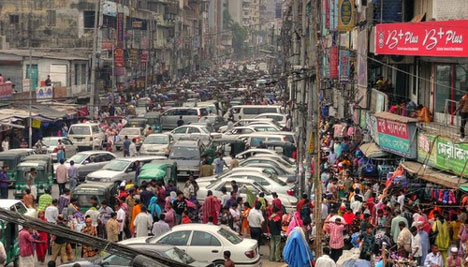
I am scheduled to observe evening classes at a school almost on the outskirts of the city. It is after sunset and already dark when I set out the first time. Now, Kolkata is already pretty large, and with developments it is expanding further. Two hours of travel in, say, Mauritius, might cover the island nation end to end, but here, spend the same amount of time going in any direction, and you may still be within city limits. I realize it will take me quite a while to get to the suburbs on the other side, from my starting point. 

My concern is that there is no direct bus route there. Besides, I shall be slap bang in the middle of ‘office time’. That means buses overcrowded with office-goers desperate to get home. I use the term ‘overcrowded’ dramatically because ‘crowded’ is normal (remember Kolkata is peopled by a million, if not more!) An empty bus is one that you can board and find a seat, or at least, stand comfortably, maintaining personal space. In ‘overcrowded’, people hang out of the bus entrances, balanced precariously on half or less of one foot each, and the vehicle itself tilts over to one side. Obviously the bus-drivers must be immensely skilled to navigate them safe and sound through heavy traffic every single working day!


Part of my journey will be in the opposite direction, that is, towards the business centers, and I can expect to find ‘empty’ buses. Thereafter, I will have to compete for space, and must rethink options as I go along. The journey begins uneventfully enough, and I find a seat right at the back of the bus. Slowly the bus fills to capacity and more. Since there is no air conditioning, it soon feels hot and sticky, but everybody bears the discomfort as best they can. I notice small kindnesses as those seated move over to squeeze in small children beside them. Some others hold belongings for those standing on their laps.

From further up, I hear tempers suddenly flare, and voices rise in altercation. A woman objects to something said or done to her, a man retorts that she is only taking advantage of being a woman. Some passengers smile wryly, a peacemaker asks both sides to calm down. Closer to me two young men pick up on the irritation spewed. New rules for men, bus non-cooperation, they announce. They look around a little disappointed when nobody else acknowledges their jibe.

I feel twinges of apprehension because, yes, my spatial orientation begins to falter. The crowd muffles the shouts of the bus conductor naming the bus stops coming up. I cannot get a fix on where we are, and whether we near or far from where I should disembark. ‘Excuse me, sir’ gets the attention of the nearest regular on the route, and I ask him instead. Far yet, he nods and asks where exactly I am going. Several more heads swivel around in surprise as I mention the place (also known for its slums), and an animated discussion follows on aspects of the information I provide.

One man draws an imaginary circle in the air with his forefinger, demonstrating that I am on a long detour. I am told direct buses were available much earlier at ‘seven point’ and I would have reached destination in 10-15 minutes at most from there. I look blank and immediately tongues click. She doesn’t know the way, they look at me pityingly, and proceed to educate. Get off at the next stop and go back, advises one and some agree the point.  The man in the corner shakes his head. Nah, nah, office time, brother, he interjects, and more agree with his point. It seems the buses only pass through this ‘seven point’ region, and hence the chances are higher of my being stranded there unable to board any transport. Go point to point, the man says knowledgeably; that is, to avoid the office-returning crowd, to wherever transport is definitely available.

There is a general consensus amongst the experienced that the auto-rickshaw is my best bet from here onwards. The first man undertakes the instructing. He describes in detail the landmarks I cannot miss, the shortcuts to keep eyes open for, and pathways I should use. I am cautioned that stepping onto the flyover entails a stiff fine. The other areas are a little less lighted, but not to worry, lots of people will be going that way now, just to follow them. The other men listening in nod their agreement. They soon alert me to start moving through the crowd to exit. Thank you, I sing out to them all; mention not, they chorus back. The people packed like sardines between the seats, sway apart to let me pass.

I have no difficulty thereafter in following the very explicit directions. I find the over-bridge that gets me across the main road packed with traffic, the landmark building that I must turn off at, the dark twisting little alley beside the flyover that connects to another main road, and the auto-rickshaw stand across the way. As I head off to my final destination, I marvel at the unconditional collective cooperation I receive in such chaotic situations. Seems to me that the key to successfully asking directions of the local in India is a bit of respect for people and their cultures.


Tuesday, October 16, 2012

Journey and the Indian housewife


Social learning requires a formal introduction before people can interact with one another. The wait is for somebody to fulfil that role, somebody to set the ball rolling, and if not then not has become usual. A problem arises during travel, in the forced proximity, on a journey, with strangers. People’s focus has become reaching destination, period.  They seem always in a hurry, and the anxiety to get somewhere, turns quickly to impatience. They may push and shove others out of their way in the mad rush to be first to the exits on airplanes, trains and even theatre halls. Enjoyment of the journey itself, and relaxed conversations with others is a rarity.

The frequent fliers I have come across wrap themselves in the protective aura of power and prestige emanating from their organizations. It fortifies them through the many thousands of miles of airplane travel regularly covered in self-imposed silence. In the process, they may earn rewards of free mileage, vacations, and so on. But ask them, and they have no recollection of the thousands of people they might have journeyed alongside. One gentleman tells me he generally pops a couple of pills before he gets to the airport, and once ensconced aboard, sleeps right through the cross-continental flights, shutting off all possibilities of interaction. For shorter distances, being engrossed in the laptop or ipad is enough deterrent to any interaction. 

A far older tradition in certain Tibetan monasteries has been to deliberately rip apart these social boundaries. Before the acolyte formally joins the order, he must know himself. The young men are sent out to face the world with little more than a staff and a begging bowl. The intent is to strip the ego, to experience humility and learn adaptability to changing environments. The given task is to follow the meandering route of a holy river from source to delta, downstream by one bank and back upstream by the other – on foot.  Their return, if or when that is, depends upon the individual survival skills in various social environments.

This practice is, of course, hardly known about or followed amongst people outside the monastery. For the householder, the proposition is frightening. Women of good families, especially, prefer to travel with a group of known faces around them to keep the unknown at bay. Long distance train journeys generally mean more hours of forced companionship with people outside the social circle. If perchance the women are traveling alone, their apprehensions mount. What if I get lost is the plaintive refrain irrespective of age, education or employment. Their social dependence needs assurances ten times over that somebody will see them off at one end and somebody will receive them at the other, and prayers for divine protection en route. Obviously, few perceive any journey as new adventures.

I try to settle in early on the train, to avoid the jostling of late arrivals, and observe the unfolding of new, unique human stories. Many of the people I strike up conversations with, look as if they expect the worst from the encounter. I can almost see the wheels of their minds clicking back to childhood warnings against speaking to strangers. It takes them awhile to return to the present and remember that they actually are adults.

 
A well-dressed lady arrives to take the berth across me on this journey. The several men with her are far too respectful to be family. The boss’s wife, I suspect, accompanied by those lower on the pecking order who have discovered their unwritten duty to ensure her wellbeing - and thence their own. I gather they are Railways employees,  and remember stories told of how wives of senior officials and their entourage behave as royalty on board. Should they have links to political heavyweights their attitudes worsen in reflected glory. Yes indeed, horror stories of some sort of mafia in play. The ladies demand exclusive service from the train staff threatening to get them fired for disobedience. They also harass the other passengers that might protest, with threats of getting them dragged off the train... I wonder what is in store for us!

On this day, the men in attendance struggle with large suitcases while she fiddles with her cellphone. After a while they decide leave the luggage where it is, occupying all the space between the berths. In their overt concern for the lady, co-existence with other passengers seems clean forgotten. I pipe up to remind them of it, whilst feeling it an inauspicious opening to my anticipated encounter! The lady starts up at my interjection, and the men look around in surprise at the sound of strident female tones directed at them. Lucky for me, I guess, that they only try harder to manage the luggage!

With their departure, mission accomplished, the lady busies with the phone speaking with some people, or just waiting for some others to respond. I ask what she does for a living. Nothing, she says with an embarrassed look, just a housewife, as if nobody could possibly be interested in this group of creatures. As she gradually overcomes her inhibitions, she confides that because she is unsure about others’ reaction, she speaks only when spoken to. 

Her story resonates with that of millions of women of this country brought up high on sacrifice, and low on self-esteem. She is married off young to forestall other eventualities, and before she can really find her feet, motherhood is upon her, as is the omnipresence of the mother-in-law.  She strives to be an exceptional homemaker, an accomplished cook and the perfect mother. Her husband’s rising career graph means transfers and late working hours, so she cannot expect adult companionship much of the time. Her children are her treasures, closer to her than to their busy father. While on the way to help one settle house in a new place, she worries about those she leaves behind. All the lives conjoint with hers should run smoothly – let her be the recipient of all their travails. 

The tradition in families is for one generation to groom another to take its place on the hierarchy in the exact same way. The strict tutelage of mothers-in-law put new brides into the same mould that they once occupied in the past. The ritualistic training in customs ensures that women of successive ages, the carrier of the culture, eventually dress alike, look alike, act alike and even think alike in a stream of carbon copies. The sisterhood of sameness is their ordained destiny.  Men in the family adopt a hands-off approach to these traditions of the women’s world, while themselves keeping up with the new technology and so on, of modernity. 

The benefit of the husband’s job  allows this housewife to live in a sprawling suburban bungalow with plenty of space and few neighbours. She gets used to being alone with the children, learns to appreciate Nature, and discovers her green thumb. Gardening becomes a passion, the bonsai technique the speciality she perfects over twenty years. The plants are her personal pride and joy and it will be a wrench to leave many of the little masterpieces behind as has happened before, when they must move away to another new posting as the job demands. 
 
   
Many such women of this country tend to internalize the traditional lack of social esteem for their gender and accept their lot as karma. Nobody in the social organization is concerned with the effect of unsought change on the feminine psyche; the ‘housewife’ is expected only to deliver as others desire. In using the archaic term to describe their life roles, the women devalue themselves, and nobody else thinks twice about doing the same. Because the economic complement is missing in their contributions, they are perceived within the family as no more than glorified domestic labour. Fact is they may be worse off, in unpaid service 24/7, at beck and call of husband, children and extended family with almost no returns of credit or genuine appreciation. 

Although they are the home managers, the enablers of others’ power and prestige, they carry forwards centuries of gender inequality on their back. In this day and age as well, they hide their true worth under bushels of conditioned self-deprecation. A parable relates that the elephant could not be the king of the jungle because their large ears prevented their realizing their own size and strength. The lack of esteem in the Indian housewife similarly blinds her to her own creative potential.