Showing posts with label racism. Show all posts

Thursday, October 2, 2014

O Calcutta!


It seems to me to be disrespectful to live in a place and know little about it. The structured and the organic conjoin in Kolkata. Modernity has wrought changes, but the influences of earlier ages are never eliminated. I decide to explore why it is as it is. 

Epistemologists say the name Kolkata is likely to be a tribute to deity, the warrior goddess Kali, or Mother Nature’s bounty. However, most newcomers to the city, and especially non-resident Indians, don’t see any godly connection, and are appalled by the congestion, the pollution and the noise. It takes time to recognize the indomitable spirit of the people and to experience their selfless giving nature, but few people are that patient. To others, although difficult to stomach initially, Kolkata, nicknamed the city of joy after a French author’s book, tends to grow on you.

Travelogues of merchants and scholars from Persia and China date the region to centuries BCE. It is mentioned in the Mahabharat, one of the country’s ancient mythological epics. It was there during the Maurya and Gupta periods and in Mughal Emperor Akbar’s rent rolls in the sixteenth century. In short, this region had inhabitants for well over two millennia before Europeans appeared on the horizon. There was also an established trading post. Burra Bazar, close to the river, was probably this business hub. The old, old trading houses are still standing, although now in urgent need of repair and restoration.


The British, though, claim to have discovered the area through Job Charnock, a representative of the East India Company that came to these shores towards the end of the seventeenth century. That strikes me as absurd; just as it must have the Native American tribes when Christopher Columbus was credited the discovery of America. Like, hey, we were here first!  

True, not much concrete evidence remains of the ancient Indian architecture. This is most likely because the people of the age didn’t use brick and mortar for their dwellings. Their homes were eco-friendly, made of mud, thatch, tiles, and regularly recycled. Temples and tombs, however, were constructed with more lasting materials and they are testimony to the local talent. 


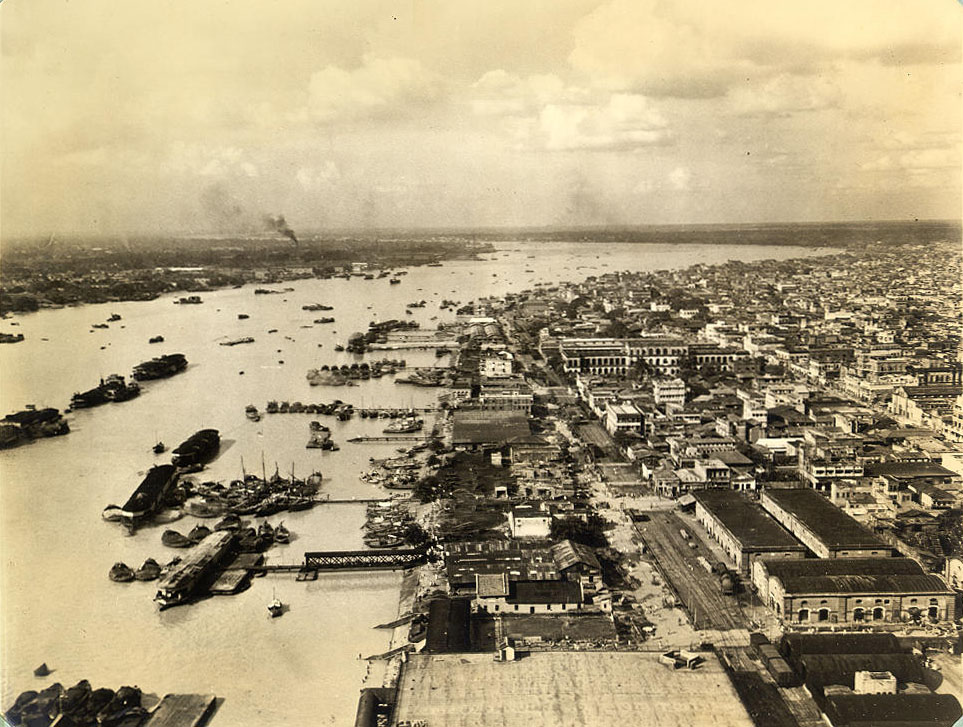
The British captured three villages, Sutanuti, Gobindapur and Kalikata, to create their headquarters for trading. They put their cultural stamp on their holdings razing everything else to the ground. The eastern bank of the Hoogly tributary of River Ganges bears impressive British architecture since. The roads built were named for their convenience - Dalhousie Square, Esplanade, Strand Road, Outram Ghat, Princep Ghat, Hastings, Curzon Park and so on. Being unable to pronounce the tongue-twisting Indian names, I suppose, they called the city Calcutta.

In the new millennium, this city has been renamed Kolkata. Street names change more frequently here. Whosoever comes to power in state governance, exercises the right to rename, perhaps following the British. I look up a few on a map of the city and then try to find them on the road. It turns out not such an easy task, because the same place might be referred to with different names! It can become confusing when people forget Chowringhee Road is now Jawahar Lal Nehru Road, or by habit, remember Harrington Street instead of Ho Chi Minh Sarani.


New constructions also appear atop the old, changing the faces of things quite completely. A Bank Street, for instance, is shown on a map to run alongside the waterfront on the Kolkata side for miles. But the location of this road is still a mystery to me. On every try, I am stumped at the Howrah Bridge, because the flow of traffic goes straight onto and over the bridge. I’m missing it somehow, or perhaps the newer flyovers have been built over and across it, to make ‘Bank Street’ just another discarded historical name.

Amongst the first British projects in India was the garrison to station the troops. Fort William, founded in 1702, is still there, as are the various living quarters built within, for humans, horses and armoury. Post-independence it has been taken over to serve as cantonment for the Indian Army. Although there have been later additions of housing and schools, the heritage of older structures, including the cannons, still look in top condition. The military story from inception to today is meticulously recorded in a little museum inside the Fort. 


Fort William was a strategic placement for the British. On the bank of the river, and shaped as a polygon of six or eight sides, and gateways on each side, enabled rapid deployment of their enforcers to one direction or another. The establishment of this regional military headquarters became a bone of contention between the foreign settlers, and the Muslim monarch of Bengal. Nawab Siraj-ud-daulah’s foresight of British expansionist intentions, led him to attack the Fort and succeed in driving the British out.  

But consolidation eluded him. Within a year, his own uncle betrayed him to British cunning. The bloody battle of Plassey was fought in 1757 and the Nawab was vanquished and killed. That put an end, for a while at least, to local aspirations. The Crown established Calcutta as the capital of British India. They wanted it to be known as the City of Palaces, and accordingly, the buildings constructed were massive, ostentatious displays of British architecture, high-ceiled spacious rooms, wide main roads, handsome parkways and boulevards, and deep, concealed drainage. The capital of British India flaunted imperial superiority to this part of the world. 


I’ve often wondered why only a part of Calcutta is so beautifully laid out, while much more was steeped in poverty and squalor. I rationalized that the Calcutta of yore must have been a pretty small place. The locations of their architecture probably demarcated the limits of the city built by the British. The population explosion thereafter must be responsible for sections to become dreadfully congested, with narrow streets, and run down structures. Pity, I thought, that the Indians had not learned from them to value space

I realize now that my grasp of the history is pretty weak. Calcutta had actually been bigger than what I imagined. The imperialists were not in the region to integrate cultures. They were white supremacists, here as masters.  Calcutta was developed in two distinct parts, and their names are self-explanatory - White Town and Black Town. The land, the funds utilized in the opulent construction projects of the former, as well as the human labour pressed into service were of course, taken from their new subjects in India, probably as reparation costs. 


They indulged racial discrimination to the hilt, relegating the natives to Black Town, north and east of the city. Dispossessed of their own lands, the Indian people were pushed further inland. The waterways and access to the river came under the aegis of the British Raj that did not hesitate to collect taxes. Deprived of their traditional livelihoods of cultivation and fishing, they huddled together in shantytowns. Poverty and squalor become their lot, and eventually the characteristic of all Black Towns held in the iron grip of the colonizers, backed by imperial military might.

Meanwhile, education was introduced in accordance with British educational standards. It raised a new class of Bengalis, the anglophiles, the educated, rich, upper caste Hindus. They were inducted into the lower levels of administration and the Baboo culture became the backbone of the bureaucracy. The Baboos profited from British presence. Their large town houses situated just outside the White Town zone probably as a buffer, shielding the masters from the serfs. Manipulated by the colonizers, many Baboos were against their own people.

However, education became a double-edged sword for the colonizers. Many Indians quickly became discerning, politically savvy intellectuals. The seeds of nationalism against British occupancy began to take root. Calcutta became the hub of the freedom movement launched within the first decade of the twentieth century. The sepoy mutiny (the upsurge of Indian soldiers), took place near the capital.  It was said that what Bengal thinks today, India thinks tomorrow

When the partition of Bengal was mooted in 1905, political activism gained momentum with the boycott and public burning of British goods on the streets. It forced the British to shift their capital from Calcutta to Delhi in 1911. Perhaps in retaliation, they vivisected Bengal and handed the East to Pakistan in 1947. Although the former East Bengal is now a country, Bangladesh, that physical, emotional and economic setback inflicted on the region, it is yet to recover from. 
 

But the Indian psyche is not built to hold onto grudges for too long. Through centuries of being invaded, conquered, annexed and colonized by different culture, we are able to take the worst misfortunes in strides. The sense of nationhood remains through oppression and democracy. We become comfortable with all outside influences. They are assimilated into the culture and Indianized.

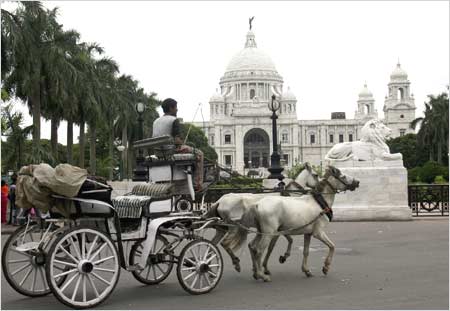
The English language is now one of the twenty-two official languages in the country. The colonial architecture has been preserved in all its glory even so many decades after Independence. Buggy rides reminiscent of the British Raj continue around the Victoria Memorial even today. We own it all without prejudice. As part of Kolkata’s historical cultural inheritance, they remain, as they ever were - Black Town, White Town, and what-have-you.

Saturday, October 1, 2011

The issue with Lookism

Although, in the present age, political correctness demands support for merit, the social preference for beauty continues around the world. Women especially have been caught up with carrying the social standards forward, as their self-esteem often depends on others’ approval. Physicality seems to become an equal-opportunity issue in  organizations in the West. However, lookism – that is, prejudice based on appearance – may be hard to prove in Diversity.

Women perceived aesthetically challenged attest that they have a harder time with social acceptance than their more physically endowed peers. Sharing her own humiliating experiences, Sibary asserts that good looks open doors, literally and metaphorically. She writes:
I may as well put a bin bag over my head for all the impact my face has … I recently went on holiday with an old school friend to celebrate our joint 40th birthdays. She is single, blonde and very attractive. Throughout our trip, men were holding doors open for her (and then letting them swing in my face); carrying her bag, but ignoring mine; and falling over themselves to buy her drinks and apply her sun lotion. 
Many women that might themselves have memories of being left on the shelf focus on forcing beauty treatments onto their baby girls. The little ones are taught to strut their stuff, and wear fake body parts, fake tan and botox if only to get ahead. Oblivious to possible psychological repercussions in future, the mothers believe that their daughters will thank them for their efforts to make them ‘stars’ before they learn the R’s. But for the moment, reality shows featuring toddlers beauty pageants owe their success to this relentless maternal drive to render advantage to their offspring at any cost.


Theorists imagine a beauty-related continuum in the social psyche, bound at the ends by two aesthetic poles – maximum unattractiveness (or ugliness) at the negative pole, and maximum attractiveness (or beauty) at the positive pole. Tietje and Cresap explain the significance of the poles:
Being judged to be at the negative pole is an aesthetic variant of … stigma: an immediately recognizable abnormal trait that works subliminally to turn others away and thus break social claims. Being judged to be at the positive pole is aesthetic charisma … is perceived to be a divine gift and … “star quality.”
Now, few people actually place at the poles, and most of the population occupies the middle of the imaginary line. People’s social worth then appears to be graded according to the subjective perception of the reality behind the appearance.

Perhaps as a consequence of the Darwinian concept of survival of the fittest, beauty has been stereotypically associated with productivity. Matrimonial matchmakers seemingly with a finger on the social pulse, advise women to dumb down on the one hand, and on the other, to raise their attractiveness quotient in order to ensnare rich, eligible men.

Unattractive people can expect poor treatment even if they work hard at developing personality because assumptions about beauty are hard-wired into people’s brains through evolution. In social research tests conducted, men were shown pictures of beautiful women while their brain activity was monitored with MRI imaging. The results, Stossel reports, are that:
… the same part of the brain lights up as when a hungry person sees food, or a gambler eyes cash, or a drug addict sees a fix. Essentially, beauty and addiction trigger the same areas in the brain.
Both visualization of beauty and the substances of addiction activate pathways to the brain’s reward centres. In each case, the respective individuals anticipate pleasurable experiences.

A litigious trend in the West rests on lookism, with complainants demanding measures against looks-based inequality in the workplace. Tietje and Cresap explain the serious implications of the practice:
According to recent labor-market research, attractiveness receives a premium and unattractiveness receives a penalty. For both men and women, results “suggest a 7–9-percent penalty for being in the lowest 9 percent of looks among all workers, and a 5-percent premium for being in the top 33 percent.”
Now, although any form of discrimination is unjust, it seems to me that the hurdles in establishing lookism as a discriminatory process increase with social diversity. 

Fact is people of a particular culture imbibe notions of beauty in collective social learning from their own earlier generations. Their subsequent evaluations are subjective associations with standards imbibed within the community. With little experience or ideation of standards outside of those racial and cultural boundaries, their beauty judgements of diversity must also be ineffective. Hence, for charges of lookism to stick, homogeneity is required for comparisons.


Consciously or unconsciously, people give much attention to the visage in interpretations of beauty and worth. Research shows that three areas of the brain are activated when people recognize or identify faces. However, the neural activities of these areas diminish when the faces are perceived alien. These signify the lack of recognition and identifications, which may indeed underlie culture clashes.

Presented with facial structures of other cultures, people not only have difficulty distinguishing one picture from another, latent prejudices may also become activated. For example, the ‘white’ community may perceive its members educated and successful, while more readily associating people of colour with lack of education and crime.

The stereotypical judgements of people extend to include the clothes they wear. A study with ambiguous faces (i.e., those not clearly categorized racially) pictured the models dressed in various types of clothing. A BBC report on the study says:
Faces were more likely to be seen as white when dressed smartly and black when in overalls … "[The results]... imply that our cultural knowledge, and what we are expecting to see stereotypically, can literately change what we do see in other people" … decisions about race or gender or age change the way we feel about people and affect the way we interact and behave towards them.
Clearly, people judge by the cultural standards and attitudes they have been brought up on. For instance, the socio-religious significance of the enveloping female attire, the burqa, to the Muslim community, is lost on the Western world. Post 9/11, the dress has been stigmatized, and some governments have approved its ban, perceiving it a symbol of terrorism.

Although there are myriad instances of demeaning preferences for ‘beauty’ within every social group, cross-cultural lookism would be hard to establish. This because social diversity has not yet developed common, rational standards of looks, and social judgements and interactions based on them continues to be subjective. In one demographic fraction, beauty may be perceived in veiled women blending unobtrusively into the traditional community. Elsewhere, women in revealing attire underscoring freedom from traditions may be deemed hot and sexy. Each group may accuse the other of lookism, but their evaluative contexts differ.

Swamped with differences of race and culture, ‘beauty’ means different things to different people. The effect of globalization has been social heterogeneity, and obviously differing beauty standards for physical structures, colour and clothes remain within the diverse social groups. In a multicultural society, discrimination on looks may be indistinguishable from that of race and culture.


References for this post: 

  1. Clothes influence race perception” bbc.co.uk. BBC News. 28 September 2011. 
  2. Dumas, Daisy. “’No harm was done’: Mother defends dressing daughter, three, as prostitute for Toddlers and Tiaras beauty pageant” dailymail.co.uk. Mail Online. 7th September 2011. 
  3. Greenaway, Naomi. “Why experts say it’s harmful to tell your little girl she’s pretty” dailymail.co.uk. Mail Online. 27th July 2011.
  4. How the brain recognises a face” bbc.co.uk. BBC News. 13 December 2004. 
  5. Sibary, Shona. “How I’ve learnt to accept feeling ugly: With startling honesty, one woman describes how her looks have affected her life” dailymail.co.uk. Mail Online. 8th September 2011. 
  6. Stossel, John. “The Ugly Truth About Beauty Like It or Not, Looks Do Matter” shortsupport.org. ABC News.com. August 23, 2011. 
  7. Tietje, Louis and Cresap, Steven. “IS LOOKISM UNJUST? THE ETHICS OF AESTHETICS AND PUBLIC POLICY IMPLICATIONS” mises.org. JOURNAL OF LIBERTARIAN STUDIES. JL VOLUME 19, NO. 2 (SPRING 2005): 31-50. 

Wednesday, January 27, 2010

Denial: the shift of focus


Denial, as they say, is not just a river in Egypt.


The dictionary defines the word as the act of gainsaying, refusing, or disowning; negation; the contrary of affirmation. In psychology, it is termed a defence mechanism. Essentially, denial signals the desire to maintain a certain status quo.

Denial is amongst the favoured modes of operation of many people at home and in society. In each case a certain image of self or the organization is being protected. At home, it becomes useful when the standing with other members of the family is perceived in jeopardy. In bureaucratic circles, image preservation before the world at large becomes important.

The trouble with denial is that it does little to change reality. It simply allows the doer to extend his or her stay in the world of fantasy wherein all proceedings play out according to one’s personal fable, or an official line being held sacrosanct. People seek to live out their lies, while issues of actuality develop unchecked.


Used in tandem with denial (of reality) is projection, another defence mechanism that claims that one’s faults are actually the faults of another. Literally it is the act of throwing or shooting forward in attributions. In the process, introspection at home is eliminated.

Of great concern to India and to the expat community are reports that the attacks on Indians in Australia are racially motivated. Australian governmental officials play down implications that that country may not be safe for Indians by insisting that the events in question are merely criminal acts. In response to the Indian advisory to students seeking education abroad that they need to exercise caution in moving about freely, they accuse their counterparts of fueling “hysteria”. Crime, they say, exists in Australian metropolitan cities in the same way that it does in Mumbai, Delhi or Kolkata.

The reality is that the acts are criminal – robbery, assault and battery, and so on. The reality also is that Indians are targets, specifically because they are considered potentially soft when compared to others. In that sense, the cases reported on are criminal as well as racially motivated. In the ensuing diplomatic acrimony, an important fact evades attention – that most of the attackers are minors.

The Hindu reports:


According to the dossier submitted to the government, nearly half of those arrested so far or on the run are juvenile or under 18 years of age.


It is possible that the global economic downturn has created frustration anger in the new generation perceiving a bleak future in adult working life. The bureaucratic response of denial of the issue will not make these events disappear. This growing phenomenon of minors taking to crime as a solution to their problems should be of a greater concern to the people and governments of any nation.


Children are the future of a nation, and in these cases, a noticeable complement of them is being neglected or misguided. It is clear that their nurturance is in need of focus. The protection of an apparent image through denial is hardly the best way to combat the rise of racial profiling for criminal intent. Full-blown racism is only a flea skip away.


Links:

Denial

Projection

Most attackers of Indians in Australia are youth