Showing posts with label children. Show all posts

Monday, May 16, 2016

Game changer

This young man I know looks disheveled with unshaven face and bloodshot eyes. Sleepless nights? I inquire. He confesses to feeling the toll of nightly wakes these days. But no honeymoon here! Blessed with a beautiful baby, all is well, yet now he’s losing track of whether he’s on his head or his heels!


I’m a tad gleefully at the travails of brand new fatherhood. He now walks in the careworn shoes of generations past – parents, grandparents, and feels the lows they had with him that must never have occurred before. A rude shock, though, for him to realize he no longer is the centre of that universe.

Change in the new mother is dramatic. Overnight she transforms from wifey into somebody strange - the new mother transfixed with child. Awash with the maternity hormones, her system resets, restructuring her universe to be so. That then on, the needs of that wailing “bundle of joy” shall take precedence. Thus, Nature ensures infant survival.

Suddenly, from alpha to ordinary! The young man nods. That I experience every day, he rues. It is important for the young couple to rediscover romance in their partnership. But to put others first, is an invaluable lesson of maturity, many men need to learn. I’m sure that this new father secretly resents the carpet being yanked away from beneath his feet. Still he’s lucky to be human; male insects have it far worse. Were he a praying mantis, his head might have been yanked right off when usefulness was done!

Tuesday, October 7, 2014

Get up, stand up


I’m not a victim, I say. And realize to my surprise, that indeed, it is a thing of the past for me. The majority of the female gender in India is, or has been victim at some point in their lives. The abuse they suffer can be in many forms, economic, verbal, physical, sexual, and emotional. It is not only the illiterate that are affected; education and employment doesn’t always protect the others. Culturally, they rarely get help; rather their integrity is questioned. The trauma of an abusive experience hounds them, and perhaps gets carried into their social interactions.


Several decades ago, a Western woman journalist, curious about life as a non-white in London, decided to change her appearance and go undercover as an Asian. With wig, contact lenses, appropriate makeup and attire, she transformed from one race to another. The few weeks of subtle social discrimination experienced were a revelation, and eventually, she too felt hunted. While commuting on a train in the disguise, she heard two other white women patronizing her. They obviously assumed that being Asian, she wouldn’t have the language. It was not her appearance that irritated, they said, but her attitude.

The downtrodden expect abuse. That they are beaten into the dust and cannot hope to get up again, is projected in look and body language. Perhaps their unarticulated fears attract further aggression. Verbal or physical abuse is common sight on the city streets. Hardly anybody protests.  Many may even condone it, and outside interventions often make things harder for the victim. Like kicking pets in petulance, men in India tend to take their frustrations on those that can’t or don’t fight back. But mostly, society is immune to the abuse of women.

On the road, the family group walking by, seemed normal enough, man, woman and small girl child. But as they passed, I heard the man say conversationally that he was fed up with ingratitude, and if the little girl made one more demand for food, he would smash her baby face to pulp. I looked up sharply, but nothing seemed out of the ordinary. I wondered if I was imagining things. The child and the mother said nothing; they simply walked on as if all was well. But then I noticed, they walked a little too straight looking neither right nor left, as if careful to not upset the man.

Another day, three little girls were on their way to school, along with a young man, most probably a member of their extended family, or a neighbour. The littlest girl had been unable to cross the road with the others, and remained stranded on the far curb. The fellow didn’t even notice that she had been left behind. Several bystanders at the crossing called out to attract his attention: Hey, hey, take this one with you! Then the man marched angrily back to the child and slapped her hard on the head. In shock and pain, she burst into tears. Slap yourself first, I shouted, walking up to point an accusing finger, the fault is yours entirely. He went quiet, embarrassed into behaving by the public scrutiny.


In days gone by, the joint family structure had several generation and extended families living under the same roof. The cloistering of women was extreme. During my mother’s girlhood in the 1930s and 1940s, young women couldn’t stand at the windows in case they caught the eye of some man before marriage, and they were forbidden from meeting any man alone. It seems to me that there was a positive to it too, in terms of their safety from predators.

Post-independence, nuclear family units became the norm mostly for economic reasons. It was instrumental in opening doors to women’s education and employment. However, it did not remove the feudal attitude to gender; it just made the access to women easier. In the new family structure, family ties remained the same. Mothers continued to view men as they were brought up to, as the superior beings to look up to. They trusted the male ‘family members’ in its extended branches implicitly.

It never occurred to them that by putting their little girls in their control they were putting them in harm’s way. The ignorance of the mothers allowed the uncomprehending children as young as four to be abused and molested at will. I know this, because it happened to me too. The home itself can be an unsafe environment for many women and girls. They are socialized early into the trauma of gender. 

Women may be unsafe in the marital home as well. In a traditional marriage, the spouses are almost strangers. It is customary to uproot the woman from her parents’ home, and throw her to the wolves, as it were. I once witnessed such a couple’s public interaction. The man strutted around like the proverbial rooster, and the woman’s insecurity was palpable. She wasn’t pretty, which was probably was the source of her insecurity. She followed the man, crying and pleading.

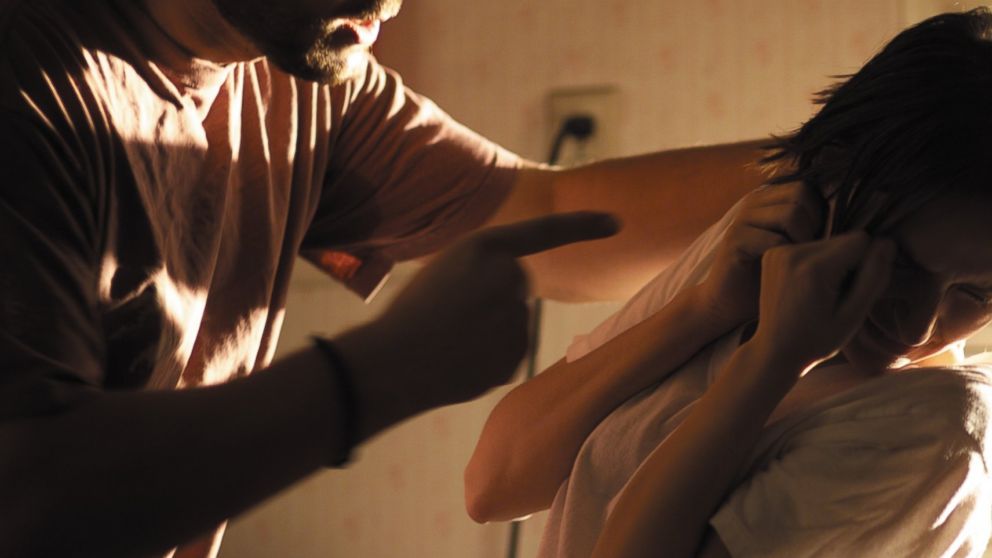
The more she did that, the more his ego inflated. Every now and then he stopped, and turned on her aggressively. Wagging his finger in her face, he hissed threats and insults. I heard him say she was so ugly she sickened him, that she was a burden around his neck, and that he couldn’t wait to be rid of her. She should have rapped him across the mug and stalked off. But instead, she just put her hands up piteously, as if to ward off his words.


It made my blood boil, and I stopped nearby and glared at the man. Other passersby definitely heard him too, but because the woman had a vermillion streak in her hair (signifying the marital state), nobody intervened. The social environment holds out no support whatsoever for the victims of marital abuse. It is traditional, instead, to consider a wife the husband’s property; with which argument, marital abusers count on escaping censure. 

I know, because I was in such a relationship, where this argument was repeatedly used. I was educated, but perhaps I too projected the characteristically abysmal self-esteem of victims. It didn’t matter that I changed attitude like a chameleon changes colour, to keep the peace and protect children and pets. Punishment for some slight, real or imagined, was imminent, and would be vicious. At a time when the marital and custody laws favoured the male, it was a hostage situation.

Not much has changed since then, however. The right to ‘control’ the women in their lives – mothers, sisters, wives, daughters, and others, continues to receive tacit social support. It matters not that the women may have outstripped the men academically.  In the social equation, they are expected to walk several steps behind and be the subservient gender even in this day and age.

After several years, I recently met my own brother. He is a non-resident Indian, and has been a citizen of the lands of plenty for several decades. We are closest in age, and in our younger days, were constantly at loggerheads. The special treatment he always seemed to get, especially from my mother, irked me no end. We have mellowed in later years, but still, I admit, that although we do not come to blows any more, we occasionally lapse into childish behaviours, reminiscent of our younger days.


The matter of our argument, the other day, was actually trivial. But I realized that his Indianness is entrenched in a time gone by. Despite living in a developed society for several decades, the conditioned cultural responses reactivate on the shores of the mother country.  In an instant, the general mistrust of gender of those past times came alive in him. He was like an alpha male that had to dominate the group and the women!  In his mind, possibly, he was being the elder, the male head of family, and quite unaware that that behaviour pattern could now be termed abusive. 

The revisit of the past brought me enlightenment. Although we were brought up in the same environment in the past, I have moved on, have emancipated from victim-hood. I no longer placate or change attitude. I am assertive, and relate on equal terms. Masculine intimidations are of no consequence to me today. They seem comically archaic, and I am free of their toxicity.  I’m not a victim, I say. Not anymore. I have been in the pits, and now I stand up.

Saturday, September 27, 2014

Social attitude and family reality

Children in traditional India lead more sheltered lives than their counterparts elsewhere. Helicopter parents control the purse strings and their lives. It is social duty to do so, because they are judged by their children’s achievements. But family structure is rapidly changing in today’s India, and so must the social attitudes.


Education is priority over everything else. The family’s social recognition depends upon results - how the children do in the high school Board Exams, in college, in university and so on. The parents want their children to go up in the world, hence, the proper exposure is of paramount important. From middle school itself, extracurricular activities or vacations are sacrificed for coaching classes to prepare the children for the next step in life. There is no let up to keeping noses to the grindstone. It is for their good they are told, for their future.

The transition from high school to college is most stressful, especially for the parents. Adolescents beginning to explore the world outside without supervision is concerning, because who knows what influences will be picked up to alienate them from cultural family values! 

A teenager, Runu, stands on this threshold. Much time is spent in weighing the pros and cons of the different institutions. On the one hand, there is a far-away governmental institution, where costs are subsidized. For the adolescent, it is opportunity to be free of parental supervisions. On the other hand, staying in the city brings down establishment costs, but extends the parental watch. And it means attendance at a more expensive private institution; hence more strain on parental resources, because the children are still economically dependent. 

The immediate family and the social circle of involved relatives and friends agonize over the course of action for college admissions, reminiscent of the joint family structure of days gone by in India. Where siblings and cousins were brought up together, with several generations living under the same roof, it was not customary for the individual to think or act independently. 


Westernization and the partition of the country destroyed the joint family social unit, and instead, small, independent nuclear units became standard. The circle of people involved in decision-making became smaller, restricted to parents and their children. However, older age groups sometimes behave as though the traditional collectivism continues, whereby somebody’s business is everybody’s business.

In my opinion, young people need to make their own choice in the matter of their future. Runu should not feel pushed to live out somebody else’s dream, and later blame them for it. He needs to discover what his aptitude and interest pointed to, and state them clearly. I insist to his parents that they let him do so and support him to their best ability, and not the other way around. My input bases on the experience of another family, traumatized by change.

Fact is the social unit is again in transition. The education and employment of women has put them in touch with their own identity, as distinct from husband or family. There is power struggle in the home. Men may want to continue with things as they were, but women are less tolerant of second-class citizenship within the home. Consequently, separations and divorce have risen sharply.

The new family unit then is becoming parent-and-child/children, and the parent mostly, is the mother. A matrimonial bond is traditionally supposed to last seven lifetimes; hence a fragmentary family is an affront to social attitudes, and bias is clear. Social sympathy sides with the man, and the social circle is more concerned with his needs. The woman is generally blamed for the failure; kinship support deserts her. The responsibility of child upbringing remains hers, nevertheless.


Shibani is such a single mother and Santanu, her only son. Since she is also the breadwinner now, she opts to send the boy to a military boarding school. In the absence of the father as a role model, she reasons, the school training would instill discipline in his life. His mother doesn’t have the time to hover, and all she can do was to keep track of academic results.

She dreams of a far better future for them, expects him to achieve certain targets, and he consistently delivers. But her goals are those that society values. She looked forward to him becoming a doctor, or an engineer. Only his success in life will assuage the pain and guilt she is burdened with over the breakup of her marriage and the family unit.

Unfortunately, Shantanu dreams different from his mother. Neither medicine nor engineering interest him. That his aspirations are quite in another direction, he doesn’t share. Shantanu had learned early to look after himself and appears quite self-sufficient. However, he has withdrawn into himself and shares little of his thoughts and aspirations with others. He also trusts none - least of all, the adults in his life.

His mother pushes him to appear in all the relevant entrance exams, and dutifully he does so. He passes them all with flying colours and top institutions in the state offer admissions. But on the very day they are scheduled to complete the admissions process at a top college, Shantanu is untraceable. His mother waits in vain at the admissions office, devastated as her dreams for their future slip out of her grasp. 

Caught between his own aspirations and social expectations, Shantanu meanwhile, has fled from home. He takes up residence in a district across the river, and a job as a delivery boy to support himself. He stays put for a few weeks while he thinks out the direction of his future. Mother and son thus live in the same state, with no contact whatsoever between them.

Fortunately, Shantanu finds his course in life, and returns a few weeks later. The absence of a father figure and role model in his life to provide seasoned counsel is stark. His choices clearly lack the experience of life. He enrolls in his favourite subject at a very ordinary college nearby. One college is as good as another, it is the subject that matters, he reasons in his inexperience. No quite, I say when I meet him. The equation is small pond versus big pond. A small place doesn't hold out too many opportunities for the future. In the work world, the value to a potential employer is the institution he graduates from, and bigger is better.


Children of fragmentary homes are alienated from society itself for no fault of their own. While unable to comprehend the trauma they have to go through, they internalize it. They feel the outsider, compelled to reinvent the wheel, to relearn things by trial and error. Society needs to be aware that many of its traditional practices are fast becoming obsolete. A change in social attitude to family reality is necessary eschewing the entrenchment in social inequality.

Friday, December 21, 2012

Heard of Dark Continent?

The little girl looked carefully at me. Had I ever heard of Dark Continent, she asked softly. I was surprised that she knew enough to quiz about it, considering her background. She was a child of the slums, and hardly ten years old, her clothes worn, frayed at the edges. Perhaps this is the habitual mistake the “educated” make. We look upon the poor as an undifferentiated mass of entrenched illiteracy, impediments to the nation’s economic progress. 
This country does its best to eradicate poverty, but with the population burgeoning, it is difficult to make much headway. I believe a Japan adds on in people numbers each year or so! Illiteracy is the other face of poverty; hence education for all is a part of social development in the socialist, democratic republic of India of the present.  Education is heavily subsidized to make it within the reach of the economically disadvantaged. 
In a bygone era of numerous monarchies, organized community living in the Indian sub-continent had strict social segregations based on birth. These divisions of society were hierarchical. The Brahmins were the academicians, teachers, custodians of the scriptures; the Kshatriyas were the royalty, the warriors; the Vaishyas were the business group; the Shudras were the menial labour, the untouchables. Social discrimination was rife. Males born into a particular family were forced to follow the trade of their fathers. There was no escape; caste was hereditary.  The “upper” castes hoarded wealth and privileges, and imposed upon those “lower”. 

The right to education was restricted to the top of the social ladder, and those born to families low on the totem pole were barred from it. The epic Mahabharata recounts the story of Ekalavya, the talented son of an untouchable. Unable to attend the martial arts academy run by the renowned Dronacharya, guru to the princes, Ekalavya practiced archery on his own before a statue of the teacher he revered. He caused consternation when he dared compete against Prince Arjuna, the guru’s favourite student. Teachers, during that period, were not paid salary, but received guru dakshina (returns in cash or kind) from the students or their families. Although not directly responsible for Ekalavya’s prowess, Dronacharya nevertheless claimed dakshina from him, and demanded his archer’s thumb in reward! 

Women of course, were entitled to a caste only after marriage. Thus the point of their education really did not arise outside of chores learned at home from childhood - cooking, cleaning and rearing children. Although social reformers fought long and hard through the colonization of India to remove the social discriminations, the perception of women being secondary to men continued far into the twentieth century. All that the marriage market required was the minimal ability to read and write; girls hardly needed to become pundits! In fact, the elders feared that prospective grooms would turn away from over-qualified brides, who would never get married and thus dishonour the family name. Even today many believe that investment in the education of boys bring returns in future, but girls are paraya (outsiders), soon to belong to another family. 

In the ‘sixties, my father broke family tradition, as it were, by sending daughters to English-medium schools to get what was then the best education. I remember that during university days, a classmate and I were in heated discussion of a certain project on the tram ride back home. While we argued our points, other passengers were listening in. After I got off the tram, the man that took my seat turned to my companion and inquired where I came from. His eyes popped when he heard that I was a local. Huh, he exclaimed in astonishment, Speaking English! Educated!


At the time, the tuition fees everybody paid were about two hundred rupees a year, that is, less than five dollars annually, even in the science subjects. This was because the political intent post-Partition was to rebuild the dismembered nation. They assumed that the intellectual crop so nurtured would take the country forward. But that idea backfired in the ‘seventies and ‘eighties. Unlike many other nations, India did not have a compulsory service scheme for its citizens. Thousands of top graduates and post-graduates winged their way to the West, lured into serving in the more lucrative workplaces overseas. The expendable patriotism of the already privileged sunk the nation deeper into debt, because there were no legal bonds to hold them back. With the actual cost of the university education for each a few hundred thousand rupees at least, the eventual loss to the national exchequer with the brain drain must have been in the billions. Without the IT boom and the outsourcing industry, the Indian economy might have still wallowed in the doledrums. 

Although scores of private autonomous universities have since mushroomed charging exorbitant amounts for better teaching facilities, the educational subsidy continues in governmental institutions, the university fees being raised minimally over decades.  Furthermore, in and around Kolkata, primary and secondary governmental schools waive tuition fees for the economically disadvantaged sections. After generations of illiteracy on the backs of social segregation and poverty, their offspring are exposed to the R’s, and graduate degrees. One parent told me that they would have been satisfied with their children being allowed to touch the benches of high school; to have a graduate in the family was beyond imagination. 

I visited the students of a governmental primary school recently to get a sense of their ability in the English language. Both boys and girls present were the first school-goers in their family. I looked at one young boy’s exercise book. He had made many mistakes in an earlier spelling test, and in one word, written “dee” instead of “deer”. Just carelessness, I presumed. I pointed to the word, and asked him what it was meant to be. He blinked at it a moment and then whispered to me that it was a very hard word. What is it, I insisted. Elephant, he replied glibly. Clearly the wiggles on the page made no sense to him at all! 

It seems to me that, with the decision to eliminate examinations in the school system, the point of education is being lost. The light of knowledge being spread is dim because the children are not pushed to rehearse, remember, think complex and compete intellectually. They are being uniformly promoted with no quality control of capability, simply pushed up to a new level of incompetence each year. Education to them thus becomes a meaningless trudging back and forth each day, uncomprehending. 

An interesting TV reality show is titled Are you smarter than a fifth-grader? Questions from science, math, history, geography, grammar, etc., are asked of adults locking horns with the academic level of the average American ten-year-old. It proves that the children really do have to study a lot, because most adults trip up in the programme. But sadly, amongst the economically disadvantaged groups in this state today, many children of the same age are stumped by anything to do with academics. 

Education for all is a commendable idea in democracy, but is the process in use the best for the country? The educators might boast of rising literacy numbers, but the quality of education differs widely between the social sections. Eliminating competition in schools for the disadvantaged encourages their students to avoid critical thinking, to seek the easy ways out. Where ability counts most, in the work world, they fail to impress employers.  The degrees they possess may not be worth the paper they are printed on. The joke is, toss a pebble on the street and you might hit such an “educated” unemployed. 

The little girl clued into the Dark Continent is one bright spot of intelligence amongst the general clueless. Surely, there are many more talents like her touched with the light of knowledge, passionate about learning, and waiting for the opportunity to excel.  Education is meant to enlighten minds, to create awareness of the environment for adaptability, and to dispel the darkness of ignorance, superstition and discrimination. The socially disadvantaged groups need out of dole dependency to develop as people. Else, lamp-lighting ceremonies in the educational institutions become mere rituals, while the dark continent of mindsets are preserved across society.


Thursday, December 13, 2012

Flower in the muck

The boy on the bus sat hunched in his seat. He was about ten years of age, but the posture, hiding his face behind the bag of books on his lap, made him appear small and lost. He seemed shy and withdrawn, squashed between buxom passengers on seats reserved for ladies. His uniform, faded from many washes, had an indeterminable emblem embroidered on the breast of the shirt. It may have been a lotus - the flower that blooms alone in muck, its innate splendour unsullied by its environment.


It was clear he travelled unattended. The dusty socks and shoes on his feet testified to rundown conditions. I imagined the family was hard pressed to make ends meet. His father was probably the only earning member, burdened by the costs of supporting an extended family, his mother young and harried. Household chores would take up all her time – cooking, cleaning, washing, hauling water and tending to the elderly in the family as well as the children. In sending to school, the child’s parents must visualize a brighter future for their generation next, as well they should. If the free mid-day meal at school was attraction, so be it. But definitely, escorting them to and from school was out of the question; neither would they have the wherewithal to hire school-bus services for their safety.

The ordinary buses here, both public and private, carry far more passengers than they should. At peak time overcrowding, there is hardly any personal space, as people pack in like sardines. These buses, my sister living in America believes, are a hotbed of deviant behaviour, a living hell for children. She shudders at the mere thought of one. Convinced that predators abound, she has banned her offspring from boarding them. Apparently this thought never occurred to her in our younger proletariat days when she herded us onto them!

It is true that back in the day, far fewer women were out and about pursuing education or employment. Most mothers were too shy to speak about sex, and children, especially girls, were left their clueless about this reality. Public awareness was poor as well, and the young victims either too uncomprehending to protest, or too ashamed to draw attention to themselves. But much has changed since then, mainly in the passenger numbers. With greater social awareness, the bus interiors have clear gender demarcations – women and children on one side, men on the other. Over the intervening years, girls learned to confront, to even hit back at attempts to take undue advantage. As mothers themselves thereafter, many have taught daughters to be assertive. Often other passengers join in to deter unsavory behaviours.

In a country as large as India, with at least a quarter of the billion plus population located below the economic cut-off line, poverty is the affliction. Exposed as they are to the environment with nobody to shield them from harm, children born into this disadvantage have to learn early to fend for themselves. Harsh circumstances force their growing up fast - or perishing.

On this day, the bus conductor ruffled his pack of tickets with his thumb, the sound a distinct reminder of the rite of passage – one had to buy one’s stay on the bus. The boy pressed back as if trying to disappear from view. He could not however, avoid the experienced eye of the conductor. Every now and then the man would look around at him and flick his pack in warning. The boy would feebly feel in his pockets in response. Ticket, ticket, urged the man with his persistent thumb sounding his impatience, his stare unsympathetic. Watching the tension build up, I was touched by the boy’s woeful look. The point to disembark was approaching for me, so I decided to intervene in their byplay and help the child. As I moved forward to resolve the issue, to buy the ticket for him myself, the boy stood up and dug deep into his pockets. He brought out a coin that he placed in the man’s palm, and shrugged his shoulders to imply he had no more. The man glared at him, but turned away. He did not offer a ticket stub, nor was he asked for one. The boy hopped off the bus when it stopped, and behind him, I did too.

He seemed to gain energy as the bus trundled away. As I watched, he casually slung the bag across his shoulder. Then suddenly, he sprinted across the road beating the oncoming traffic. He seemed to be heading in the same direction that I was. I followed at a more sedate pace. On the other side on the road, he skipped along ahead on the sidewalk. I saw him pause a moment before darting in towards a roadside stall.  These are makeshift wooden structures where knickknacks are sold – chocolates, lozenges, potato chips, cigarettes, chewing tobacco, and so on. Their owners set up for business every day, keeping a weather eye open for the police. Because, whenever there is a clean-up drive, they must pack up and leave. 

The boy leaned on the counter, pointing at something in the stall, while holding out something he had clutched in his hand. As I came alongside, the stall-keeper took it and opened out the tight folds of paper money! I could see that the note would easily have covered the actual price of the boy’s bus ride. I shook my head and smiled wryly to myself as I walked on. So much for my expectations of childlike innocence, I thought! Indeed, this child has already learned to fend for himself in an unkind world.  Left to their own devices and exposed to a devious environment, children of disadvantage may practice the art of con, long before mastering the R’s.  The need for survival forces their early adaptation to harsh reality. Can we really fault the lonely flower for being touched by the surrounding muck?