Sunday, March 14, 2010

Sports in India: 6. Revival of the dying glory


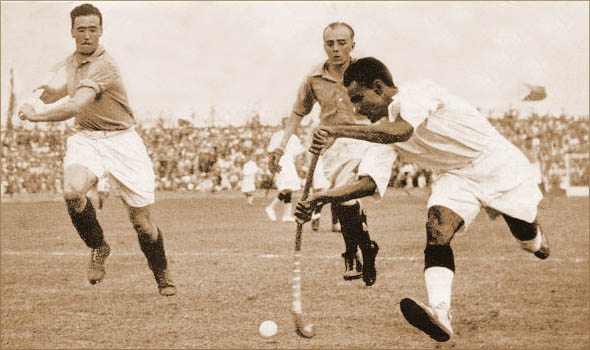
About eighty years ago, the Dhyan Chand stick wizardry stunned German excellence in the sport. Today, European hockey has made an emphatic return to world dominance with Germany, Netherlands and England in the top four. This has been the result of persistent dedication, hard work, and organizational support over the years.

There are lessons to learn from the functioning of these outfits. Sports talent is far more valued than in the sub-continent. The potential is nurtured through the formative years with competitions held for various age group levels that are calculated to raise the existing quality of play. The field hockey teams also participate in indoor games to get used to maneuvering in more closed conditions.

The European circuit has many tournaments set up between the hockey playing nations to continually improve on the art. Goal achievements are not left entirely to the players. The coaching staff works just as hard with modern technology to equip them with information that helps them to win on the ground.

Videography captures relevant data, and ongoing plays are constantly processed to identify patterns. These analyses are used to determine the strengths and weaknesses of other teams. They also provide feedback on and for various on-field strategies, discerning potential opportunities and threats at runtime. This teamwork resulted in the awesome performances displayed during the World Cup.

For a realistic shot at regaining lost glory, those associated with Indian hockey need to think outside the box. This does not mean to abandon the traditional style and import foreign ways, but to adapt to the circumstances prevailing in the global scenario to develop the game.

There is inspiration to gather from Australia that combines Asian flair with European aggression in a blend uniquely their own. After sixteen years of practice and improvement, and despite consecutive defeats by Germany in the last two World Cup finals, Australian tenacity has finally triumphed, the team emerging victors in 2010!

India does not have a comprehensive State-run sports system along the lines of those in the West. Governmental funds are limited since the centre and states are occupied with the other more pressing problems on their plates. Business concerns may have the money, but they lack the motivation to take up the social responsibility. Widespread sports development in the country is thus almost none.

Companies in India tend to restrict their involvement in sports. Some look to celebrity endorsements, to build favourable images in the minds of consumers about company and product. Associations with those already famous gain them mileage.

Some others prefer sponsoring tournaments, domestic or international, where the population reached will be large. However, for sports in which the home teams are ranked low, the public stay away, knowing that the laurels will be carried away elsewhere. As witnessed in the hockey World Cup, poor spectator attendance brings tepid returns that in turn, dampen further corporate inclinations.

From the commercial viewpoint, cricket is a now sure bet. In sharp contrast to the major hockey tournament, cricket’s Indian Premier League (IPL), a domestic club tournament opened on 12th March to packed stadiums. The IPL ushered in the hugely popular “franchisee culture” in cricket three years ago.

Business groups own franchisee cricket clubs, and are completely involved in building and managing teams composed of the best available talents around the world. These are auctioned to the highest bidding clubs owners. The teams formed then compete for the top honours of the T20 league championships held over about 45 days.

It is money well invested, as the IPL has proved a major corporate money-spinner. In fact, a few more clubs are planned. With the huge profits being made, cricket stadiums around the country are being refurbished with state-of-the-art facilities. The corporate franchisees spare no expenses to scout talent. They also acquire training infrastructure, expert Coaches and support staff to develop them into fiercely competitive teams.

The new cricket culture has seamlessly blended glamour with quality sports for complete entertainment. Cheerleaders dancing to the crowds have become an integral part of the show generating massive spectator response.


This domestic league attracts top-quality players from top cricket playing countries. It has raised the bar in cricket standards. India is on the map as a formidable force in all forms of the game. Corporate involvement has played no mean role in this achievement.

It is perhaps premature to envisage a similar plan for hockey at present. Indian hockey players need to be at the top of their game first, for a hockey league to achieve the same brand of success. But it could be the goal to work towards.

Scientific hockey is here to stay and India’s traditional hockey needs to catch up to compete. There is no dearth of potential in this country – only the structurededicated to hone homegrown talent into brilliance is missing at the moment.

Perhaps Indian corporate bodies should consider greater involvement with sports other than cricket, now in the doldrums due to the lack of support. There may be longer-term value in reviving the dying culture from the grassroots. Economic support to create a strong organizational system may prove a longer lasting solution to business sustainability within the country.

Despite being dethroned from hockey supremacy by India so many decades ago, European nations had not stopped their systemic nurturing of sports talents. Undaunted by failure, these organizations continued experimenting and evolving with time and technology. Today, they reap rich rewards for their perseverance. It is definitely something to learn from.

Next…references

Friday, March 12, 2010

Sports in India: 5. Structure and performance


Performance relates directly to the structure in place – in the immediate context of the game and in the greater organizational set-up. Both India and Pakistan display reliance on some poor structural “traditions” that have contributed to strings of losses and largely empty stands at international hockey meets held in the region.

Firstly, there is an over-dependence on past processes to achieve present goals. The hockey magic that once dazzled the world is seldom visible in play. Pitches have changed and other teams have grown wiser, while the followers of “tradition” falter in adapting to new situations.

Canny opponents have cracked the habitual play patterns of individuals. The set moves of the specialists have been out-maneuvered. Burdened with frustration and fears of failure, behaviour becomes unthinking. There is little variation of concept or strategy as if repetitions of the same actions will wear the opposition down or force them to make mistakes.

For example, the Pakistani team admitted that, in their first encounter, the Indians took them by surprise – a team they had beaten comprehensively only a couple of months earlier. Pakistan then defeated Spain, but India, perhaps expecting to do likewise with their similar style of play, slumped to defeat.

Not to be caught napping a second time, the Spanish had worked out effective counters to India’s dream of getting past them. In their final outing against Argentina, and despite having greater ball-possession for much of the match, the Indians’ weak finishing saw them beaten into eighth place.

Secondly, the collective lack of innovation and foresight is dealt with by victimizing lower levels on the hierarchy. In the subcontinent, sports administration is authoritarian. The powers-that-be generally is a political appointee with little knowledge and experience of the sport.

Power displays are arbitrary and team compositions subject to whim. Reports say that an earlier incumbent of the Indian hockey federation entrusted his chauffer with the team selections!

Clearly, little thought is given to projects for the future, or to research and development of sports. The Indian team’s preparatory training period was for about six weeks and fraught with controversy. On the other hand, some of the other teams have worked exclusively on their campaign plans for at least eighteen months. They now play the World Cup finals.

The organizational differences show. Without the requisite funds, facilities and infrastructure that other teams are nurtured in, sub-continental sportspersons are ill equipped to bring back trophies. Yet in the existing structure, it becomes dangerous to return home empty-handed. The game plan becomes to avoid defeat rather than risk chasing victory.

After every debacle, players, coaches and support staff of the region can expect to be blamed, axed, fined, banned, accused of match-fixing and so on. The saddest news coming out of the World Cup tournament has been the post-match “retirement” of the entire Pakistani team over their humiliating last place finish. At least two “retirees” are aged seventeen!

Valuable resources are thus grossly mismanaged or lost. The sub-continental powers-that-be need to realize that deprived of playing alongside senior players and availing of their knowledge and experience (even of defeat), the learning curve of youngsters coming into the game barely rises above the baseline.

The new generations thrown on to the world stage continue to reinvent the wheel in the same archaic mode. With development of the art no further than whatever has worked in the glorious days of the past, they too can eventually expect no more than the same ignominious death of their dreams.

None of the hockey teams from Asia – India, Pakistan and Korea - made it to the World Cup semi-finals in 2010. The defeats should not be attributed solely to the lack of commitment on the field. The faulty decision-making that set them up for failure in the first place is equally accountable.

In the context the existing structures are ineffective. The game’s administration and the performance on the field have been found wanting in vision and innovative techniques. Players can do their best to reproduce what has been learnt and practiced, but they can scarcely create miracles.

Although the Asian styles, especially that of the sub-continent possess an abundance of flair, they fail in terms of results. It was clear to people watching the matches at Delhi that the present conceptualizing, strategies and tactics need renovating. R&D is urgently required to fine-tune their play, devise counters to the other styles, and follow through to efficient finishes.

Next…revival

Thursday, March 11, 2010

Sports in India: 4. Pressures of controversy


It would appear that cricket is now the only sport in India capable of drawing in the crowds, the money and the recognition. To the extent that field hockey's World Cup tournament dates were brought forward to keep from clashing with those of cricket's domestic IPL season.


Now that India is one of the top teams in cricket, the players are showered with public adulation, and cash prizes from central and state sports councils. It is not an Olympic sport, yet many cricketers have been named for national awards for their achievements.


Hitching a ride on the cricket obsession, the corporate world associates their products with the sport or with its icons. The advertisements on print and electronic media are calculated to increase the media hype, and thence push up the sales numbers. In comparison, other sports disciplines are treated like stepchildren that struggle without support and find little acclaim even when they win.


For example, besides the individual gold medal in shooting, Indians brought home bronze medals for boxing and wrestling again for the first time in Olympic sporting history. However, the Republic Day awards overlooked the winners in the last two categories and namedcricketers for the honours instead, which drew protests.


Coming into the prestigious World Cup tournament, the Indian hockey team has laboured under intense pressures. On the field, they would be grappling with artificial pitches and taller, fitter and stronger opponents. Off the field, they were embroiled in several distractive controversies.


In February, just prior to the World Cup, a charity organization set up exhibition matches against Bollywood stars. Strangely, the timing of the event was not questioned. Then, just hours before the game, organizers complained to the media that they were being “blackmailed” by the players with demands of exorbitant amounts to put in an appearance.


Management decisions have caused disequilibria, conflict and dissatisfaction – the appointments of coach and captain, the payments, etc. In January there was a players’ mutiny, a truce and again a revolt at the Pune training camp. By middle of the month, they were accused of “blackmail” and given an ultimatum: resume training or be sacked.


The international body FIH that organized the World Cup was perturbed at the developments. Vice-President Ondarza view was that:

The players have to remember that hockey is not like cricket, basketball or soccer where dollars roll in…It was not right on the players' part to come out all guns blazing against Hockey India. Hockey India can't do any thing more than it has promised.

Fact is that the players’ main demand was the payment of dues for the past year that had accumulated to about 4.5 lakh rupees per individual. The reports say:

Hockey India had told the players that it did not have the money to agree to the demands and that it could only offer a maximum of Rs 25,000 per player for the results of 2009.

The players at every level then, juniors and senior men and women, are expected to prove their patriotism while the amounts originally “promised” for participation remain outstanding months after the events are over.

Consequently the men went on strike, while the women wore black armbands at practice. As Digvijay Singh Deo reports:

Hockey India officials blame the players of being greedy and putting money before the country.

The team’s Spanish coach, however, struck a different note. Reports quote him as saying:

We have to understand that the players are very, very sad. Some of them were close to crying because they do not want to take the decision of stopping to play because they want to play, but I think all you will agree that they should be paid for playing. I am not from India, I am not the only one saying what we should do this, I am not saying what the Indian Government should do, but what I am reading in newspapers is that they should be paid and they should earn some money for playing in the national team.

To the disinterested public the money-related furore was embarrassing. It was shocking that the hockey coffers were so empty when surely there were some sponsorships or funds for the international tournaments. As it turned out, in issues between outgoing and incoming committees, the team sponsors had withheld payments for sometime.

Fortunately the crisis ended when “in the interest of hockey”, sponsors stepped up to resolve the impasse. Sahara India shelled out one crore INR “only for distribution to the players” and the show went on.

Next… structure

Wednesday, March 10, 2010

Sports in India: 3. Downfall of the magic stick


Pakistan came up in field hockey to rival India with similar style of play. In 1960, they won Olympic gold to prove their equality and dethroned India, the so-far unbeaten champions.

On grass, the hockey skills of the two teams were awesome, and a cut above the rest. Teams from outside the region were hard pressed to compete. Technology however, killed the sub-continental magic.

Astroturf, created in USA, was introduced in 1965. The first generation of “plastic pitches” displayed problems. They was viewed with distaste for aesthetic reasons and costs, but more so because of the scale of injuries it could cause.

According to the history of the synthetic surface:

This has increased the speed of the game considerably, and changed the shape of hockey sticks to allow for different techniques, such as reverse stick trapping and hitting. Due to the cost of installing synthetic pitches, India and Pakistan have lost their once dominant position in international competition.


New research addressed the issues and the artificial grass gradually gained acceptance into competitive sports in the Western countries. Through the 1970s and ’80s, Astroturf became the surface of play in matches, tennis, soccer and field hockey.

Today, the artificial replaces the natural as a common denominator in all international fixtures of field hockey. Obviously this new reality was unimagined in the sub-continent nations. Perhaps hoping the fad would soon fade, subcontinental hockey has been slow to adapt to modernity.

Western teams, outfoxed for decades by stick magic, perceived the perfect counter to the Indian play patterns in field hockey – synthetic surface to evolve the game in a new direction. The new surface rendered the traditional play obsolete.

Indian hockey was dealt a deathblow. Teams could win their matches only if they were played within the country or in places that still had natural grass. Now, most of the tournaments were held in the West.

New chapters in India’s hockey history began to chronicle the losing streaks in foreign tours, and in international meets. These brought heartbreak to lovers of the game and to the general population alike.

Sports bodies in India in those times were regularly cash-strapped. The Government, burdened with more pressing problems of poverty and economic advancement, was not open handed in providing finances. In end result, age-old traditions continued with little development.

Unlike today, the corporate world also had little interest in sponsoring sports and sports icons. Players received no monetary returns for their efforts to bring hockey glory to the country, then or thereafter. Driven solely by their passion for the art, they earned laurels representing the nation.

But in later life, they were simply forgotten; many forced to sell their gold medals to make ends meet. Many lived and died in abject poverty with no other skills, no jobs, no pensions and no recognition.

It became clear to parents that job skills were particularly important, as there was indeed no future in sports. Indian field hockey’s fall from grace was especially etched in memory. With the Western styles of play in ascendancy, the majority of the people of the country transferred affections elsewhere.

In 1983, India won the Cricket World Cup completely against the odds. The public found new heroes to idolize. From then on, field hockey, and every other game played in India, has been totally eclipsed by cricket fever.

A new era has been ushered in. Corporate advertising interests funnels big money into the sport. Franchisee club cricket, the IPL is now in its third season, making huge profits. Corporate endorsements make cricket stars millionaires, while BCCI, the Cricket Board of India, is now the richest in the world.

Next…pressures

Monday, March 8, 2010

Sports in India: 2. The continuance of tradition


Sportspersons in India are subject to conflicting social influences. Traditions are diverse, as are family and community demands for their preservation.

Around four thousand BCE physical education had a high social standing. According to the history of sports:

In early India, games and sports were very much concerned about the development of the physique and for the art of offence and defence. Also games were considered a kind of recreation, which played a vital role in the development of a man's personality. Important of them included indoor games, music, fishing and boating, singing and dancing, watersports, etc.

However, with the later influences - like the Greek philosophical separation of mind and body, the division of labour, caste system, etc, - physical activity was devalued. The ancient culture of games and sports gradually waned and in an increasingly class-conscious society, physical exertions became associated with menial classes.

Post independence too the belief persisted that sports were a waste of time, because ‘brain’ was more important than ‘brawn’ to ensure jobs, and in the case of girls, indulging in sports would cause masculinization inappropriate for the marriage market, and so on. Those breaking tradition earned individual ridicule, and sometimes, social disapproval for the family.

At an international beauty pageant in the early 1990s, the Indian contestant in the final round was asked to outline her specific social endeavour should she win. Where others might mention world peace, AIDS, child labour, the uplift of women or the poverty-stricken, she stated the intention of building a huge gymnasium to get the people of the country to work out!

Obviously the reply made little sense to the judging panel, and was said to have lost her the title. However, perhaps the point she laboured to make was the need to revive the ancient culture of physical education countrywide.


It is attitude, not genetics or climate that is now the stumbling block. Every person venturing into sports is generally breaking new ground, reinventing the wheel. Unless there are sportspersons in previous generations, they must follow their passion unsupported by family, and the social or political establishments.

Various disciplines of sports are practiced in pockets, like secret societies difficult for ‘outsiders’ to access easily. The emphasis on the continuance of tradition has also meant doing things in the same familiar ways as before. The teaching methods and techniques of yesteryears become sacrosanct, and change is taboo.

In the case of field hockey in India, living up to Olympian standards set by past generations is a tall ask. It is also somewhat irrational because reality has changed from then to now. With time, the context of the game and the associated technology has also transformed. New developments of pitch, pace and rules have led to India’s ‘traditional hockey’ being overtaken by the ‘scientific hockey’ practiced outside of the subcontinent.

In the present scenario, the Indian hockey team members (bred on traditions of yore) intermix flashes of brilliance with abject bungling in both defence and attack. The Coach mentions inexperience, as only five veterans have survived the rigors of the game. The rest can boast of no more than two matches in international tournaments before the present World Cup.

There are other issues. For instance, after the thumping 5-2 loss against Australia at the ongoing World Cup in Delhi, the Indian team’s Spanish Coach, Jose Brasa commented –

"Australians are very fit and strong physically. They had started research on this aspect 30 years ago and we started just six months before. They have the equipments like GPRS system for training. In our case we wanted it but we are not getting…”

With other teams so far ahead, the “men in blue” battle against the odds. At best a work in progress, the young team members lack both knowledge and experience crucial to make a mark at this competitive level. Hence the loss in composure, the inability to think outside the box, and to act effectively under pressure, should surprise none.

Next…downfall

Sunday, March 7, 2010

Sports in India: 1. Giving heart to hockey


It is hilarious to the rest of the world that India, a country of over a billion people, has so little to show in global competitive sports.

China, in comparison, having cast aside the bamboo curtain about thirty years ago, seemed to make excellence in every forum the national goal. Today she is the new economic superpower. Chinese athletes also took pole position in the medals tally at the last Olympics, ahead even of USA, whereas India received only her first individual gold medal at the same event.

The field hockey World Cup 2010 is ongoing in New Delhi’s Major Dyan Chand National Stadium. Sponsors Hero Honda has made it almost a social cause, appealing to the public to “phir dil do hockey ko (once again give hearts to hockey)”.

The public responded to boost morale although few expect the team to progress beyond the league stage. TV viewerships for the matches have been record. The otherwise empty stands fill as Team India takes the field. The national anthem played before each game has thousands singing along raising the roof, as it were.

The crowd roars with anticipation at every foray into opponent territory, sometimes drowning out the umpiring whistles. Cheered on by the very vocal majority of spectators, Team India opened their World Cup 2010 campaign on home soil, with a stunning 4-1 win over archrivals Pakistan.

Two months ago, Pakistan had won 6-3 against the same side. The Indian players attributed their performance to public support. Veteran Pakistani player Rehan Butt felt the crowd’s vociferous rooting put his team under pressure. A commentator joked that a national holiday was declared to celebrate the victory!

Actually the ‘holiday’ was on account of Holi (the festival of colours), but the comment speaks volumes of the unexpectedness of the Indian win. Not a fairytale win for Indian hockey, it refers to the depth of its downfall. Although the national sport, it can hardly consolidate its place in the world group. At the last World Cup 2006, India finished near last.

In the history of the game, however, the Indian chapter has been illustrious:

Making its Olympic debut at the 1928 Amsterdam Games, Indian hockey team cruised home to its first Olympic gold, without conceding a single goal. The hallmark of this ruthless domination was the wizardry of Indian hockey legend - Dhyan Chand, who mesmerized the Amsterdam crowd with his dazzling skills. From 1928 to 1956, the Indian hockey juggernaut won six straight Olympic gold medals, while winning 24 consecutive matches. During this time, India scored 178 goals conceding only 7 in the process.


The unbeaten run was terminated in 1960 by Pakistan. Thereafter India has struggled, winning gold only twice in the next four decades, and failing to qualify for the 2008 Beijing Olympics - for the first time in 80 years.

After the inaugural win against Pakistan this time, player of the match, Sandeep Singh said that their ultimate goal is to restore Indian field hockey to its former glory. The team has since tasted consecutive defeats to Australia, to Spain, to England…

Shock and silence descends around the stadium whenever the opponents score. Perceiving the writing on the wall, many spectators file out of the stadium early.

The players say the public support infuses energy into their play. While that may be true, those cognizant of the history, find it difficult to further witness the humiliation of India’s former pride.

Pulling India’s national game out of the doldrums is no easy task. It will take Herculean effort just to improve the present rankings. It is important for the players to pick themselves up after each setback, and learn from mistakes made in the heat of the moment.

They need to prove to themselves first that, dreams aside, they have the heart and the head to excel in future encounters. In the process, if they can re-kindle public interest in Indian hockey, their ultimate goal of restoring glory to the game will have reached a milestone.

Next… traditions

Tuesday, March 2, 2010

CSR: 7. References


List of References for CSR: posts 1-6:

  1. Browning, Jackson B. “UNION CARBIDE: DISASTER AT BHOPAL”. Reprint from Crisis Response: Inside Stories on Managing Under Siege. Jack A Gottschalk, Ed. Visible Ink Press, a division of Gale Research. Detroit Michigan. 1993.
  2. Clarence Hailey Long, 1949 - Another Landmark Image”. digitaljournalist.org The Digital Journalist. Life. Powered by Hewlett-Packard. Undated.
  3. Cochrane, Robert. “Ethics and games theory”. twmacademy.com. TWM Academy. Powered by The Working Manager. Undated.
  4. Corporate Social Responsibility / Human Resource”. ibef.org. IBEF India Brand Equity Foundation. Managed by Woodapple. Undated. Updated December 2009.
  5. Economic history of India”. wikipedia.org.Wikipedia the free encyclopedia. Undated.
  6. Elkington, John. “Chapter 1 Enter the Triple Bottom Line”. johnelkington.com. pp 1-16. 17/8/04.
  7. Gopalakrishnan, R. “Insaaniyat”. tata.co.in. TATA leadership with trust. June 2004.
  8. Iyer, Raghavan. “GANDHIAN TRUSTEESHIP IN THEORY AND PRACTICE”. theosophytrust.org. Theosophy Trust. August 1985.
  9. Kumar, Jeevan. “Economy and Society – The Gandhian Perspectivepekea-fr.org. Undated.
  10. Mehra Madhav. “The poor are not an obligation; they are an opportunity”. wcfcg.net. WORLD COUNCIL FOR CORPORATE GOVERNANCE. Undated.
  11. Marlboro Man”. wikipedia.org.Wikipedia the free encyclopedia. Undated.
  12. Origins of CSR and Stakeholder Theory”. chriscurnow.com. The Spiral Path A SEARCH FOR MEANING AND PURPOSE IN WORK. July 9, 2006.
  13. Sengupta Biswas, Jharna. “How and what”. ”. twmacademy.com. TWM Academy. Powered by The Working Manager. Undated.
  14. Sengupta Biswas, Jharna. “Letter and spirittwmacademy.com. TWM Academy. Powered by The Working Manager. Undated.
  15. Sriramachari, S. “The Bhopal gas tragedy: An environmental disaster”. ias.ac.in. CURRENT SCIENCE, VOL. 86, NO. 7, pp905-920.10 APRIL 2004.
  16. Weber, Thomas. “Mahatma Gandhi – A living sermon”. lifepositive.com. Life Positive Your Complete Guide To Holistic Living. Oct-Dec 2002.