Wednesday, June 29, 2016

Generational break


Brexit has sent shockwaves around the world! In this vote to embrace change, the outpouring of angst is from the young people. After four decades of same old, same old, one might have expected them to welcome change. But no, the older age groups dream of new reality outside of the EU!


Millennials have taken to the streets in protest. Bucketfuls of ketchup underscore the verdict as a "bloody joke"! This generation thrives in Diversity, and on foreign soil. Now they face uncertainties. They perceive the country turning inwards culturally. The outrage is at its becoming isolationist. They fear their world shrinking down to one small island. 

Baby Boomers spearheaded the concept of globalization some decades ago. Then they advocated open borders - but for business purposes. The migration of other nationalities into their world was perhaps never considered. Now they fear cultural invasions, and Brexit presents opportunity to reclaim their distinct national identity.

The two generations, once close because of globalization, now plant in opposing camps. The bonhomie is lost. Bitter political rhetoric stokes differing views of the concept to ignite the fears for the future.


In a tv discussion after the referendum, the hostility was apparent. While a young millennial guest spoke her piece, an older fellow guest repeatedly interrupted her flow to question her stand. Clearly incensed, she vented that, as the privileged white male whose generation had already taken away their future, he now wanted to also take away her airtime! 

From across the world, it appears as if the advocates of the change did not themselves believe in Brexit actually coming to pass. Now that they have it, there is backpedaling on claims. Most importantly, they seem at a loss for plans to consolidate and take forward the change.

Consequences to the verdict, however, were immediate. Many that had voted swayed by emotions, regret the outcome.The markets fell. The currency value reached its lowest in three decades. Investors grew jittery. Some trading had to be suspended. Scotland wants independence. EU leaders adopt a hard line. And then at Euro 2016, England falls to shock defeat against tiny Iceland...

Wednesday, June 22, 2016

My internal seahorse


My idea of direction is like zero! Most embarrassingly, I have got lost getting home! My mother is similar, maybe even worse, so for years I blamed it on the genetic inheritance from her side.  
 
 
Now, research may be saying that the “problem” is in the development of the hippocampus. This organ, buried inside the brain, is responsible for memory, learning and emotion.

The hippocampus also houses our internal GPS. Inputs from the intelligence areas in the front side of the brain, helps to create the destination point, the “future goal”. Other areas then chime in to enable us to visualize it and to work out our route from point A to point B.

I realize that I fail in chartering course. I probably adapt poorly to space. I have the end points, but memory of the routes in between soon evaporate. I end up going around in circles until suddenly something clicks!

Because of its shape, the hippocampus, meaning “seahorse”, is named after a tiny oceanic animal. The male seahorse is the homemaker, a truly empathetic parent. He has a little pouch, like a kangaroo, where baby seahorses take refuge until they grow up.  


Well, I was always daddy’s girl. Through my formative years, my father would assume responsibility of getting me from point A to point B. That must have led to the underdevelopment. My baby GPS never needed to venture beyond daddy’s pouch! So, do I now blame my dysfunction on his nurturing?

Tuesday, June 7, 2016

Ice-creamwala


The ice-creamwala parks his cart at the entrance to the building, positioning strategically between cars. He wipes his brow, unloads belongings and perches on the step, like a scrawny little doorman. Day after day, morning to night, he is thus open for business.

The bright red cart is a fixture at the busy crossing. He doesn’t need to hawk his wares; customers naturally gravitate towards the colourful display. Brokers and salespersons pump him for information about the flats and the people living there. Postal peons and couriers sometimes leave with him correspondence for the building’s residents, saving further trips. He can be relied on to conscientiously deliver to the addressees when they return. He helps the local drivers occupy regular parking spots, and holds open car-doors to enable the elderly alight. He calls these his “neighbourly” duties.


He gets his ice-cream supplies from the company factory at least 5 Km away and turns in his cart there at night.  His abode is as far in the opposite direction. He walks a half marathon each day, summer or winter, just to be there. I tell him he should upgrade to a bicycle-cart. He is a little man, his vehicle has no lights, and late at night, it could be dangerous. He shrugs and points to the sky. His will, he says philosophically, whatever happens.

The street vendors have built their own social network at the crossing. The police appear sometimes, to chase them all away. They pack up and leave – and are back in business soon enough at the very same place! They look out for one another, sharing food and work responsibilities. If another vendor has his hands full, the ice-creamwala may well stand over the small coal furnace to dry roast corn on the cob for a customer.

I often see him with a book, a newspaper or fiddling with a smartphone. I once ask him to read the name printed on a letter. English, he first identifies. Try the alphabets, I encourage. He stares at it for a moment, and then to my surprise, reads it out correctly. I ask how far he went in school. He shakes his head. Never even went through the gates, he says, turning up his hands to demonstrate lack of funds. His is social learning; achieved with the help of the people he meets.

Nobody knows or asks for his real name; he responds just as well to “Oye!”, "Ice-creamwala!" or beckoning fingers. His cheery Jai Shri Ram greeting to the world announces him each day - the enterprising outsider, arriving to claim his niche. On the days he fails to be there to keep an eye on things, he is actually missed.

Monday, May 30, 2016

Tat’s empowerment


The meaning of empowerment changes over generations. People naturally react to circumstances; these shape their outlook, and their actions change accordingly. The sense of being and becoming, for young people especially, depends on their environment.

About four generations ago, India was a colony, struggling to throw off the yoke of servitude. The environment was uncertain, the people powerless. However, the the charismatic leaders they followed, united the young and the old as one in the independence movement. Many were child foot soldiers imbued with the fervour of patriotic freedom, unafraid to be arrested, tortured and imprisoned for their social activism. 

Innumerable numbers of these young people martyred themselves during the freedom struggle. Empowered by ideals, they sacrificed their all for the cause deemed greater than the self. Their selfless dedication to the motherland brought independence to the region against the odds. 


The environment appears so much more controllable today, only a few generations later. Advancement of technology moulds the youthful outlook. Young people attune to the technology rather than to the collective around them. Virtual reality trumps the immediate external environment. Technology unites young men and women of global diversity through social networking.  

Online trends that go viral attract huge following, and thence is the attraction to body art. The word tattoo has Polynesian origins – tatau, tatu, or tattaw. Among tribal cultures, of this region, those in Africa and elsewhere, the tattoo symbolises a rite of passage. It proclaims to the world that the individual has stepped into adulthood, and is ready to assume the requisite responsibilities. 

It is doubtful that most young people in India have adult reasoning behind their choices of design. Although some may be in homage to the charismatic leaders of yesteryear, social activism also is far from their minds. In reality, they say, the pain is empowering. It is a rite of passage of sorts, to do as their celebrity idols do in promoting their self online. In virtual reality, the intricacies of designing are important. It enables them to stand out from the crowd on the global platform.


There-and-then, freedom of the collectivist nation was cause. In today’s individualistic world here-and-now, the cause is freedom of self-expression.
The previous generations may perceive the youth isolated, inward looking. Not introspective, but rather self-interested, with shrunken horizons and alienation from traditions. But, the question is should they blame the present generation for the outcomes of the technological developments they themselves initiated

Monday, May 16, 2016

Game changer

This young man I know looks disheveled with unshaven face and bloodshot eyes. Sleepless nights? I inquire. He confesses to feeling the toll of nightly wakes these days. But no honeymoon here! Blessed with a beautiful baby, all is well, yet now he’s losing track of whether he’s on his head or his heels!


I’m a tad gleefully at the travails of brand new fatherhood. He now walks in the careworn shoes of generations past – parents, grandparents, and feels the lows they had with him that must never have occurred before. A rude shock, though, for him to realize he no longer is the centre of that universe.

Change in the new mother is dramatic. Overnight she transforms from wifey into somebody strange - the new mother transfixed with child. Awash with the maternity hormones, her system resets, restructuring her universe to be so. That then on, the needs of that wailing “bundle of joy” shall take precedence. Thus, Nature ensures infant survival.

Suddenly, from alpha to ordinary! The young man nods. That I experience every day, he rues. It is important for the young couple to rediscover romance in their partnership. But to put others first, is an invaluable lesson of maturity, many men need to learn. I’m sure that this new father secretly resents the carpet being yanked away from beneath his feet. Still he’s lucky to be human; male insects have it far worse. Were he a praying mantis, his head might have been yanked right off when usefulness was done!

Thursday, May 12, 2016

Blurred lines

History has always been the bulwark of our culture. Through the ages, we reference a then-and-there we never really experienced to explain actions or rationalize happenings.

That we descend from the gods… that our civilization is the oldest… that in ancient times democracy existed … that over centuries, we withstood the onslaught of other cultures… that monarchies, colonies, and dictatorships passed on… that on the strength of our traditions, we faced diversity but never lost nationhood.

From it we draw meaning for our existence. We do our best to live up to the grandeur and the superhuman heroics. The lines blur between real and fantasy in the stuff of legends we know as traditional heritage.


Then virtual reality happened. Generation Next took to the change like duck to water. History creates at the fingertips as the online transcends all else.

Descend from the gods… assume civilizations of any age… withstand the onslaught of other cultures… raise and demolish democracies, monarchies, colonies, dictatorships instantly in the here-and-now experience. 

The Internet fulfills networking needs and gives meaning to existence. They live through it the images of grandeur, of superhuman heroics, the stuff of legends. 


The interface enables 3d worlds so more real than reality that the lines between blur. In the virtual world of continually streaming information, diversity flows into the living room. It is the new culture the generation connects to, to explain actions or rationalize happenings. The old moulds are broken...Is this evolution?

Monday, April 25, 2016

Are we ready to meet the mosquito?


The good news is the zika virus, carried by the mosquito, has not been detected in India. The bad news? In this country of over a billion people, the viral strike of birth defects could wipe out generations.

Many might believe this to be scare mongering. Or is their attitude simply the dismal index of our preparedness? Zika is the virus identified in Brazil and carried by the Aedes mosquito genus. The Aedes, also known as the Asian tiger mosquito, with distinctive white markings on its legs, already exists in India. It is known to have a painful bite, transmitting certain diseases to humans and other animals. Infected adults suffer through fevers and painful joints before they appear to recover.

In India, such disease attacks occur periodically, in tune with the monsoon seasons. Dengue and Chikungunya are common around the country; they are hardly taken seriously any more. Amongst the scientific community, however, there are uneasy murmurings. The individuals attacked, they suspect, are not really cured.

Instead, the virus goes dark, becomes dormant. It hides in organs not usually tested, biding its time, awaiting fresh pastures. The zika virus may thus pass from generation to generation until it finds a suitable host. It has been implicated in attacking fetal development in the womb causing microcephaly – the shrinking of the brain.

The mosquito is the single largest insect community affecting humans. They are found in all parts of the country, a tally of at least 225 species. Indeed, over a hundred mosquito species are disease carriers. Diseases unheard of before, like yellow fever or West Nile Virus have now been located in pockets. 


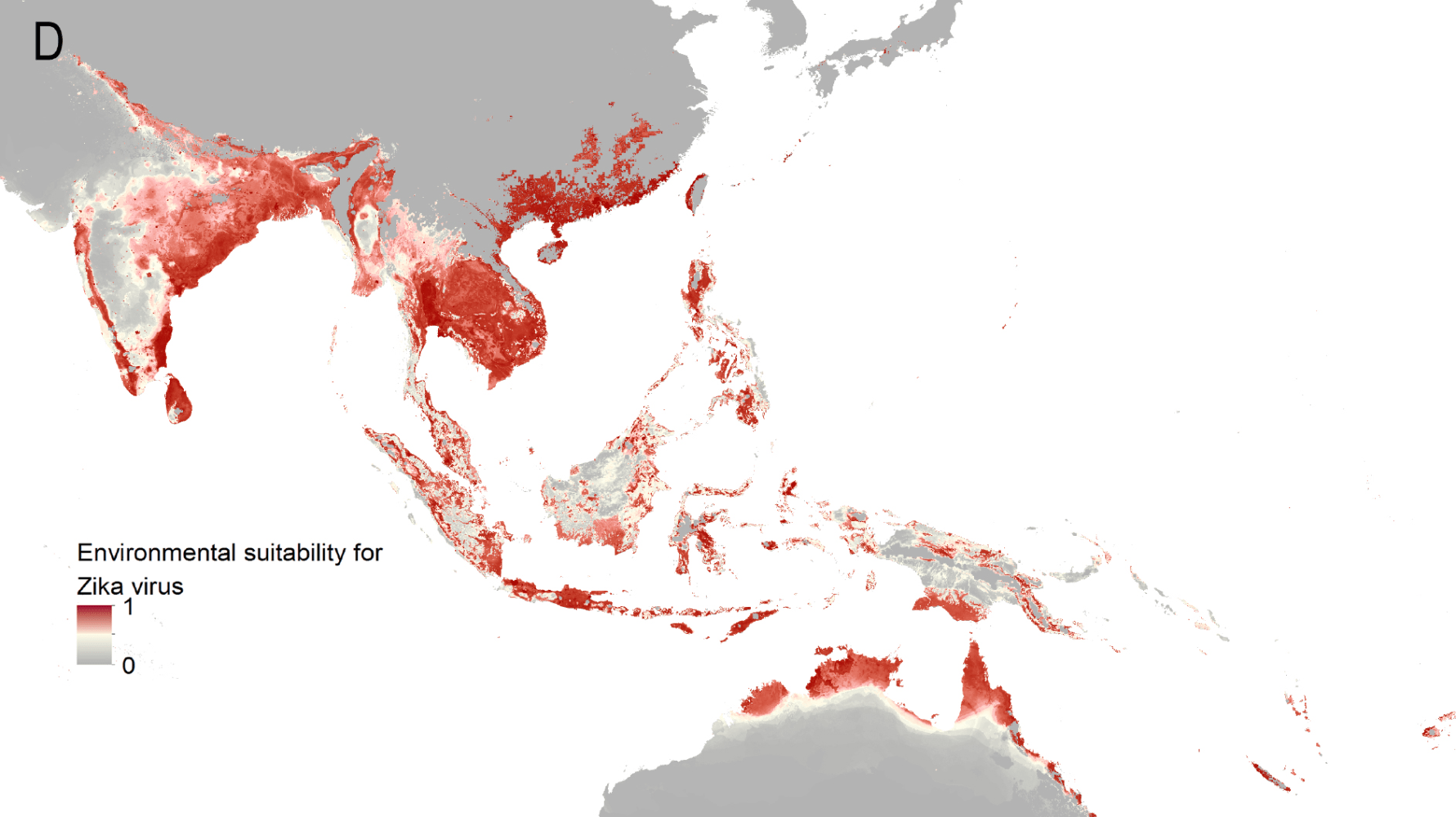
How long before zika strikes? Some believe the virus has already arrived. Because it is symptomatically similar to the other seasonal fevers and masked by them, it has not been isolated as such. A study of the conditions conducive to proliferation of the virus around the world highlights Asia. About 2 billion people may be in this “zika zone”. The fertile eastern sector of India that boasts of heavy monsoons has been mapped as distinctly vulnerable.

Awareness if social health is therefore necessary within communities of people. They would need to know that antibiotics may not be effective on the long run, but the collective attention to keeping the environment clean would certainly help to check mosquito infestations and hence the rampant spread of diseases.

However, many of the privileged generation next may prefer to remain ensconced in their contrived reality. “How stupid!” scoffed the Internet-savvy collegiate, pausing his multiplayer war gaming for a moment to heap scorn on my campaign proposal. “You have nothing better to do than to chase after mosquitoes? Why should we join you? Know this, we just don’t care!”

Saturday, November 22, 2014

The left bank


My grandfather had a sister, a saga behen (own sister) as we say in India. Nothing unusual in that except that there has been no trace of her existence within the family in decades. That she had even existed in what is now called Bangladesh was just a chance discovery.

You’re like the Koreas, a friend quipped, alluding to the fact that North/South Korean divide has pulled entire families asunder. Still, in the Indian joint family structure where collectivism is key, it is bemusing that the only female sibling of three brothers remained unknown to their families for the longest time. 

In the Indian sub-continent, historically, Bengal has been the hotbed of socio-cultural activism. During the colonial era, Bengali Babus were the anglophiles that, at first, the British colonizers relied heavily on to consolidate their position in the region. But then, with Western ‘education’ and their subsequent political awakening, the Bengalis transformed to thorns in their flesh. 


To contain Bengal, the then representative of the Crown, Lord Conwalis I think it was, mooted its first partitioning circa 1911. The banks of the River Ganges that flows through the state became the East and West Bengals. Locally they were called apaar Bangla (Bengal on this bank of the river) and opaar Bangla (Bengal on that bank of the river). In the vivisection of India in 1947, East Bengal was made a province of the newly carved out nation, was renamed East Pakistan. Then, in 1971, with help from across the river to stop the genocide, it became an independent nation, Bangladesh. But the local reference continues to be apaar Bangla and opaar Bangla

My family originates from that side, although they retained no connections with it since they left its soil around the time of the partition of the country. But the parents never forgot their birthplaces, and in their childhood memories, opaar Bangla was like no other on earth. For years we have only heard stories of abundance in the fertile land they grew up in and the freedom to be they had as children in their respective joint families: the tasty hilsa fish, the numerous ponds they swam in and orchards overladen with fruit, the prajas (subjects) that cultivated their fields, the space they enjoyed, the football, the intellectual pursuits.

They spoke less about the horrors inflicted on its people, though the effects of that experience runs deep in remembrances of the oppressiveness of the colonial rule, the famine the foreign powers engineered, the freedom struggle that the young men joined into and were killed for, the sudden rise of communalism that put friends into opposing camps, the riots following the forcible partitioning of the nation that caused the river to run red… My father never got over the trauma or ever wanted to go back. Now, seventy years after she left her village as a bewildered teen, my mother has finally desired to revisit the paradise of stunning natural beauty.


Thinking of it as a pilgrimage, my objective became to find somebody in Bangladesh who might recall those times and the location of the villages my parents came from. At first, it appeared that possibly nobody in the know had survived time. Well, I thought, we have the village names, and perhaps they haven’t been changed too many times by successive governments! But, truth is, I wasn’t too hopeful myself.

Then, the very extended family network came through with a name and a contact number.  He was somebody’s relative, on a visit to Kolkata, and still lived in opaar Bangla. It seemed a godsend, and I made contact immediately. When we met face-to-face, the eager questions we asked one another were, and how are you related to so-and-so or to such-and-such family?

We compared notes on our respective family trees. We stared in surprise at our findings. We are blood relatives, the newfound cousin I shall call Umesh declared at last. The sister of my grandfather, apparently lost in the sands of time for two generations, turned out to be his grandmother!

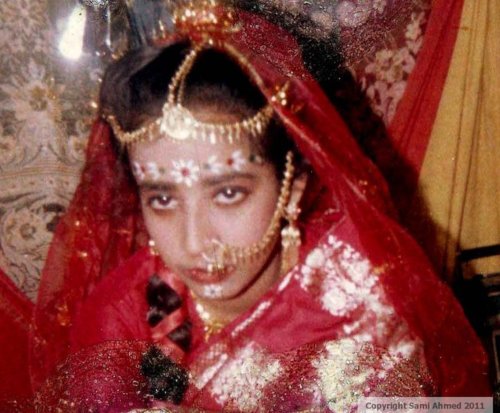
I was eager to hear her story. Her grandson, however, couldn’t quite recall her name. Something-sundari was the best he could come up with. In the traditional naming of the girl-child in those times, appends like Sundari, meaning beautiful, or Bala meaning ornament, was regular. I suppose they were meant to enhance their chances in the marriage market, where child-marriage was prevalent then.


Anyway, the story of this Sundari is the story of three families of my father’s village inter-linked by marriage. Let’s call them X, Y and Z. My paternal grandfather belonged to family Z. At the turn of the twentieth century, the patriarch of family X was a renowned practitioner of ayurvedic medicine. A young man of family Y had become his apprentice and proved himself ably to his mentor. He was welcomed into the fold of practitioners of traditional medicine and thereafter married a young woman of the family, obviously with the patriarch’s blessing. His wife produced two children, but she did not survive too long after. He couldn’t be expected to rear the children on his own, and hence another marriage was on the cards.

Family Z had three boys and one girl of the same generation. The youngest of the three sons, my grandfather, had also married a daughter of family X. Meanwhile, the young man of family Y set his sights this time on the girl of family Z. This was Sundari! It seems they married, although family Z kept no record of it.

Why has there been no mention of her within her family of origin? Was it sexism - did her three brothers consider her gender a burden to be rid of and forgotten at the earliest? Did she marry for love? Was the match against family wishes, and so she was spoken of no more? Or did the fact of Partition lead to the unraveling of ties? 


Sundari stayed back with her husband and children when two of her brothers left for the other bank of the river with the rest of the family members. Her eldest brother also remained to dispose of the family property, but then was found dead under suspicious circumstances. The second brother also died soon after, and it was left to the youngest brother, my grandfather, to anchor the relocation of this large extended family. It all seems pretty curious, and so many questions arise, especially about the constraints imposed on little girls in that age!

I hear that she bore three sons and two daughters, survived childbirth and lived to a ripe old age.  So there was nothing wrong with her physiologically. Was she indeed as beautiful as her name suggests or was loyalty her strength? Was she happy with her lot as wife, mother and grandmother, or was it an imprisonment of sorts? Did she accept her family’s indifference to her plight stoically or was she heartbroken at being so completely forgotten? She died some time ago, and hence unfortunately, there is no way of knowing her side of the story, except as her descendants retell. 

The separation of family members is probably the natural fallout of the partitioning of any nation, but still why forget a person altogether, an only daughter of the family at that? There is no one to provide the answers, and today, I can only speculate whether Sundari’s life has been the stuff of fairytales or as tragic as those times.


Sunday, November 9, 2014

Young college awareness


Young man Rohan has just turned nineteen. He tells me he sometimes forgets that he’s still a teen, he feels so grown up. Stepping into college portals clearly signals the outgrowing of the cocooned shelter of home.

It seems adult characters are being chiseled out of the undifferentiated child block. Within months of entry, the college student is actively shedding puppy fat. His fond mother tells me a little wanly that he’s stopped eating.  He is going through the lean-and-mean phase in the search for individual identity, which needs must include the physical. Besides, there are girls to impress at the college.

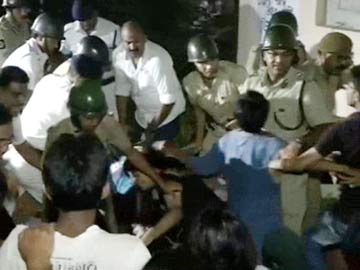
Quite recently, I visit their home, and see the college newbie looking exhausted, but elated all the same. What’s up? I ask. He has been walking miles, he says, and is just back from a student rally. We hear that thousands of students of different colleges cut classes to march from their institutions to another to express solidarity with the student body there. This rally is against police action against their protest against official inaction against student demands against the molestation of a girl-student earlier. It all seems a little complicated to me, but essentially, the student body is riled up.


I ask the question that probably keeps his parents awake at night, have you become a political activist? No, no, he says, we joined in only because it (the protest rally) was apolitical. For children born into the traditional family system in India, breaking bounds in such a way is an awesome feeling. What is important is the realization that in a democracy protest is a right, and they begin to understand the value of the adult franchise they gain at age eighteen. 

In the college world, political awareness is imbibed from the environment. In our time, decades ago, the campus was the hotbed of political activities. Political parties would run their recruitment drives through the student unions dependent on their patronage. Thousands of young people fell victims to their machinations, during the Naxalbari movement in the late ‘60s and early ‘70s. Some political people had wanted to ‘lead’ the rally, Rohan informs us, but were asked to leave. These students want no such overtones, or to have their opinions hijacked by party organizers.  

We tune into the news channel on television and find coverage of rally. We see the students marching along, and Rohan is a little disappointed that he is indistinguishable in the crowd. The elders around him though, are secretly relieved that he is not identifiable; nobody wants to be the unwitting recipient of political ire. 

Many of the young marchers clearly perceive the rally as some sort of college excursion or picnic. The musically inclined have taken along their guitars. They gather en masse to sing songs and join into street plays. It was peaceful, entirely peaceful, the young man insists, and it quite seems that way 

Then the state minister comes on view, and he is like an aggrieved, martyred parent bemoaning bad behaviour of unruly children. He says that he was saddened by the videos shown to him of the incidents - aggressive students on a rampage, destroying property, beating up unarmed police personnel, abusing elders and so on. Lies, all lies, says our young man excitedly, nothing like that happened. I tell him to calm down and that ‘democracy’ means the other side too must be heard.  

It gets too much for him. We were there; we saw it all, he insists, everything was peaceful. I remind him that the incidents in question happened before their rally. Yes, yes, he says, but we saw the unedited videos. The police put 35 students in hospital, how come that is not being mentioned or shown on tv? The students involved in the fracas had recorded the police actions, and displayed them at the rally. Well, I counter, these could have been edited as well to show the authorities in a bad light, no? 


Or it just might be that outside influences did come in, in the guise of the students, to make mischief. Do you know, says Rohan, some ruling party goons locked students in at a college, so they could not participate in the rally! In volatile situations, anything is possible, and the young people are yet too naive to understand their implications. Small wonder then that parents that have suffered in the past are at pains to ensure that their children focus on studies and stay away from anything that might be deemed political. 

Memories of past times resurface in the elders, and they are fearful for the children. Remember those times, one tells me, how thousands were made to just disappear? Indeed, student unrest had been quelled with an iron hand in the past. We had heard little about that on news waves then officially censored. We had felt their effects however, with academic sessions completely disrupted in the ‘70s, and students unable to graduate because examinations were cancelled.

That government was voted out, and the Left Front came to power as the people’s party, and ruled for over three decades. Ironically, the present state administration in Bengal won the elections against all odds, sweeping them aside. The incumbent chief minister had been much admired for her grit and tenacity in standing up to their political stranglehold. It reflected in her party’s success in the elections, which had been once deemed unthinkable.

However, winning elections is one thing and governance is quite another. Despite election promises and good intentions, political mistakes seem to pile up. Anybody that doesn’t agree with them is now branded ‘maoist’ Rohan tells me, so we started to shout that we were Maoists! The point is the present administrative incumbent is fast losing the support of youth. In India, they are the new voting public, and now a sizeable demographic group. 


Most recently, the social activism against corruption carried by students in Delhi contributed to bringing down the entrenched state government. I suppose the political elders had forgotten that the young people are far more adept with technology and social networks. State machineries cannot even hope to control their communications through the informal grapevine. Political heavyweights need to learn from the past to respect the future.

Tuesday, October 7, 2014

Get up, stand up


I’m not a victim, I say. And realize to my surprise, that indeed, it is a thing of the past for me. The majority of the female gender in India is, or has been victim at some point in their lives. The abuse they suffer can be in many forms, economic, verbal, physical, sexual, and emotional. It is not only the illiterate that are affected; education and employment doesn’t always protect the others. Culturally, they rarely get help; rather their integrity is questioned. The trauma of an abusive experience hounds them, and perhaps gets carried into their social interactions.


Several decades ago, a Western woman journalist, curious about life as a non-white in London, decided to change her appearance and go undercover as an Asian. With wig, contact lenses, appropriate makeup and attire, she transformed from one race to another. The few weeks of subtle social discrimination experienced were a revelation, and eventually, she too felt hunted. While commuting on a train in the disguise, she heard two other white women patronizing her. They obviously assumed that being Asian, she wouldn’t have the language. It was not her appearance that irritated, they said, but her attitude.

The downtrodden expect abuse. That they are beaten into the dust and cannot hope to get up again, is projected in look and body language. Perhaps their unarticulated fears attract further aggression. Verbal or physical abuse is common sight on the city streets. Hardly anybody protests.  Many may even condone it, and outside interventions often make things harder for the victim. Like kicking pets in petulance, men in India tend to take their frustrations on those that can’t or don’t fight back. But mostly, society is immune to the abuse of women.

On the road, the family group walking by, seemed normal enough, man, woman and small girl child. But as they passed, I heard the man say conversationally that he was fed up with ingratitude, and if the little girl made one more demand for food, he would smash her baby face to pulp. I looked up sharply, but nothing seemed out of the ordinary. I wondered if I was imagining things. The child and the mother said nothing; they simply walked on as if all was well. But then I noticed, they walked a little too straight looking neither right nor left, as if careful to not upset the man.

Another day, three little girls were on their way to school, along with a young man, most probably a member of their extended family, or a neighbour. The littlest girl had been unable to cross the road with the others, and remained stranded on the far curb. The fellow didn’t even notice that she had been left behind. Several bystanders at the crossing called out to attract his attention: Hey, hey, take this one with you! Then the man marched angrily back to the child and slapped her hard on the head. In shock and pain, she burst into tears. Slap yourself first, I shouted, walking up to point an accusing finger, the fault is yours entirely. He went quiet, embarrassed into behaving by the public scrutiny.


In days gone by, the joint family structure had several generation and extended families living under the same roof. The cloistering of women was extreme. During my mother’s girlhood in the 1930s and 1940s, young women couldn’t stand at the windows in case they caught the eye of some man before marriage, and they were forbidden from meeting any man alone. It seems to me that there was a positive to it too, in terms of their safety from predators.

Post-independence, nuclear family units became the norm mostly for economic reasons. It was instrumental in opening doors to women’s education and employment. However, it did not remove the feudal attitude to gender; it just made the access to women easier. In the new family structure, family ties remained the same. Mothers continued to view men as they were brought up to, as the superior beings to look up to. They trusted the male ‘family members’ in its extended branches implicitly.

It never occurred to them that by putting their little girls in their control they were putting them in harm’s way. The ignorance of the mothers allowed the uncomprehending children as young as four to be abused and molested at will. I know this, because it happened to me too. The home itself can be an unsafe environment for many women and girls. They are socialized early into the trauma of gender. 

Women may be unsafe in the marital home as well. In a traditional marriage, the spouses are almost strangers. It is customary to uproot the woman from her parents’ home, and throw her to the wolves, as it were. I once witnessed such a couple’s public interaction. The man strutted around like the proverbial rooster, and the woman’s insecurity was palpable. She wasn’t pretty, which was probably was the source of her insecurity. She followed the man, crying and pleading.

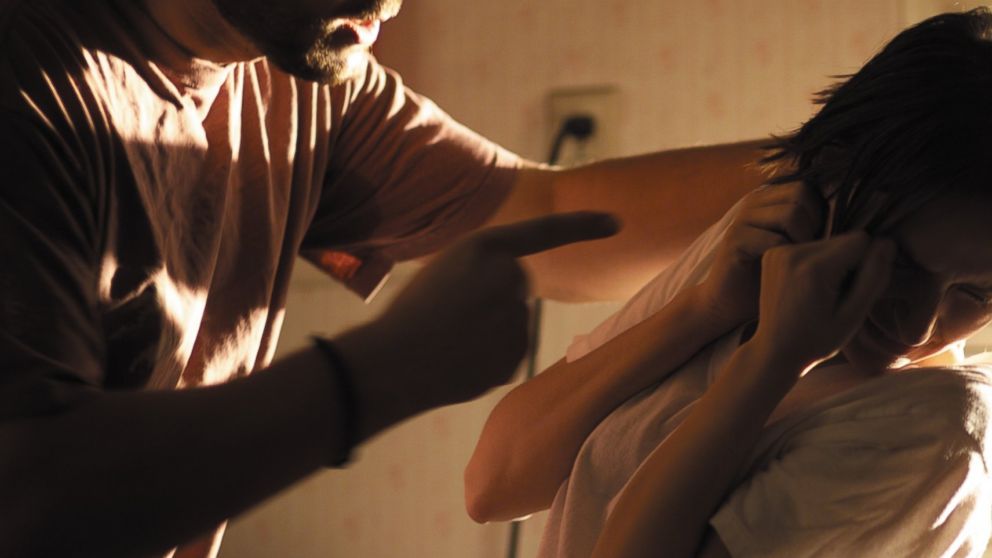
The more she did that, the more his ego inflated. Every now and then he stopped, and turned on her aggressively. Wagging his finger in her face, he hissed threats and insults. I heard him say she was so ugly she sickened him, that she was a burden around his neck, and that he couldn’t wait to be rid of her. She should have rapped him across the mug and stalked off. But instead, she just put her hands up piteously, as if to ward off his words.


It made my blood boil, and I stopped nearby and glared at the man. Other passersby definitely heard him too, but because the woman had a vermillion streak in her hair (signifying the marital state), nobody intervened. The social environment holds out no support whatsoever for the victims of marital abuse. It is traditional, instead, to consider a wife the husband’s property; with which argument, marital abusers count on escaping censure. 

I know, because I was in such a relationship, where this argument was repeatedly used. I was educated, but perhaps I too projected the characteristically abysmal self-esteem of victims. It didn’t matter that I changed attitude like a chameleon changes colour, to keep the peace and protect children and pets. Punishment for some slight, real or imagined, was imminent, and would be vicious. At a time when the marital and custody laws favoured the male, it was a hostage situation.

Not much has changed since then, however. The right to ‘control’ the women in their lives – mothers, sisters, wives, daughters, and others, continues to receive tacit social support. It matters not that the women may have outstripped the men academically.  In the social equation, they are expected to walk several steps behind and be the subservient gender even in this day and age.

After several years, I recently met my own brother. He is a non-resident Indian, and has been a citizen of the lands of plenty for several decades. We are closest in age, and in our younger days, were constantly at loggerheads. The special treatment he always seemed to get, especially from my mother, irked me no end. We have mellowed in later years, but still, I admit, that although we do not come to blows any more, we occasionally lapse into childish behaviours, reminiscent of our younger days.


The matter of our argument, the other day, was actually trivial. But I realized that his Indianness is entrenched in a time gone by. Despite living in a developed society for several decades, the conditioned cultural responses reactivate on the shores of the mother country.  In an instant, the general mistrust of gender of those past times came alive in him. He was like an alpha male that had to dominate the group and the women!  In his mind, possibly, he was being the elder, the male head of family, and quite unaware that that behaviour pattern could now be termed abusive. 

The revisit of the past brought me enlightenment. Although we were brought up in the same environment in the past, I have moved on, have emancipated from victim-hood. I no longer placate or change attitude. I am assertive, and relate on equal terms. Masculine intimidations are of no consequence to me today. They seem comically archaic, and I am free of their toxicity.  I’m not a victim, I say. Not anymore. I have been in the pits, and now I stand up.